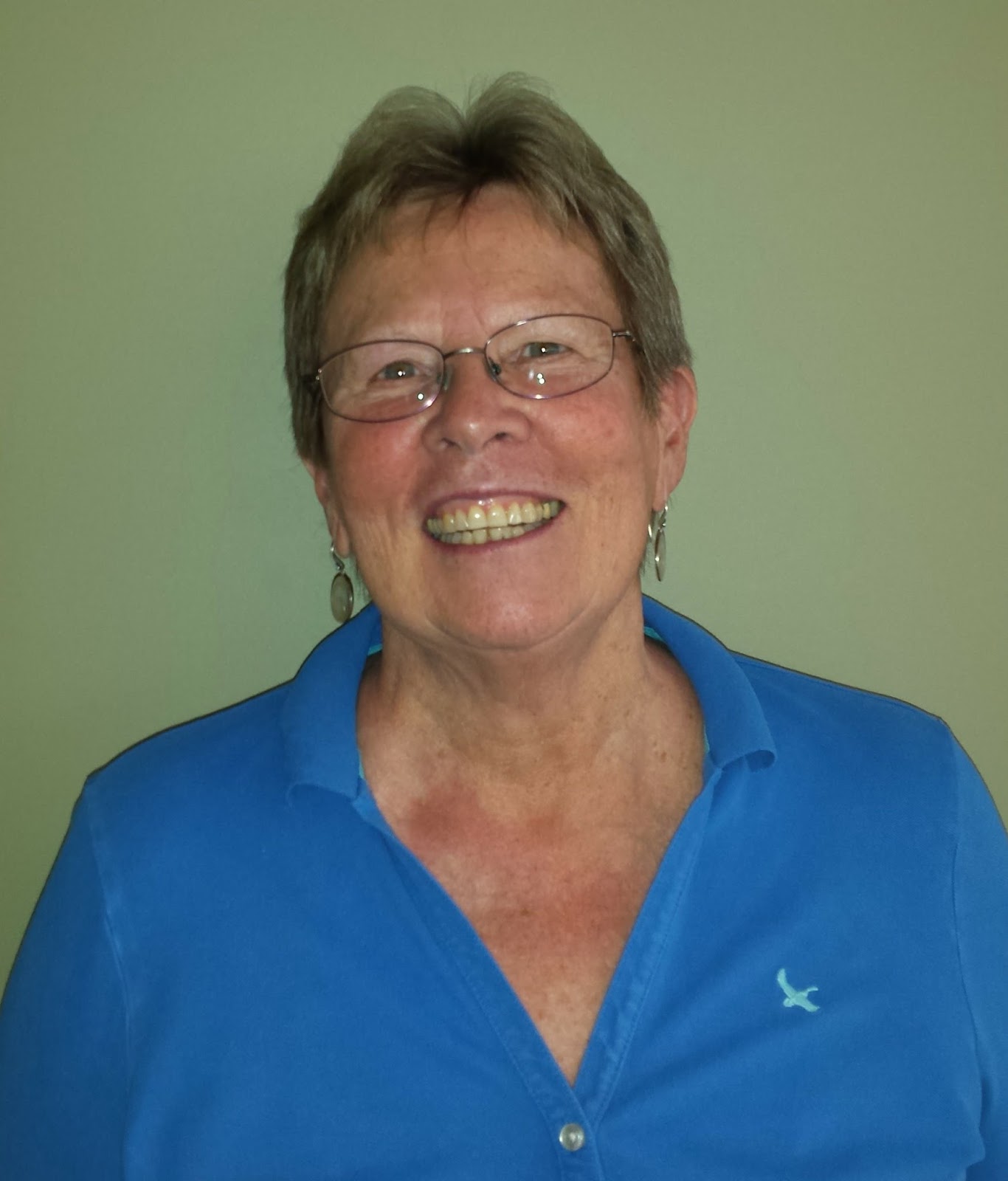
Forgiveness, by Gail Klock

I have at times been hurt by people I loved or complete
strangers and I hated the feelings it left inside of me; sadness, anger, desperation.
These feelings prohibited me from enjoying life and made the pain last longer.
I know from past experiences once I’m am able to forgive the offend or I no longer
feel like the victim and he/she no longer has control of my life, or so it
feels at the time, even though this is an allusion, they never really did.
In order to move on I try to understand the other person’s
motives and once I do I generally realize these motives are based on
experiences I was not even a part of.  For example, when my mom abandoned me as a
child it hurt me a great deal and had a lasting impact on my life. But after
many years of counseling and maturing I realized the pain I felt was real, but
not directed at me for anything I had done or for who I was- good or bad. My
mom was not trying to hurt me; in fact, she was just trying to make it through
each day living with her own unbearable pain of losing a child.
I really don’t believe people want to hurt others, it would
be a lousy motivator. I don’t think anyone enters a relationship thinking, “I
really want my lover to think the world of me, to cherish me, and put me before
all others, then I can lower the boom and hurt them. In fact, I’m already
thinking of the lyrics to Paul Simon’s “Fifty Ways to Leave Your Lover”, I
think I’ll use number 23 this time!  However,
at the onset of a painful experience it is really hard for me to lift myself
out of the victim role. Of course it’s all about me. I wasn’t perfect. What
could I have done differently? Why didn’t I see the red flags? Or what does it
mean, “People change, it’s not about you, I just need to make changes for
myself,” The tape in my head plays on and on in the moment and it’s hard to
step back and away from the pain.
The ease of letting go of this pain and bitterness seems to
be related to the relationship and the intention of the offensive action. In
one situation I was very angry and hurt when a thief stole all my camping gear
which I was airing out in my back yard. 
I felt violated by the senselessness of this act. I think in this
instance my ability to forgive was in reality the passing of time. It’s hard to
forgive someone when you don’t know who they are. I was angry too because I had
very little money and I had worked hard for these items which had provided me
with an inexpensive form of entertainment.
Of course as a lesbian I have felt the hurt of those who
think of me as an evil and vile person. I don’t know that I need to forgive
them anymore, I’ve moved on to not believing a word they utter. I’d be willing
to match my positive attributes with theirs any day and I already have a head
start because I don’t try to run their life’s just because of their sexual
preference. I doubt they even know when they made their choices to be straight.
I really think it sucks to be so full of hatred towards others. When does it
leave time to enjoy this wonderful world, to see all the beauty around us. It
would be so draining.
There is one other aspect of forgiveness which I ponder. I
think when a person hurts you and apologizes for their action it takes most of
the sting out of the situation and it is much easier to forgive.
For now, I just hope if I get hurt in the future, I can
remember I’m not the center of the universe. I need to let go of the hurt
feelings to allow myself to move on. I don’t hurt others on purpose and I really
don’t think others do either.
© 9 Mar
2015
 
About the Author 

I grew up in Pueblo, CO with my two brothers and parents.
Upon completion of high school I attended Colorado State University majoring in
Physical Education. My first teaching job was at a high school in Madison,
Wisconsin. After three years of teaching I moved to North Carolina to attend
graduate school at UNC-Greensboro. After obtaining my MSPE I coached
basketball, volleyball, and softball at the college level starting with Wake
Forest University and moving on to Springfield College, Brown University, and
Colorado School of Mines.
While coaching at Mines my long term partner and I had two
daughters through artificial insemination. Due to the time away from home
required by coaching I resigned from this position and got my elementary education
certification. I taught in the gifted/talented program in Jefferson County
Schools for ten years. As a retiree I enjoy helping take care of my
granddaughter, playing senior basketball, writing/listening to stories in the
storytelling group, gardening, reading, and attending OLOC and other GLBT
organizations.
As a retiree I enjoy helping take care of my granddaughter,
playing senior basketball, writing/listening to stories in the storytelling
group, gardening, reading, and attending OLOC and other GLBT organizations.

Moving, by Carol White

While thinking about the word “Moving” I find myself drawn to
emotionally moving experiences more than physically moving from city to
city.  One of the most moving experiences
of my life came about in 1986.  Here are
some of the events leading up to it:
In 1980 I was living in Denver, Colorado.  February of that year was the initial meeting
of PFLAG Denver that I attended and the first meeting of several parents who
were soon thereafter to become dear friends. 
I have already written a story for this group about the beginnings of
PFLAG and the events in 1984 that led to the formation of the 140-voice PFLAG
Festival Chorus that sang for the national convention in Denver, which was the
first time that I had conducted in 16 years since being fired from the church.
Today’s story is about the women singing in that chorus who
wanted to continue to sing together, and became the Denver Women’s Chorus.  Immediately following the PFLAG Festival
Chorus, the 70 women decided to continue rehearsing at St. Paul’s UMC in
Capitol Hill.  Naturally, the very first
performance of this new DWC was at a PFLAG meeting in December with Christmas
songs.
Then came the big night — our very first concert as a women’s
chorus, which we held at North High School auditorium.  This was exciting stuff!
We got Jane Vennard to be our MC.  Jane is the sister of Dottie Lamm, who was
married to the Governor of Colorado, Dick Lamm. 
Jane had been married to a gay man at one time, so she was a member of
PFLAG, and we had an “in” at the governor’s mansion, which was very neat.
Leading up to this concert, one of the things that we talked
about in rehearsals was that when you sing, you are not to pronounce the letter
“R” in a song.  For instance, the word
“mother” would be “mothuh” and “father” would be “fathuh”, etc, etc.
Well, Judith and I went to Laguna Beach, California, to visit
Bishop Mel Wheatley and his wife Lucile for a few days.  We stayed at a hotel right on the ocean and
watched the seagulls flying by.  When we
got back to rehearsal, I told the chorus that one of the seagulls flying by was
singing, “I enjoy being a gull.”  Would
you believe that we actually sang that song at that North High concert, and one
of the chorus members dressed up all frilly and danced while we were singing
it.  It was actually tongue in cheek.

Anyway, after the concert we were so high and so excited that
we had a big cast party over at the home of one of the singers whose name was
Susan.  Jane Vennard was dancing on the
piano bench.  We were all dancing so much
that the old North Denver house was actually shaking, and I remember forming a
long line and dancing out into the yard singing “I Heard It Through the
Grapevine.”
Later came the Paramount Theater concert with Barbra Higbie
as the special guest.  One of Judith’s
friends brought a straight male friend with him, and of course, this was the
first gay concert he had ever been to, and he asked John, “Why do they sing?”
We tried to answer that question first by saying that it’s
the title of a Holly Near song, “We are singing for our lives.”  Then Judith reminded me of this saying:  “A bird does not sing because it has an
answer.  It sings because it has a
song.”  And I said that gay and lesbian
people have always had a song, but the tragedy of it is we have never been able
to sing it before, and the beauty of it is that now we can!
At the end of that Paramount concert Judith and I got to ride
to the cast party at the Hilton Hotel downtown in one of those horse-drawn
carriages with Barbara Higbie and her partner. 
That was a blast.
Then came our first GALA Choruses Festival in
Minneapolis!  The Gay and Lesbian
Association of Choruses had formed a few years earlier from its beginnings in
San Francisco to several gay men’s choruses around the country, and they had
had their first choral festival in New York City.  This was their second time to get together to
sing.  We were the only women’s chorus
there, along with 16 gay men’s choruses. 
We boarded the plane in Denver, and as we attained cruising
altitude at about 30,000 feet, Judith and I went up and down the aisle passing
out a quote for each member to keep.  It
read like this:  “Years from now, when
you are old and grey, you will be able to look back and say that ONCE in your
life you gave EVERYTHING you had for justice.”
Soon we were on the stage at Orchestra Hall in downtown
Minneapolis performing to a sold-out crowd, when Suzanne Pierson was singing a
solo on a song that she had written, “No Child of Mine,” and she forgot the
words.  The chorus came in with her and
saved her.  So while our performance as a
chorus may not have been perfect, still, afterwards when we walked into a
restaurant on the downtown mall in Minneapolis, we would get a standing ovation
from the men singers who were sitting at tables in that restaurant, and they
would say, “Oh, the Brahms, Oh, the Brahms.” 
They evidently loved the Brahms numbers that we sang.  And they really appreciated our being there.
But the final night in Minneapolis was the piece de
resistance.  We were on stage with all of
the men’s choruses, about 1,000 singers as I remember, and there was an
orchestra on the floor in front of the stage and they had hired Philip Brunelle
to conduct and we were singing a commissioned work by John David Earnest called
“Jubilation.”  Woah!  Unbelievable highlight!
After the concert, some of the members were so excited that
they actually JUMPED off the risers rather than stepping down.  And then we ALL went out into the plaza
outside the hall and, as one member later said, we “sang to the heavens what
the hall would not contain.”  Close to
1,000 of us standing there singing and singing and singing, every song we could
think of. 
That was moving!  That was the highlight
of my life to that time.  And most of us
returned to work in Denver and could not even tell people where we had been
because we were still not out, for fear of losing our jobs and the support of
our families and friends. 
Times have changed in the last 30 years.  Judith and I are retired and out to everyone
now.  The Denver Women’s Chorus is still
singing.  The Gay and Lesbian Association
of Choruses has produced a Festival every three or four years since then, from
Seattle to Denver to Tampa to San Jose to Montreal and others, and finally back
to Denver in 2012.  In fact, they were so
impressed with the facilities here at the DCPA 
that they are coming back in 2016 so that they can use Boetcher, Temple
Buell, and Ellie Caulkins Opera House all at the same time for simultaneous concerts
all day and all evening for four days in a row over the July 4 holiday in our
great city. 
The number of choruses participating actually doubled at each
festival from 16 to 32 to 67 to 120, and has finally leveled out at over 190
choruses around the world with over 10,000 singers. 
I am registered as a single delegate for the July 2016
festival, and if you like choral music, you can go to their website and
register too.  IT WILL BE A MOVING
EXPERIENCE! 
©
2 Nov 2015
 
About the Author 
I was born in Louisiana in
1939, went to Southern Methodist University in Dallas from 1957 through 1963,
with majors in sacred music and choral conducting, was a minister of music for
a large Methodist church in Houston for four years, and was fired for being gay
in 1967.  After five years of searching,
I settled in Denver and spent 30 years here as a freelance court reporter.  From 1980 forward I have been involved with
PFLAG Denver, and started and conducted four GLBT choruses:  the PFLAG Festival Chorus, the Denver Women’s
Chorus, the Celebration ’90 Festival Chorus for the Gay Games in Vancouver, and
Harmony.  I am enjoying my 11-year
retirement with my life partner of 32 years, Judith Nelson, riding our bikes, going
to concerts, and writing stories for the great SAGE group.

We Shall Never Know, by Carlos

A
poet much wiser than I recognized that journeys never undertaken and roads
never traversed, nonetheless have the power to burden. I find myself looking
back over the decades, forever ambivalent about those uncharted journeys. And
although I celebrate that I did take a less traveled road, which, in fact, made
a difference, a wonderful difference, the shadowy vignettes of a past unlived
on occasion haunt me like the dripping of a faucet on a silent night.
He
and I never danced; we never touched; we never spoke of the drives and passions
that might have lubricated our lives. It was a different time, a different
place. It was a time when to unsheathe our souls to judgmental eyes could have
thwarted careers, made futures bleak, and shattered lives like frost descending
upon tender blades of green grass. And though our connection consisted of two
twirl-a-cups gyrating around a circular orb, I have come to believe that had we
lived in a freer world, a more inclusive one, he and I might have given light
to secrets destined to remain forever occulted, held hands on blustery winter
nights, and charted voyages that alas never sailed away. In retrospect he was
my first infatuation, the first man with whom I dared to dream that somewhere,
someplace we could make our peace. We could have been oblivious to a sanctimonious
Brokeback Mountain world beset on
sacrificing us, for no other reason than our souls quested after forbidden
dreams. But we never danced; we never touched; we never found the courage to
challenge the consequences of reaching out to thwart ingrained fears. Thus, we
never transformed hope into possibilities.
We
were so different. He was passionate about Ché Guevara and César Chávez, about
the injustices of Chilean tyrants and brutish money changers. I was passionate
about my intangible world. How often I would find myself walking alone,
surrounded by the voices of poets and dreamers, philosophers and stargazers.
While immersed in my rhymes and rhythms of far-off melodies, I would focus on the
intricate cobwebbed anatomy of elm leaves, on the oceans mirrored within raindrops,
on the starry convolution of heavens above. Thus, in those early years, we trekked
in diametrically different worlds. We allowed our fears of the unknown, of
ourselves, to silence what in retrospect I now know nestled within us. We could
have, we should have, but we never did speak of our cryptic secrets, and time,
like a shape-shifting cloud flitted out of our reach.
Over
the years, I finished my studies. Over the years, I lost my innocence in foreign
lands. I thought of him often, but I allowed myself to believe that the past
was but an epitaph on crumbling sandstone. Years later, an act of serendipity
became our swan’s song when upon my return home from distant shores, I prepared
to root my life. Acknowledging my forays into the future, I celebrated among strangers
at my favorite restaurant. As fate would have it, he was there too, alone,
following a day of toiling in this world of the mundane. Instant recognition erupted
in our eyes, and although we spoke so briefly about things so trivial, we never
unshackled the chains that bound us. After all, the world still remained
dangerous for men like us. Thus, what needed to be said remained forever
fossilized within our respective hearts. Saying goodbye so long ago, I now
recognize that he wanted to say more; I can only hope he knew I too longed to
reach out, but instead with a quiet desperation I stifled my longings. Even as
I walked away and turned to look at him, I could not break the insidious spell
spun by those who had authority over us. And thus, we never danced; we never
touched, we never let the sun break through the storm. We will never know what
could have been. Suffice to say, although the road I took directed me away from
him, I remain forever grateful that this traveler did, in spite of himself, step
toward a wondrous journey. I can only hope his path was likewise emblazoned
with innumerable constellations.
© 28 Dec 2015  
About
the Author
 
Cervantes
wrote, “I know who I am and who I may choose to be.”  In spite of my constant quest to live up to
this proposition, I often falter.  I am a
man who has been defined as sensitive, intuitive, and altruistic, but I have
also been defined as being too shy, too retrospective, too pragmatic.  Something I know to be true. I am a survivor,
a contradictory balance of a realist and a dreamer, and on occasions, quite
charming.  Nevertheless, I often ask
Spirit to keep His arms around my shoulder and His hand over my mouth.  My heroes range from Henry David Thoreau to
Sheldon Cooper, and I always have time to watch Big Bang Theory or Under the
Tuscan Sun.  I am a pragmatic romantic and
a consummate lover of ideas and words, nature and time.  My beloved husband and our three rambunctious
cocker spaniels are the souls that populate my heart. I could spend the rest of
my life restoring our Victorian home, planting tomatoes, and lying under
coconut palms on tropical sands.  I
believe in Spirit, and have zero tolerance for irresponsibility, victim’s
mentalities, political and religious orthodoxy, and intentional cruelty.  I am always on the look-out for friends,
people who find that life just doesn’t get any better than breaking bread
together and finding humor in the world around us.

Acceptance, by Will Stanton

There actually have been times during my adult life that some people wished to use me as a role-model. I am far too self-effacing to comfortably accept that suggestion. I never have had a huge ego, and I do not regard myself as a remarkably successful person. Nor am I especially emotive or flamboyant, drawing attention to myself. Still, I recall a markedly ironic episode in 1970 when I specifically was asked to play that role.

I was in my early twenties, living and working for just one year in a stereotypical Midwest town. It was not a town that I would like to spend a lifetime in. I suppose that many of the citizens were decent people, but they were much more narrow in their experiences and thinking than I would like. The dominating economic force in town was an Alcoa plant. Other than people’s work and families, the main focus of their attention was devoted to church – – there was a disproportionate number of churches for the size of the town – – also men joining the Rotary Club, along with the almost mandatory high-school football and basketball. I gathered from hearing people talk that, when a baby boy was born, he immediately was destined to play football, if he was chunky, or basketball, if he was thin and long.

Even the school-teachers were not particularly well educated, and they certainly were not cosmopolitan. I recall one English teacher stating, “I told them students to put them books back on their desks.” Then she adamantly asserted, “I’m not interested in ever going to Europe. Everything in America is bigger and better than anything in Europe.” You can just imagine what their attitudes were about sexual identity, appearance, and affect, especially for boys.

I recall one sunny day sitting on a bench, waiting for a bus, when a well-dressed woman sat down next to me. She did not hesitate to introduce herself and engage me in conversation. She seemed eager to tell me that she had a daughter my age, not yet married, who had been in Japan and soon would be rejoining her. Almost as though the mother were vetting me as a potential son-in-law – – and perhaps she actually was—, she inquired all about me. She seemed impressed that I had more to offer than the usual young men born and raised in that town. I also got the distinct impression that, when I told her that I had, over the years, much interaction with many Japanese because I had studied Judo and Karate, she apparently concluded that I possessed an appropriate degree of masculinity.

She then very kindly, but also rather forcibly, suggested that, my being relatively new in town and not knowing many people, I should come to her home and join her husband and teenage son for supper. She claimed that we would have so much in common to talk about; and, later when her daughter returned, I could meet her, too. Without hesitation, she stated an appropriate date and insisted that I accept, which I did, albeit with some misgivings.

From the moment of my arrival at their home, I sensed a peculiar situation. The husband, rather than standing up to greet me, remained slunk in a coach, looking at me in discomfort. Then her fifteen-year-old son politely but timidly approached me and held out his hand. I remember his appearance quite clearly. He was blond, pleasantly attractive, and, like many colt-like, long-limb fifteen-year-olds, slim.

What she said next astounded me, for she said it right in front of her husband and her son. She stated that she was concerned that her son did not show signs of being sufficiently masculine, that he needed to have a masculine role model to interact with on a frequent basis, and his father was not up to the task. She thought that, if I visited the boy frequently and engaged in various activities with him, I could be a good influence on him. I was truly embarrassed for the father, and I could just imagine what that poor boy was thinking and feeling.

I remained polite throughout the dinner, keeping the conversation focused upon general topics having nothing to do with the personalities of the boy or his father. I somehow managed to make the evening short, thanking them for a pleasant evening, and, much to my relief, departed.

For some reason, I managed to never return to that home. I never got to meet the daughter once she returned. I suppose, considering the fact that I never phoned their house, the mother must have concluded that I was not eager to become connected with her family.

In retrospect, that mother’s attitude toward her son and her husband does not surprise me, especially considering the time and place of that encounter. Yet, that mother’s lack of acceptance toward her son, whatever his orientation or personality, and that of her husband, saddens me. I have no way of knowing what may have become of that boy; yet, obviously, I hope that he found some degree of happiness, security, and acceptance.

© 16 September 2015

About the Author

I have had a life-long fascination with people and their life stories. I also realize that, although my own life has not brought me particular fame or fortune, I too have had some noteworthy experiences and, at times, unusual ones. Since I joined this Story Time group, I have derived pleasure and satisfaction participating in the group. I do put some thought and effort into my stories, and I hope that you find them interesting.

Hold My Beer and Watch Me Participate in My Favorite Water Sport, by Ricky

As a pre-teen, I could never hold my beer very long. For that matter, I could never leave it on the table or TV tray for long either. My parents had a modestly stocked liquor cabinet under our built-in BBQ in the kitchen. Jimmy and I did sneak a taste, once only. Neither of us cared for hard liquor but the beer we attacked without hesitation each time he visited until it was all gone, followed by a somewhat lengthy visit to the bathroom to see a man about a horse as it were. My parents were not blind and noticed the disappearance of the containers. After that, they did not buy me any root beer in large qualities when they went to the store.

One day when I was 13, I was attending a Red Cross swimming class to learn how to swim. I had no bathing suit so was wearing a one year too small pair of green shorts. The shorts were not tight anywhere except at the waist but, they were loose at the crotch. Did I mention they were small or perhaps I should have said “too short”? During the classes, my favorite thing to do was to be up to the waist in water at the shallow end, take a deep breath and hold it, dive down to the bottom, then swim underwater to the other end of the pool, all the while slowly rising towards the surface. I would do this repeatedly as long as the female instructors would let me. This was and still is the only way I can swim for short distances.

At the end of the second swimming class, I was walking home with Roy, the brother of another boy who was in my rival scout troop. As we were talking, Roy told me that as I was swimming he could see my testicles through the leg opening of my shorts. Remember, I did say the shorts were too short. The shorts were not a swimming suit so there was no liner in them either. Naturally, I was slightly embarrassed but also titillated as I imagined all those female instructors feasting their collective eyes on me and whispering to each other “Look at that boy’s balls”. Roy’s revelation to me about my equipment, shortly thereafter led to some naked playtime before he had to go home.

So, you can see why as a teen, swimming class was my favorite water sport—just ahead of seeing a man about a horse.

© 26 Oct 2015

About the Author

I was born in June of 1948 in Los Angeles, living first in Lawndale and then in Redondo Beach. Just prior to turning 8 years old in 1956, I began living with my grandparents on their farm in Isanti County, Minnesota for two years during which time my parents divorced.

When united with my mother and stepfather two years later in 1958, I lived first at Emerald Bay and then at South Lake Tahoe, California, graduating from South Tahoe High School in 1966. After three tours of duty with the Air Force, I moved to Denver, Colorado where I lived with my wife and four children until her passing away from complications of breast cancer four days after the 9-11 terrorist attack.

I came out as a gay man in the summer of 2010. I find writing these memories to be therapeutic.

My story blog is TheTahoeBoy.Blogspot.com

Scars, by Phillip Hoyle

I’ve been lucky to live 68 years with almost no scars. As a result of that I don’t much relate to this topic even though after many years think I can still identify the scar Jeanetta Olson left on the back of my hand from a fingernail cut. I don’t recall the occasion except that it happened in the car during one of our families’ many trips to Topeka to see Dr. Peuzit. Jeanetta and my sister Christy both doctored with him due to polio. The scar now may be obscured by an age spot.

For some years I sported a scar on one of my fingers due to a cut I got from wrangling with a 16mm film take-up reel when I was working as a student minister at Central Christian Church, Wichita, KS. My wife Myrna was helping me to stop the flow of blood from the cut. When Dr. Parrish, the senior minister, came out of his study to help with a bottle of Witch Hazel, we saw Myrna sink to the floor and almost faint. I held my own paper towel bandage while Dr. Parrish worked with her. After that I was always properly careful around projectors and aware that Myrna might easily faint in any medical situation.

I do have stretch marks in the skin around both of my knees, scars due to having dislocated them. I always felt they seemed like nothing when compared with my wife’s proud stretch marks for having born two children.

In my psychic life I have suffered little pathos, so I have little of that kind of scarring. Still, I have become aware of a price I paid due to the many years of living in the closet. I also am aware that if I stay in this storytelling group for another five years, I may uncover scars of various kinds, even if it is only a callus on my right middle finger from writing stories so intensely every morning to have something ready to read. Also I am aware of the slight possibility that I may have so many scars on my feelings so deep that I cannot distinguish touched from untouched. There are a few scars from medical procedures of the last year and a half. Probably from now on in my ageing life I will be able to add a scaring episode or two from these kinds of new experiences every year. Perhaps I will eventually have a book out of them. I hope not.

Denver, ©22 June 2015

About the Author

Phillip Hoyle lives in Denver and spends his time writing, painting, and socializing. In general he keeps busy with groups of writers and artists. Following thirty-two years in church work and fifteen in a therapeutic massage practice, he now focuses on creating beauty. He volunteers at The Center leading the SAGE program “Telling Your Story.”

He also blogs at artandmorebyphilhoyle.blogspot.com

Compulsion, by Gillian

At bottom, my personality is not one to encompass compulsion. I am essentially too laid back, too relaxed, and also too logical and pragmatic, to be driven to do something which is not logically in my best interest. Or, as one definition has it, against one’s conscious wishes. I don’t generally let myself go in that direction; and Lord help anyone who tries to push me.

Yeah, that sounds good. Like most such statements, it is not exactly the whole truth and nothing but. It needs a little qualification.

What do I know? What can I know? I who spent the first forty-odd years of life playing a part, pretending to myself and everyone else that I need not be, in fact was not, the person I was born to be. Simply acting a part, of course I was not prey to compulsion. I was not affected by really strong emotion of any kind. An actor pretends an emotion; plays at having it, but does not truly, deep down in the soul, feel it.

When eventually I came out to myself, I must honestly admit, it was completely compulsive. I have often described it as being swept up on the cow-catcher of a run-away train; going wherever it took me, without conscious choice – and that most certainly is acting compulsively.

I cared not a jot whether coming out to the world as quickly and loudly as I could was, in fact, in my best interest. Many of us, had we looked at our coming out in the clear light of logic, would probably have stayed firmly in the closet. On the whole. it was not a welcoming world awaiting us out there.

For some time after coming out, my behavior remained compulsive. For the first time in my life, I fell madly in love. And love, or at least it’s for-runner, infatuation, surely is pure compulsion: we are compelled to pursue that person, to be with her every minute of every day, to make it last forever. Fortunately, as we settle into a less dramatic true love which goes so very much deeper than infatuation, we are able to swim free of that rip-current of compulsion and return to a more rational frame of mind.

I say fortunately because, as I began by saying, my personality is not really a good fit for compulsion. I am uncomfortable with it. It scares me. On the other hand, I have just said that the two best things I have done in my entire life – coming out and loving Betsy – resulted from irresistible compulsion. And now I think more about it, I’m not sure that Betsy would agree that I am so free of compulsive behavior. Yes, I am a wee bit obsessed with photography. And screaming Stop!! Turn around! at Betsy in the center lane of 80 mile an hour freeway traffic because we’ve just passed a perfect photo op. just might be construed as not acting in one’s own best interest!

© September 2015

About the Author

I was born and raised in England. After graduation from college there, I moved to the U.S. and, having discovered Colorado, never left. I have lived in the Denver-Boulder area since 1965, working for 30 years at IBM. I married, raised four stepchildren, then got divorced after finally, in my forties, accepting myself as a lesbian. I have now been with my wonderful partner Betsy for 25 years.

Grandparents, by Ricky

I never met my father’s father, John Leonard Nelson. He died when my father, John Archie Nelson, was only 9 years old. As the oldest of six siblings (2 girls and 4 boys), he became the “man-of-the-house” and had to help his mother, Emma Sophia (Ungar) Nelson, support the family. He ultimately left school after the 8th grade to work full-time. Emma was a short but not frail woman. After I was born, she lived with us in Redondo Beach and Lawndale for awhile. During that time she would dress me like mothers did back in the early 1900’s; in clothes that looked like small girl dresses. I was too young to care, but when, as a teen, I saw the old photographs of those days, I was embarrassed to have a record of how I had been dressed.

As I grew into my teens, I remember Emma as a thinner elderly lady with silver grey hair and a really nice personality. At that time in her life, she was a live-in “nanny” for a down’s syndrome girl, Jackie. I first met Jackie when she was about 3 and the last time before she passed away she was about 13. In all those years whenever we would meet, she would run to me and give me a big hug. I always felt awkward and uncomfortable around Jackie, but I can still see her round smiling face and her radiating pure love to this day. Truly, she was one of God’s special gifts to our world.

In her later years, Grandma Nelson alternately lived with my dad or his oldest sister, Marion, until she finally passed away.

I first saw my mother’s parents, Richard Pearson and Signe (Erickson), when they came from their farm in Minnesota to visit us shortly after my birth. Of course, I don’t remember any of that, but I have seen the photographs of the event. For my 3rd birthday, my “party” and birthday cake were served at the farm because their 25th anniversary was less than 2-weeks after my birthday and our family was there to help celebrate. I don’t remember that event either, but once again, I’ve seen the photographs.

When, at the age of 8, I was sent to the farm to live while my parents divorced, I was able to learn somewhat about them during the 2-years I lived there. Both Richard and Signe were the first children born in America in their respective families, so they were raised in the traditions of the “old” country, Sweden. As such, they were not very “touchy-feely” people. Others would probably classify them as being rather “cold” or “distant” emotionally.

I felt pretty close to both of them; to my grandfather, because I was named after him; John (after my dad and his dad) and Richard (after grandpa). I was “close” to my grandma because my mother was in California and I missed her so much.

While I was there, I was not allowed to do anything with the fun farm equipment, or fun chores, like driving the tractor while plowing, mowing the lawn with a power mower, etc. I suppose that was because I wasn’t raised on the farm from infancy AND because I wasn’t their child only a grandchild. They were very protective of me (irritatingly so).

I was allowed to help feed the cows, stack hay bales onto trailers and then again in the barn. I was no good at milking because the cows were so much bigger than I was and I was VERY hesitant in getting between any two of them in their stalls to install the milking machines onto their business ends. I did watch and laugh, as grandpa would occasionally hand-milk a cow just to squirt milk at all the cats and kittens that would sit on their hind legs and beg like a dog.

Grandpa did allow me to ride on the tractor with him while he would plow, plant, cultivate, and harvest his crops. I could also ride whenever he would mow, rake, and bale hay. I spent many long hours riding with him.

Grandma absolutely refused to let me mow the yard with the power mower. She considered it too dangerous. She did assign me the job of collecting the morning eggs, however. That didn’t even last two days as I was terrified of the rooster or more accurately, of his talons and extremely aggressive behavior.

Grandma made the most delicious dessert, which remains my favorite to this day. It’s called, Cherry Delight and is extremely “rich” in flavor and calories.

Sometimes, I helped her do the laundry, not from any sense of duty but because my part was running the clothes through the “wringer”, (it’s a boy vs machine thing). While grandpa was generally proportionally muscled for his average frame, grandma was a bit on the husky (not fat) side as she was a hard worker who not only managed a two-story farmhouse but also had a nice medium sized garden. Every autumn she would do a lot of canning of her garden vegetables, including the ever-present rhubarb. Even into her older age, she was quite a lovely woman and nice to look at.

Because he spent so much time out in the sun, grandpa resembled one of those ancient cowboys one occasionally sees on greeting cards. He had a very dark tan, but with his shirt off, the sun, reflecting off his alabaster chest could be quite blinding. He was truly a “red neck” but not in intelligence or personality.

One of the chores I got to do, I did because I wanted to, not because they asked me to. I just loved to go out to the fields and trap gophers. My grandpa was the township’s “gopher bounty” paying agent so he paid me 10 cents per gopher trapped. Other farm boys would come over to our farm with their dads and show him the tails from gophers that they had caught and he would pay them 10 cents a tail. I just brought home the whole body. Killing the gophers in my traps was one thing; I did not want to cut the tail off.

I loved all my grandparents and I miss them as much as I miss my own parents.

© January 2012

About the Author

I was born in June of 1948 in Los Angeles, living first in Lawndale and then in Redondo Beach. Just prior to turning 8 years old in 1956, I began living with my grandparents on their farm in Isanti County, Minnesota for two years during which time my parents divorced.

When united with my mother and stepfather two years later in 1958, I lived first at Emerald Bay and then at South Lake Tahoe, California, graduating from South Tahoe High School in 1966. After three tours of duty with the Air Force, I moved to Denver, Colorado where I lived with my wife and four children until her passing away from complications of breast cancer four days after the 9-11 terrorist attack.

I came out as a gay man in the summer of 2010. I find writing these memories to be therapeutic.

My story blog is TheTahoeBoy.Blogspot.com

Doors, by Phillip Hoyle

Two doors controlled the comings and goings in our early 1940s Cape Cod house in Junction City, Kansas: the front door and the back door. Both were wooden, both had latches and locks, both greeted and debarred. The front door was made of oak, the backdoor of fir. The front door opened onto a stoop where in summer Mother tended flowers in planters; the back door opened onto a screened porch. A second back door to the porch was a frame with screens and a simple hook latch at about adult eye level. I liked the way the screen door whacked like a gunshot when we’d let the spring pull it closed from a full open position. The doors must have been quite strong for they withstood the abuse of two adults and five children, a dog and several cats, neighbors and neighborhood kids, all of whom provided a kind of Grand Central Station feel to the house. The house was open, the doors seldom locked.

Formal visitors used the front door. Even Santa Clause entered there; we had no fireplace. We kids used the backdoor usually because we played in the backyard, garage, or the yards of neighbors who lived across or down the alley.

Thus it almost seemed a ceremonial moment when Dad locked the front door with his key, a ritual that occurred annually when we went on our week-long family vacation. We’d drive west to the Colorado Rockies to cool off during the end of July or first of August. When we returned he would unlock the door and we’d hurry inside amazed at the size of the small house that now seemed so large, an effect of living for a week in a mountain cabin and spending too many hours in a crowded car.

So far as I know no one ever broke into our house. Perhaps it was the time and place or simply good luck. We all felt safe at home, but I learned more. Mother was threatened once when we kids were small. Dad was out of town. Late at night an unidentified man phoned saying he was going to come and get her and the kids. She was ill, hemorrhaging at the time. Following some home remedy, she got out the bottle of wine someone had given Dad for Christmas from a high shelf in the back closet, Dad’s double barrel shotgun out of their bedroom closet, and sat on the kitchen floor in view of both doors with the bottle at her side and the gun across her legs. “No one came to get anyone,” Mom told the story years later, “but if they had, and saw me, they surely would have fled the crazy drunk woman with the gun.” Of course, Mom didn’t open the wine bottle; just had it in case she needed it. With family stories like that, we kids felt safe at home. No one would ever dare come to get us.

I learned that a good door and attentive parents may be able to keep out unwanted visitors but not necessarily prying eyes. On summer nights when the temperatures soared way too high for comfort, my parents would sometimes sleep on the back porch on a double cot that folded out from the glider. I recall Mom’s story of the night she woke up to see a man staring at them through the screen. She sat up hurriedly, nudged Dad, and yelled, “You get out of here.” The Peeping Tom ran but didn’t see the wires of the clothes line that clocked him in the throat. Choking, he got up and ran down the alley. Dad called the police who located the man hiding in the trees at the high school sports field one block to the west. They identified him by the wire mark on his throat.

One night years later when I was in junior high and things were settling down for the night, Mom wearing her robe ran into the living room from the bedroom where she and dad were dressing or undressing, I don’t quite recall. She threw open the front door and looked out. I was surprised and asked, “What’s wrong?” She replied, “Someone was peeking in our window. I think it was Dinky.” I wasn’t surprised at that detail. Dinky was my rather creepy friend from across the alley who was always getting into trouble. In fact, for years when we kids played Monopoly and landed on the JUST VISITING border of the Jail we always said, “Just visiting Dinky,” who to us looked like the cartoon character peering through the bars. I think we were polite enough not to say it when he was playing with us. That night there was no call to the police, but I suspect my parents were more careful about closing the blinds while they were changing clothes. Still they rarely locked the doors except late at night when we kids were all safely in bed.

© 27 Apr 2015

About the Author

Phillip Hoyle lives in Denver and spends his time writing, painting, and socializing. In general he keeps busy with groups of writers and artists. Following thirty-two years in church work and fifteen in a therapeutic massage practice, he now focuses on creating beauty. He volunteers at The Center leading the SAGE program “Telling Your Story.”

He also blogs at artandmorebyphilhoyle.blogspot.com

Once Upon a Time, by Gillian

Progressive Dinner parties were the in thing, at least with my social group, once upon a way back when. I guess they’re still around, but I haven’t been involved in one in decades. It must have been the 1970’s when I was, because I was still married to my husband and living in Jamestown in Boulder County. Did you ever get caught up in those things?

Between about ten and twenty people gather, say, at our house. We have a drink or two to kick off the evening. Cocktails were popular then, though beer was always my drug of choice; or becoming a wino held a certain appeal, but I never cared for mixed drinks. Most of us, of course, puffed cigarettes as we chugged our drinks in those carefree days. After all, you’re already wrecking your liver so what’s the point in worrying about your lungs? From Jamestown we convoy to, say, South Boulder. There we gather at another home for hors d’oevres and another drink. Then on to Longmont and another home for what I think we called, back then, the main course, or simply dinner, the term entree not coming along until later. And, needless to say, more drinks. And off to Lafayette, then still a small town out in the sticks, for desert and after-dinner drinks, then to one of those new things called condos for a night cap. Finally off home in different directions, not a designated driver in sight. By some miracle no-one ever had an accident amongst all this. Nobody even got a drunk driving ticket. But of course in those days, even if you were spotted weaving your way along the center line, it usually earned you little more than an urge to be more careful next time, which you knew you could translate freely as, be more careful not to get caught next time.

In the here and now, Betsy and I might go to East Denver in the morning, to take an old friend who can no longer drive, out for lunch. On the way home perhaps we’ll make a detour to deliver a favorite candy bar to another old friend in a nursing home. Not so very different from a Progressive Dinner, is it? OK, maybe, but at least we’re sober. There is nothing good about the headline, “Great-grandmother arrested for drunk driving.”

Once upon a time, my calendar was covered in scrawled names, places, and times. But only around the edges. Essentially everything was crammed into evening and weekends. The big black hole in the middle was all WORK, leaving little opportunity for personal life. The other little squares were crowded with ferrying kids to endless varieties of activities, and adult celebrations.The future was looking wide and bright on a limitless horizon, and we were ready! We celebrated friends’ new jobs, new cars, new babies, new homes, new marriages, new lovers, and new divorces: promotions, graduations, undreamed of vacations.

In the here and now, the calendar on the fridge looks very similar. Except that it’s reversed. All the crowded-in names and places and times are in the middle, in that space once occupied solely by WORK. The outer squares are largely empty. We, like many older people, really do not like to drive after dark unless absolutely necessary. So we, and our friends and those accommodating family members, plan most things so that we can get home before dark. Somewhat in the same way, if not to the same extent, we tend to schedule activities on weekdays. Weekends are all crowded out with those wild young working folks who have to be accommodated so that they can keep on paying our Social Security.

If we are among the really fortunate, our children’s calendars are now covered in times and places they are ferrying us. The very fact that we’re still here means we are still having birthdays.

We probably still go on great vacations, but although many of us continue our education in one form or another, we don’t bother much about promotions and graduations – our own, that is. Our celebrations have taken on a different view. They tend to be celebrations of the past rather than future.Our calendars have a few too many memorials scheduled on them, our friends number among them too many now living alone, and if someone is moving it is usually to somewhere smaller, and sometimes to a place where they really do not want to be.

So the once upon a way back whenever was a much better place than the here and now? I’d go back in an instant given the chance?

NO WAY!!

For one thing, there’s one mighty steep learning curve I had to struggle my way up between there and here. I never want to have to do that again. And anyway, I sincerely love life, here and now.

Yes, the calendar has a few too many memorials and hospital visits, but it still denotes many other wonderful things – like Monday afternoons. The dates I now keep with friends seem so much more meaningful somehow than the endless get-togethers of my youth. The people mean more to me. In reviewing the memories of those Progressive Dinners, I realized that, other than my ex-husband, I couldn’t recall who any of the people were. Back then, anything that happened was just another excuse for a party rather than a true celebration of the event, or even the people involved. A “Celebration of Life” as we like to call memorials these days, has a whole lot more sincerity about it, and in some ways more true joy, than all that meaningless round of long ago parties.

No, of course they were wonderful times. My life has been great, I have terrific memories. But, from my current viewpoint, I have to say it seems almost as ridiculous to wish I were in my twenties as it would for someone twenty-five to yearn to be seventy-five.

© May 2015

About the Author

I was born and raised in England. After graduation from college there, I moved to the U.S. and, having discovered Colorado, never left. I have lived in the Denver-Boulder area since 1965, working for 30 years at IBM. I married, raised four stepchildren, then got divorced after finally, in my forties, accepting myself as a lesbian. I have now been with my wonderful partner Betsy for 25 years.