Handy, by Betsy

I love my family and am proud of my heritage. However, the truth is that I come from a long line of unhandy men and women. I have no recollection of my grandfather, my father, my brother, my husband, my son, uncle, any male cousins, and likewise no females in my family ever fixing anything. They could handle a bad situation and maybe make it better, but never was there a soul in my family who could physically fix an object that was physically broken. They could fix things that were in their realm of expertise such as a human body in the case of my doctor husband and son. My husband and son are MD’s, my father was a businessman and expert in forestry, my grandfather was a businessman. One grandfather, my father’s father, possibly was a man who could be handy around the house. He was an engineer. The problem was that he was always off in some other part of the world building tunnels and bridges, never around the house.

Isn’t there always supposed to be a man around the house who can fix the plumbing, the squeaky door, the stuck window, the lawn mower that doesn’t start, the car that doesn’t start.

It was late in life that I decided maybe I could take on the role of Ms. fix-it. After all, if I failed, I could just say it’s in the DNA. At least I tried. But it turns out that I have been able to fix quite a few things. The key is in having the right tools and knowing what tools should be used for a particular job. I have lots of tools out in my garage—screw drivers, hammer, power drill, chisels, pliers, cutting devices of all sorts, etc. but these are only a percentage of the total number of household tools that actually exist.

One way I have learned something about fixing things is to find a hardware store where they actually give service other than taking your money. Once in the store to ensure the successful completion of a do-it-yourself repair be sure you can describe the problem to the hardware clerk, have the right measurements and sizes, or take the fixture or whatever with you. Find someone knowledgeable who can tell you what tools and parts are needed and how to do it. Often these guys are retired plumbers, carpenters, handymen or such and they are only too happy to demonstrate their knowledge and skill.

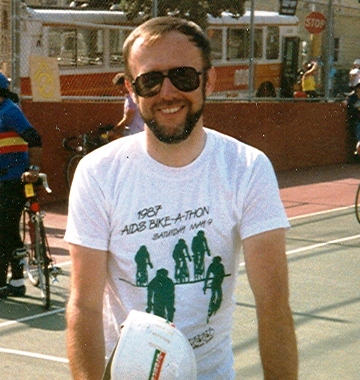
When I retired I took up cycling. I soon found myself training for a cross country trip. I learned very quickly at that time that it is a must to be able to fix whatever, change a flat tire, or put a chain back on track, or apply oil when needed, make adjustments when problems arise and you are in a remote place like the middle of the Mojave Desert.

The truth is I really enjoy fixing things. I feel quite creative when I succeed. Many years ago I took up furniture refinishing. I found it a very satisfying activity. Buying old furniture and putting it back together I find to be much more satisfying than assembling a new piece of furniture—the kind you buy on line and have delivered to your door by Fed-ex. Once you open the box (and you do need a special tool for that) you look at the myriad of parts, screw, fixtures that hold them together, scratch your head and decide you will be forced to look at the instructions.

A year ago or so driving by a house in our area we saw an old table at the curb not able to stand on its own, parts lying on the ground, covered in some awful kind of old black varnish and what looked like brown paint. A Tattered hand drawn sign hung crookedly saying “free, take me home. I once was beautiful.” It looked like it could be just the table we needed for our entry way. But it was in terrible condition. I said to Gill, “I can glue that table back together, refinish it, and we’ll love it!” I knew I could glue it because I had the right clamps left over from the old days. The clamps, unused, had moved with me many times over the years. I could now justify holding on to them for 2 decades. We did gather up the table and I did glue it together and refinish it and it is beautiful again—and useful. Very satisfying indeed!

I recently fixed some non-working, ancient door handles when I visited my daughter in Atlanta.

She and her partner had been keeping one door closed with duct tape for weeks—knowing I would be coming there for a visit soon. “Mom can fix it.”

Perhaps the women should have been the fix-it handy persons I could have emulated—but didn’t— as I was growing up. I say could have because the women of past generations did not engage in such activities. Maybe in the kitchen, but certainly not in the shop or the garage. Women were not supposed to get their hands dirty—not even in the garden. In addition to that women were not considered to be sufficiently strong or adept at such things as hammering, drilling, screwing, or working out mechanical puzzles.

Fortunately gender roles have become more relaxed since the late 20th century. My own ex husband was not at all rigid about gender roles. He thought nothing of cooking dinner while I chopped the wood for the fire. I know he was an exception. But why not share roles especially if you enjoy it and are good at it.

I’m not sure how young hetero couples are these days when dealing with gender roles. For those secure in their sexuality, probably they are relaxed and comfortable with sharing.

As for us couples in the gay and lesbian community, most of us probably more naturally fall into the roles we want and play the best. Or we do whatever is most expedient on a given day.

As for the DNA and any genetic disposition toward being handy in my family I can only conclude this is not a dominant gene. My daughters always have things they want me to fix when I visit. They always ask politely and know just the things I like to do and the limits of my ability. Also in their favor when they ask, they always add, “That is ONLY if you want to, Mom.” But they know I’m a sucker for it.

© 30 June 2015

About the Author

Betsy has been active in the GLBT community including PFLAG, the Denver women’s chorus, OLOC (Old Lesbians Organizing for Change). She has been retired from the Human Services field for about 15 years. Since her retirement, her major activities include tennis, camping, traveling, teaching skiing as a volunteer instructor with National Sports Center for the Disabled, and learning. Betsy came out as a lesbian after 25 years of marriage. She has a close relationship with her three children and enjoys spending time with her four grandchildren. Betsy says her greatest and most meaningful enjoyment comes from sharing her life with her partner of 25 years, Gillian Edwards.

Acceptance, by Ray S

Ever since I was old enough to reason, or maybe un-reason, my person has been split right down the middle. Picture an amorphous form waiting to take its shape of the character in this scene or act of the particular time in my life of this play. It is like going onstage when you hear your cue, sort of sink or swim, and you keep looking for direction and there isn’t any. Then a lot of directors appear, the play becomes complicated, and the form becomes an enigma.

In another scene there develops the discovery of the body and other like bodies. At this time it is taken for granted; no awareness of the condition except it is pleasurable and fun. (Boys will be boys.) It will be in another scene when labels appear—like pansy and sissy. “Queer” wasn’t a popular term at this time.

All the while the other side of this split enigma was craftily shaped into an acceptable heterosexual form. The deep seated need to fit in and be like everyone else took over and a fully, if not flawed, developed actor emerged on the stage. If there was any conflict burdening this act, it was sufficiently ignored so as to successfully convince this actor and his companions that he was a he. There never was an option if you had to play this role.

The big scene (known as chewing the scenery in theater talk) came when the subjugated enigma half rises in protest, and we see the two halves shouting at each other. The straight one screams, “I don’t want to be gay!” The gay half waits patiently through this anguished tantrum until his accomplice, Eros, rears his head.

All the while a play within a play has been unfolding. Everyone goes to college, everyone has a sweetheart—hetero that is. Every sweetheart finally secures an invitation to matrimony. The act and actors are quite convincing. It is all going well according to the traditional storyline, even to the advent of the securing or arrival of an heir and heiress.

Meanwhile Hetero and Homo carry on their secret conspiracy, and the act progresses. The final act or death scene arrives for the actor playing the role of the long-suffering wife.

According to tradition there is a play script for how to get into the sincere role and character of the bereaved.

If you look closely, the enigma halves have started to merge. Still, as a result of living a lifetime of the many roles this show has required, there remains a deep resentment from having had the guilt tacked on to the charade that this bit of theatre produced.

For a curtain call at the end of this drama, a person has emerged onstage to declare, “I am me.” I celebrate my gay place in its entire acceptance knowing that it is my life and not the lives of all those other characters I tried to fit into.

It has been a long, tedious story to relate, the play filled with regrets and joys, but the best result in this script is finally being able to be me. Like it or not!


 © 21 December 2015

About the Author

Scarves, by Gillian

I know those of you who’ve been in this group for some time are just tired of hearing me whinge about poor battered Britain in the years immediately after WW11. Well, too bad! It happens to be the environment I grew up in and so the time and place which generated many of my childhood memories and so my stories.

And here we go again!

In the U.K., children began (and still do begin) elementary school at the age of five, not six as we do here. So in 1947 I began the daily walk to and from the same little two-room school where my mother taught. That winter has gone down in history as one of the worst U.K.winters ever, with snow on the ground for over two months and bitter cold. I developed a bad cough and what appears in my memory as a constant cold, but then most kids were sick, as I’m sure were many adults. Most of our houses were cold and damp, without central heating – for which there would have been no fuel anyway – and few people had adequate clothing and food which were still severely rationed, as were most things until well into the 1950’s. Frequently, even if you had saved enough coupons, whatever you wanted was simply unavailable anyway.

My mother decided that to survive the bitter cold, we needed scarves. But we had no clothing coupons as my growing feet had gobbled them all up in a new pair of boots. So she would knit them. Now, I doubt that wool was actually rationed, but it was not to be had. If you had old knitted garments that were simply beyond further darning, you unravelled them and saved the worn and kinky wool for future use. My mother had a cardboard box, which probably should have been sacrificed, as just about everything had been, to the War Effort, always spoken of in capitals. Somehow this tatty old thing had survived and Mum used it for storing various balls of recycled wool. We took them out reverently, handling them like cut glass. The cats had been banished from the room lest they decide that wool is a perfect plaything. I recognized some scarlet wool which I knew came from an old sweater I had had when I was little, (I now considered myself quite grown. I had started school for goodness’ sake!) and which I had worn until it threatened to inhibit my breathing. Some very ratty gray wool I recalled came from out-at-heel socks of my dad’s. Where the rest of the bits and bobs came from I had no idea. It didn’t matter anyway, they were moving on!

Perhaps a more skilled needlewoman than my mother would have been able to knit patterns, or at least stripes, with all the different colors. But Mom’s skill level was, shall we say, elementary. Before the War, when there was material available, she used to teach basic knitting to the six-year-olds. It was always facecloths, knitted on big fat needles so they came out looking more like fishing nets for the Little People. I suspect it was invariably these easy square pieces more because of my mother’s limitations than that of the kids. But my dad and I both had faith she could do scarves. What is a scarf, after all, but an elongated facecloth? She just started out with one color, tied the last piece of it to the beginning of the next, and created quite an interesting hodgepodge of colors. But Mom’s knitting was always a bit erratic. She would start out tense, her stitches too tight. But soon she would be distracted by some entertainment on the radio and the stitches got looser and looser. Before long the scarf was taking on a somewhat rolling countenance, swelling and shrinking like ocean waves. Also, to be fair, the fact that the wool was of different thicknesses did nothing to add to the consistency of the stitches. So each scarf ended up with very wavy edges, and considerable variations in width and thickness. If I could only recreate them now, I’d think they would have a pretty good chance of becoming THE fashion accessory.

My father did have a scarf but was badly in need of a new one. His apparently dated from some time Before the War and he had worn it During the War but now, After the War, it was in rags and must not have offered much protection from the bitterly cold winds of that 1947 winter.

We didn’t talk of decades in those days. All of life was divided into three time periods, always spoken of in Capitals as was The War Effort. There was Before the War, During the War, and After the War, sometimes simply referred to as Now. Before the War was a wonderful place of endless sunny days, with peace and laughter; a land of relative abundance. During the War was the land of stoicism and heroics and carrying on and making do and tightening belts and stiff upper lips, and a lot of pride. But Now, After the War, was disillusion and resentment following rapidly on the heels of the euphoria of the long-awaited peace. What had it all been for? So many dead, even more homeless and everyone was broke. Rationing and shortages were even worse Now than they were During the War.

Mum also already had a scarf from Before the War, but it was flimsy and, though pretty, not made to provide warmth. Not only was it from Before the War, but it came from some mysterious place called The Twenties. Most of the things my mother had, seemed to have come from The Twenties. She never referred to it as The Nineteen-Twenties, so I had no idea that she was talking about a time. I envisioned The Twenties as being some huge department store loaded with wonderful things – even more exciting than Woolworth’s.

Now, three strangely serpentine scarves lay proudly stretched out on the table. My mother watched proudly, waiting for Dad and me to pick the one we wanted. Dad shook his head.

“By heck! This’ll be a decision.”

He gazed solemnly at me and offered a grave wink. I wanted to giggle but somehow knew I must not. Instead I entered whole-heartedly into the game. I gave a little girly squeal, which I have to say did not come naturally to me, and wriggled in excitement.

“That one! Can I have that one?”

Mum wound it around my neck, Dad and Mom each wore one and we looked appreciatively at ourselves.

“By heck!” said my dad again, “that’s just grand!”

I have often thought, looking back, how absurd the three of us must have looked when we were out together in those ridiculous scarves; like escapees from some Dr. Seuss book. But in those days, everyone wore strange combinations of mend-and-make-do clothes, and nobody thought much about it. The aim was warmth, after all, and that we got.

Success went completely to my mother’s head. A few days later found her once again studying what was left of differently colored little balls and scraps of wool, and various needles, then at my eternally red, raw, and chapped hands.

“Gloves,” she was saying rather doubtfully to herself. “We all need gloves.”

A fleeting look of panic crossed my father’s face, to be replaced instantly by a bland smile.

“Ay, that’d be grand.” He winked at me. “But mittens,” he added, “they’d be warmer.”

“Ooh yes, mittens! Mittens!” I echoed, though I’m not sure I knew what mittens were. But I knew what gloves were, with all those fingers sticking out of them and, young as I was, I knew, as my dad did, that Mum’s knitting was not up to gloves.

“Yes,” she agreed with great relief. “Mittens. Mittens are much warmer.”

My dad was away for the next two weeks. He was an engineer, and deemed too valuable by the powers that be to be allowed to volunteer as canon fodder. Instead he worked at a huge factory a long way, at least for those days, away from home. To get to work he had to take two buses, then a train, then another bus, then walk two miles. He also worked very long very erratic hours, and so stayed in a rooming house near the factory for several days and sometimes weeks. Whatever they made at this distant factory was classified as Top Secret, another phrase which was always capitalized, so Dad never, in his whole life, talked about it. The question, what did you do in The War, Daddy? went unanswered for many a child as so many adults lived in terror of contravening the Official Secrets Act (in capitals) by saying too much, and disappearing into some distant dark dungeon. My dad did say, in some unguarded moment, that if the most exciting thing you did throughout the war was wash milk bottles, they’d find some way of sweeping it in under the Official Secrets Act.

When my father returned home this time, he was greeted by three pairs of mittens, all more or less identical except for size. The colors of all were the same random multi-colored blotches as the scarves and, on closer inspection, the shapes were not so different from the scarves. After all, with a little imagination, mittens are little more than short scarves folded over across the middle, the sides sewn up, and elastic threaded around near the open end to fit them to your wrist. But wait! What about the thumb? I had watched in fascination as poor Mum tried to knit the thumb part but could not seem to get the hang of it. After many failed attempts, she fell back on her old favorite, the elongated square. She knit what was in fact a very tiny scarf, folded it over as in making mittens, and sewed up both sides. Then, having left an opening when closing up the side of the mitten, she stitched the end open of the tiny mitten to the opening in the side of the big mitten and, voila! a mitten complete with thumb. Though in fact they looked, lying flat on the table, like nothing more than the old knitted facecloth with a miniature facecloth attached.

“Ay, that’s just grand!” Dad slid his hands into his and held his hands up, waggling his fingers open and closed. I learned later that they were way too big and would have fallen off if he had not held up his hands, and the little thumbs, as I also discovered about mine, were way too short and not quite in the right place. Who cared? They were warm! I simply tucked by thumb into my palm where it stayed nice and cozy, and ignored the little thumb addition. I must say, though, it gave me a better understanding of why hominids didn’t get far with the use of tools until they developed opposable thumbs!

Again, in hindsight, I marvel at the vision of this engineer, too valuable to be allowed to fight, turning up at this huge, Top Secret, factory, in those wildly colored, sadly misshapen mittens.

Especially in combo with the equally wildly colored and misshapen scarf, it conjures up quite a picture. And in a time and place where men rarely wore anything other than dark, conservative, clothes! But, to be honest, it wouldn’t surprise me if Dad didn’t wear them once away from home, though he always wore them when he left and when he returned. What makes me suspect this is that I caught him out in another way. I went to where he was planting potatoes in the garden, to tell him tea was ready. He started for the house and then stopped. Pulling the mittens from his jacket pockets he winked at me.

“Mustn’t go in without my handbags,” and he slid them on. And always after that I noticed him popping them on before returning indoors.

Oh, and I was so delighted with that term. Handbags. Hand bags. It described them perfectly. Bags to put your hands in! For many years after that, when Mom mentioned her handbag – it was never called a purse in Britain – I would giggle and my dad would wink solemnly, which only made me giggle more. My father said much much more to me with his wonderful winks than he ever did in words

I know this is where I’m expected to say how much I loved those mittens and that scarf, and carried them everywhere with me like Linus with his blanket. Sorry! Not so. I was ever grateful for the added warmth, but they … what is the word? To say they frightened me is way too much.

But perhaps they did make me a little uneasy. They had something of living creatures about them as they constantly changed shape. The bigger gaps in the relaxed stitching snagged too easily on things; particularly on little fingers. There was an occasional dropped stitch in there too, increasing the problem. The wool was old, some of it several times recycled and so, brittle and thin. It broke here and there, causing further unraveling, as did the slow mysterious undoing of my mothers knots. I seemed eerily to me as if they were slowly but steadily unknitting themselves, some future day to disappear, returning to little variously colored balls of yarn.

After clothing rationing finally ended, after fourteen years, in 1954, we had the luxury of store-bought gloves and scarves and my mother was relieved of the challenges of knitting. But for sure nothing ever again had such character. Nor did any clothes ever again represent so much love and laughter. My mother taught me that for those you love, you do what you must the best you can. And that is all any of us can do. And my father taught me to see the humor in just about anything, and to be ever solicitous of the feelings of others.

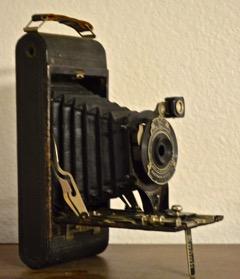
I searched through my old photos after I wrote this, hoping to do a show and tell of those mittens and scarves. No luck. Then of course it dawned on me. Mom did have an old camera which came, of course, from The Twenties, but even if it had still worked there would have been no film available over many years.

And that reminds me of one of my dad’s favorite expressions. It’s not original, it was a common saying used by many at the time. It’s also probably the longest sentence my father ever spoke.

“If we had any eggs, we could have bacon and eggs, if we had any bacon.”

© March 2015

About the Author

I was born and raised in England. After graduation from college there, I moved to the U.S. and, having discovered Colorado, never left. I have lived in the Denver-Boulder area since 1965, working for 30 years at IBM. I married, raised four stepchildren, then got divorced after finally, in my forties, accepting myself as a lesbian. I have now been with my wonderful partner Betsy for 25 years.

The Art of Crafting, by Betsy

As a youngster in school or Girl Scout meetings, arts and crafts was always one of my favorite activities. I am very grateful for the time spent making things because I still enjoy making things. So when I started thinking about todays topic, I naturally pondered the question what is the difference between an art and a craft.

I decided that art is a creation of the imagination, a craft is the result of making something by hand which is a copy or an impression or a depiction of something else. Further investigation reveals that the word craft comes from an old English then German word originally meaning strength then later, skill. Skill is the key word here when it comes to the word origin. However, the meaning for me is broader inasmuch as I have crafted many an item without the application of an ounce of skill. At least so it would seem.

In my dotage I have taken up the craft of counted cross stitch. My friend Carlos has shown some beautiful examples of his work. The two main skills required for this craft are patience and good eye sight. Also being systematic about transferring the pattern from a paper to the cloth is essential.

Is this art? Technically, in my opinion it is not. I may be creating a piece based on a painting or an artist’s rendition of an object or a scene. It is imagination that produces the image upon which my craft is based. That’s the work of art. Designing the cross stitch pattern and then stitching it is the craft. Does it matter to me which it is called? No. Call it art, call it a craft, I really don’t care. I enjoy doing it. Another of it’s assets is that it’s a great filler activity very useful when watching sports on TV, when waiting for commercials to end, or when watching something entertaining which doesn’t require a lot of concentration (which is most of television, by the way.) Other times when it is a useful activity are when waiting or when one can’t sleep.

A few years ago in our travels to the National Parks, I noticed in the gift shops, cross-stitch kits of scenes from whatever park we were visiting. So I bought that first kit that I found, and have been buying them and completing them since. So far I have Monument Valley, Zion NP, Rocky Mountain NP, and I am currently working on Arches NP. I think it will be another year or maybe two before I finish Arches as it is quite large; that is, if I work on it regularly.

My last visit to a National Park was about a month ago when we spent a day at Denali NP in Alaska, home of Mt. McKinley now called Mt. Denali. I found no craft kits in their gift shop, but later in Anchorage I came upon a craft shop that had cross-stitch patterns for typical Alaskan flowers and animals. As a result of going into that shop I have now, I think, four or five cross-stitch projects waiting to be started. Considering that some projects can take two, three, or even four years to complete, I realize I better get on with it. So many projects, so little time.

By the way, I also knit baby blankets, so if any of you are expecting to be expecting in the near future, let me know early on (before you are showing) so I can get started on a baby blanket.

Ahh! So many projects, so little time.

© 2014


About the Author

Betsy has been active in the GLBT community including PFLAG, the Denver women’s chorus, OLOC (Old Lesbians Organizing for Change). She has been retired from the Human Services field for about 15 years. Since her retirement, her major activities include tennis, camping, traveling, teaching skiing as a volunteer instructor with National Sports Center for the Disabled, and learning. Betsy came out as a lesbian after 25 years of marriage. She has a close relationship with her three children and enjoys spending time with her four grandchildren. Betsy says her greatest and most meaningful enjoyment comes from sharing her life with her partner of 25 years, Gillian Edwards.

Close but No Cigar, by Will Stanton

“A miss is as good as a mile” is another hackneyed expression equivalent to “Close but no cigar.” Sometimes winning just is a matter of sheer dumb luck.

I suppose that it’s human nature often to dwell upon bad luck at the expense of thinking of one’s good luck. We might call that the “Charlie Brown syndrome,” that is, “If I didn’t have bad luck I wouldn’t have any luck at all.” Which reminds me of Charlie being told, “Sometimes you win, sometimes you lose, and sometimes you are rained out,” along with Charlie’s response, “You mean that people sometimes win?”

Years ago when I still hoped that I had better luck than exists in reality, I occasionally used to play the lotto. I did not choose quick-picks. Instead, I had a series of favorite numbers that I always used.

Then one day, I went to the Seven-Eleven for a lotto ticket. To this day, I do not know why, at the last moment, I changed my mind and chose differently how to play. I spontaneously selected three tickets rather than just one, and, having not won with my favorite numbers before, distributed those numbers among the three tickets.

Yes, what you are thinking came true. All my favorite numbers came up on just one winning ticket. I did not win. To “rub salt into my wound,” it turns out that, a young college woman in Boulder, not choosing her numbers herself but, instead, using a simple quick-pick, won – – -with MY numbers! She had gone to a Seven-Eleven to pick up some ready-made frosting for her boyfriend’s birthday cake; and, at the last moment, decided to buy a quick-pick.

How much was the winning amount? Eleven million dollars! I never have forgotten that, especially because, since then, my not possessing entrepreneurial acumen, I have ended up being white-collar poor. How much simpler my life would have been all these years had I not missed winning that lotto loot. I almost chose the right numbers but lost because I changed my mind. I came close to winning, but close doesn’t cut it. Close but no cigar.

© 23 August 2015

About the Author

I have had a life-long fascination with people and their life stories. I also realize that, although my own life has not brought me particular fame or fortune, I too have had some noteworthy experiences and, at times, unusual ones. Since I joined this Story Time group, I have derived pleasure and satisfaction participating in the group. I do put some thought and effort into my stories, and I hope that you find them interesting.

Over the River and through the Woods, by Ricky

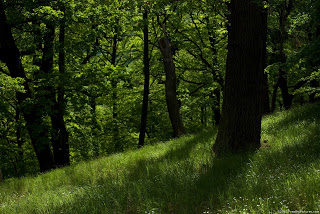
In my case, the title should be Through the Woods and Over the River. In the 1960’s no one advised me about anything not related to schoolwork. Therefore, I remained confused about my personal, physical, and mental development. I did not even know that my emotional development was deficient. I was naïve about such things and could not see my orientation because “the trees were blocking my view of the forest.”

Metaphorically speaking, I lived my life in the “woods” until the trees began to “thin out” in 1982.

I finally made it through the woods and out into the open during the summer of 2010 when I finally reviewed all the trail signs together and arrived at the conclusion that I am on the correct trail. However, I faced another obstacle – should I cross the river in front of me or remain near the woods for safety.

For the vast majority of my life, I was in denial and did not believe the signs often posted along the trail I was walking. After I accepted that the signs were correct, I pondered for several months if I even wanted to cross that wide and foreboding river.

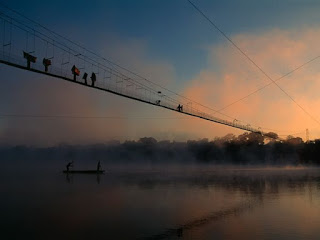
Eventually, I did cross it when I told the members of my therapy group; I am out of the woods and now across the river. Strangely, when I looked back after that meeting, the “mighty” river appeared to be nothing more than a small creek easily walked over.

All the time I spent fearing the crossing equaled time wasted. My fears were real enough but in my case, groundless and now I am healing mentally and emotionally.

I know others will have similar experiences with woods and rivers just as I know some others will have vastly different experiences. In life, a person will face many rivers that need crossing and perhaps there will be many woods or even forests to pass through.

Different trails have varying opportunities for growth, experiences, development, satisfaction, self-awareness, and offer different or strange woods, and rivers. The trick is to select a trail that matches one’s personality, abilities, understanding of the terrain ahead, dedication, preparation, and skills, or the journey may not be very enjoyable.

I hope everyone’s journey is successful and a reasonably pleasant stroll compared to a difficult, stress filled, and dangerous climb, or with river crossings filled with turbulent rapids and packed with piranha.

© 25 June 2012

About the Author

I was born in June of 1948 in Los Angeles, living first in Lawndale and then in Redondo Beach. Just prior to turning 8 years old in 1956, I began living with my grandparents on their farm in Isanti County, Minnesota for two years during which time my parents divorced.

When united with my mother and stepfather two years later in 1958, I lived first at Emerald Bay and then at South Lake Tahoe, California, graduating from South Tahoe High School in 1966. After three tours of duty with the Air Force, I moved to Denver, Colorado where I lived with my wife and four children until her passing away from complications of breast cancer four days after the 9-11 terrorist attack.

I came out as a gay man in the summer of 2010. I find writing these memories to be therapeutic.

My story blog is TheTahoeBoy.Blogspot.com

Mom and Her Mom and I, by Phillip Hoyle

Just what are we to think about boys who seem as much girl as boy? I once heard a psychiatrist analyze how Freud’s laying the blame on the parents for the inability of some males to resolve the Oedipus-related developmental challenge in early childhood moved responsibility away from the homosexual child. Freud’s analysis thus called for improvements in therapy for homosexual men. That sounded nice, but then the psychiatrist I was listening to laid more blame upon the doting mother and less on the emotionally absent father. Moms! Poor moms!

I tend not to be Freudian or neo-Freudian, but I am always interested in how domestic upbringing influences any child and particularly with regard to his or her sexual needs and attitudes. So I am curious about how my parents coped with and responded to challenges of rearing me, a skinny boy whose interest in girl things was rather plain to see, whose penchant for the artistic persistent, and whose lack of physical coordination or upper body strength kept him out of sports. So I want to tell three short stories that somewhat address the theme of “Mom” but also keep me wondering.

I

One Christmas my mom’s mom gave me a baby doll as a gift. I named him Andy probably following the lead from the only boy doll I had ever hear of, Raggedy Andy brother, I assumed, of Raggedy Ann. My boy baby doll came with clothing my grandmother had made. I recall a plaid shirt and denim-like slacks. He was one of those babies made of rubber and if you worked hard enough you could pull off its arms and legs and even its head. Then if you worked even harder, you could reassemble the little thing. It was approximately nine inches tall.

Andy looked just like my sisters’ baby dolls except that he had brown skin and black hair whereas theirs had pinkish skin and blond or light brown hair—not wigs, simply hair stamped into the rubber and lightly painted. I don’t recall if the eyes were inserted or painted (probably the latter since I remember them as being black) but I do recall they didn’t open and close like my sisters’ fancier Terri and Terri Lee dolls.

I sometimes wonder what Grandma and Mom were thinking. I never thought to ask either of them. They were very bright women, both educators. Surely they had talked about the present before it showed up under the Christmas tree. I’m sure they had noticed I played with my sisters’ dolls. Perhaps they thought I ought to have a boy doll so I would somehow know I was a boy? I’m sure there was some application of logic in their decision to give me that boy doll years before Barbie and Ken appeared under anyone’s Christmas tree.

I played with Andy but have no recollection when I got him, how long I had him, or when I left off playing with him. I don’t know whatever happened to the doll. Perhaps he was adopted by a nice Black family. I don’t even know if Andy was actually a boy doll or if he was simply dressed as one. I was intrigued that Grandma had made his clothes designing, cutting, and sewing them herself just like she did for my older sisters’ dolls. I don’t know if Andy’s shirt buttoned on the girl side or the boy side, but I am pretty sure there were no boy baby doll clothes to purchase from any store in our town.

II

When Mom was a child, she was taught to sew by her mom. I loved to see mom at work using her portable Singer sewing machine at the kitchen table. I loved even more Grandma’s Singer in its oak console, iron frame, and a treadle that we kids sometimes got to pump. When I was fifteen and we moved into a larger house, Mom got her own Singer in a console that sat in the utility room. It was powered by electricity with a foot control that reminded me of a small automobile accelerator. Grandma came to see us, and I asked her to help me make leggings for one of my Indian outfits. She did it and in the process taught me to cut, sew, hem, and more. I liked sewing and bought cloth and a pattern for a war shirt and a vest. Later I sewed a Cheyenne style dress for my next younger sister and decorated it with imitation elk teeth. When I had questions about sewing, I asked Mom to help me. Somehow playing Indian allowed me to do even more girl things. I never once heard a word of disparagement or caution from my mom or my grandma. I’m pretty sure I didn’t talk at school about sewing!

III

When I was an adult, Grandma told me a story about my childhood. She had been worried about me growing up around all those sisters, but she said she quit worrying one day while she was taking care of us. I had come into the kitchen where she was working. She claimed that by the time I had walked through the house I had all four of my sisters crying. I am not sure I like the story’s idea of what makes for a real man, but it does indicate that in her eyes I had enough ego strength or whatever was necessary to carry on with my life—queer or otherwise. She quit worrying.

I’m happy for her, pleased with my own life, happy I know how to sew; but still I wonder.

Denver, 2013

About the Author

Phillip Hoyle lives in Denver and spends his time writing, painting, and socializing. In general he keeps busy with groups of writers and artists. Following thirty-two years in church work and fifteen in a therapeutic massage practice, he now focuses on creating beauty. He volunteers at The Center leading the SAGE program “Telling Your Story.”

He also blogs at artandmorebyphilhoyle.blogspot

My Favorite Holiday, by Nicholas

Every year about this time when the days get cold and the nights longer, I wake up one morning, stretch my arms wide open, and say to the world: Let the eating begin!

The Olympics of Food is about to start. Never mind the big torch, light the ovens. Watch the parade of dishes fill the tables. All those colorful displays of food you never see any other time of the year—and thank god for that. I mean you could eat cherries in brandy anytime but, for me, it’s only at Christmas that it fits.

There will be medals for best nibbles, best entrée, best salad, best sweet potato, best cookies, best pies, best favorite whatever, most outlandish French pastry that looks like something you’d never consider eating, best wine before dinner, best wine with dinner, best wine after dinner, best wine anytime, best egg nog with rum, best egg nog with brandy, best brandy never mind the nog, and the list goes on. Instead of the 12 days of Christmas, somebody should write a song about the 75,000 calories and the 100 or so meals of Christmas/Hannukah/Kwanzaa/Solstice. Thanksgiving is really just the warm up, the first course, you might say, in a month long binge of eating. And I love it.

Alright, I exaggerate. Not every morsel I consume in December is an elaborate culinary production. And not everything to do with “The Holidays” has to do with food. But the food is the key part. You go to work this month and you eat. You go to parties and you eat. You have friends over and you eat. You decorate the tree and you eat. You open presents and you eat. Maybe it’s the fright of winter. It’s cold and dark, we’d better stock up, gird our loins, put on protective layers of fat, nourish ourselves for the coming bleak days. We could end up starving as the winds of winter howl. This really is a time of primal urges.

For me, these holidays are the antidote for darkness. I hate the short days, the early nights. I love the lights and the decorations, the busy bustling about, the gift giving, the visiting, the sharing of special traditional foods. I love the sense that for this one month normal rules don’t apply. It’s a month of light and sharing, sharing around the table.

I guess that all stems from the fact that food was a central part of everything in my family as I grew up. Mom loved to bake and made special Christmas cookies that I loved as a kid and still do. But now instead of sneaking around searching out her hiding places for these treats and secretly eating a cookie or two, I use her recipes to make my own. And I get pretty close to mom’s triumphs. Of course, it’s hard to screw up any combination of sugar, butter, nuts and chocolate. And I still hide them from myself and still sneakily snitch one before company gets them.

Jamie and I have also established some of our own Christmas traditions like decorating the house with lights and garlands, filling the house with friends and—it always gets back to food—sharing a Christmas Eve dinner of prime rib and all the trimmings, maybe even some French pastry.

Christmas, they say, is really about anticipation and the birth of new life. It’s about nourishment. It’s a time to be with people and shake off the darkness while looking forward to when the days will lengthen. The dark of December is, after all, always followed by the brightness of January’s new year. Break out the champagne!

© 20 Nov 2011

About the Author

Nicholas grew up in Cleveland, then grew up in San Francisco, and is now growing up in Denver. He retired from work with non-profits in 2009 and now bicycles, gardens, cooks, does yoga, writes stories, and loves to go out for coffee.

The No-Fault Line, by Gillian

Fault,
with it’s many meanings, is not a positive word. It’s not my fault! It’s all
your fault, or The Government’s fault, or my teacher’s fault. Electrical faults
can cause plane crashes, brownouts and blackouts. The cry of fault on
the tennis court means failure; a missing of the mark. We find fault with other
people, and occasionally admit to our own. We fault others for their errors and
disclaim responsibilities by proclaiming not to be at fault. And these days we
even must have no-fault car insurance. But there are of course the biggest, baddest
faults, those gashes in the bedrock which suddenly, or sometimes not so
suddenly, jerk into violent movement causing earthquakes and occasionally
tsunamis, and the deaths of many hundreds of thousands of people.
I have a major
fault in me. Within me. Ok Ok, I’ve got lots of them, I’m full of failings and
faults, but I’m talking of a geologic type of fissure; my very being torn
asunder. At a very young age, I couldn’t say when, social pressure started to
build up stress on the fault line between a straight me and a gay me – my
Straight Shale and my Lesbian Limestone. The building stresses finally caused
the fault to give way, allowing the Straight Shale to be forced up and over
that Lesbian Limestone. It got buried. It disappeared. But of course it was
still there, as are all things invisible beneath the surface of the earth or of
our psyches.
Shale is not a good
foundation rock. It cracks and breaks and splits and crumbles. It slips and slides.
With these qualities, it tends to weather and erode away quite rapidly. And my
Straight Shale layer was pretty thin to begin with! After forty years or so –
happily it was eroding at human speed not that creep of geologic time – it was
all but gone.
The fault line was
exposed at the surface. And on the other side of it, a mere step away, lay a
vast stretch of Lesbian limestone, glittering in the sunshine. I pulled my feet
free of that cloying clinging Straight Shale mud and stepped across the fault
onto that wide open, welcoming, slab of Lesbian Limestone. Only I prefer to
think of that line as a no-fault line. It’s not my fault, it’s not my parents’
fault and it’s not a fault at all.
Crossing that line
is, to paraphrase Neil Armstrong, but a small, simple, step, for man or woman.  But perhaps, just maybe, as endless numbers
of people continue to cross it, it will become, in terms of acceptance and
understanding, a giant leap for mankind.
© 20 Apr 2015 
About the Author 
I
was born and raised in England. After graduation from college there, I moved to
the U.S. and, having discovered Colorado, never left. I have lived in the
Denver-Boulder area since 1965, working for 30 years at IBM. I married, raised
four stepchildren, then got divorced after finally, in my forties, accepting
myself as a lesbian. I have now been with my wonderful partner Betsy for 28
years.

Left and Right, by Will Stanton

When I first prepared this
piece, I read it to two acquaintances. 
One is a retired accounting teacher, the other is a successful, wealthy
oil-and-gas land-man.  Neither one understood
it.  They had absolutely no idea what I
was talking about.
What I wrote is satire.  It portrays a type of ignorant, irrational,
intolerant individuals which often is typical of extreme right-wing,
religiosity-minded people.  Many such
extremists, for example, reportedly never understood that Steven Colbert merely
portrayed an unthinking right-winger as satire; they really were happy to think
that he was a rabid conservative.  As
with all satire, my piece also expresses my dismay and mystification that so
terribly many people display mindless hate. 
In doing so, it also expresses my own wish that such intolerance did not
exist.  So, here goes.
Letter to the Editor, The
Denver Post, from Mrs. Winifred Hash.
Headline: Our Society is Going
to Hell in a Hand-basket.
I am outraged, disgusted!  I could just throw up.  While I was in church this morning, Mrs.
Hogsbreath revealed that her little girl Suzy’s teacher this year is
left-handed.  I am horrified.  How in God’s name could any school let a
left-handed person into the school to teach innocent children?
Everybody knows that
left-handed people are evil.  After all,
the word “sinister” can mean “left.” 
That’s why Godless Liberals are called “The Left.”
The principle and
superintendent should be fired.  They are
just as guilty as those left-handed perverts. 
Once they sneak into our schools, they promote their left-handed agenda,
trying to convert our little boys and girls into being left-handed.
I’ve heard those so-called
scientists spouting their claims on TV that some people are born left-handed.  I just know that’s not true.  I asked Reverend Spittle, and he said that’s
a lie – a damned lie, and only those adulterous, Hollywood actors and Commie’s
in Congress believe it.  I should have
known I’d hear only lies on Liberal-controlled media.  From now on, I’ll stick with Fox where I can
hear the truth.
Being left-handed is a
down-right choice, and these repulsive people choose to engage in left-handedness,
engaging in disgusting practices and flaunting their abnormality on TV; and, if
you actually can believe this, I’ve seen them in parades!  My good friend Mrs. Offal said that the
church runs a restorative therapy clinic to cure youngsters, who were led
astray, back to normality.  She had to
send her teenage son Billy there.  They
are praying away his sin.
After church, my husband Al
and I had dinner at our good friend’s Joe and Agnes Hollowhead.  Joe was just as outraged as Al and me.  He said that we need to stop that left-handed
plague right now, that we need to round up all those perverts and lock them all
up in some big pen in the middle of the dessert, away from good, God-fearing
Americans.
I know that a lot of people
feel the way the Hollowheads and us feel, and it is time we do something about
it.  Maybe my letter will help wake people
up and stop God’s country from going to Hell in a hand-basket.
Yours truly,
Mrs. Winifred Hash 
© 09 August 2015 
  
About
the Author
 
I have had a life-long fascination with
people and their life stories.  I also
realize that, although my own life has not brought me particular fame or
fortune, I too have had some noteworthy experiences and, at times, unusual
ones.  Since I joined this Story Time
group, I have derived pleasure and satisfaction participating in the group.  I do put some thought and effort into my
stories, and I hope that you find them interesting.