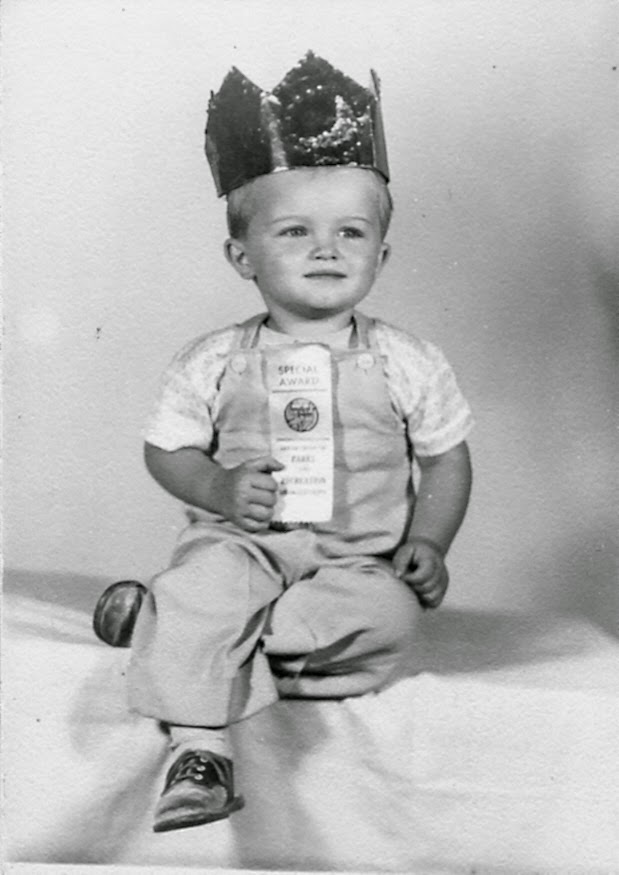
Hands, by Ricky

This story and memories are about hands, specifically my hands, although the hands of others may be mentioned. My hands are versatile; they work as a team or as individuals. They usually do good work but sometimes they shirk working altogether.

My hands like to do different tasks. One likes to write and brush my teeth. The other one likes to bowl, throw balls, and take the lead in batting a baseball. One pushes buttons and wipes both windows and my butt. One feeds me while the other helps and then loads the dishwasher. The first holds my rifle while the second squeezes the trigger. One likes to give me pleasure while the other usually watches, joining in on rare occasions. One operates my cell phone while the other holds it steady. Both make a great team using a keyboard and communicating using various non-verbal signs. They coordinate holding books and turning pages so I can read stories. They both chip in to sort clothes for the laundry and then to fold and hang them up later.

When I was a baby they both tasted good, even sweet like candy. At bath-time, they were my toys and servants, washing me at my command. As I grew my toys changed and my hands acquired new skills. They collaborated with my legs and feet and I was able to ride a tricycle and later, bicycles. They learned how to fly a kite and to operate lawn mowers. Still later, they would allow me to drive automobiles.

My hands would often do things that got them dirty, and then they wash each other to remove the dirt and grime. When I was younger, they liked to play in the snow but don’t enjoy it very much now.

My hands traveled far and wide. They have been to Disneyland, Disney World, Euro Disney, Knott’s Berry Farm, Shasta Dam, Hoover Dam, the Golden Gate Bridge, Trees of Mystery, Crescent City, Grand Coulee Dam, Portland,

Vancouver, Seattle, Boy Scout World Jamboree, BSA Camps Winton and Harvey West, British Columbia, Alberta, Niagara Falls, Times Square, France, Germany, Moscow, Voronezh, Saint Petersburg, Tampa, New Orleans, San Antonio, Tucson, Sea World, the Eiffel Tower, Bitter Root Valley, Hot Springs Arkansas, both Titan and Minuteman missile silos, Pierre, straddled flag pole peak while holding on to the flag pole, and their favorite—piloting the Skipalong on Lake Tahoe.

Yet for all of this travel my hands are just two of many and are not particularly noteworthy like some others. Hansel is famous for getting lost. Handel is famous for composing music. Hans Christian Anderson is famous for writing stories for children. Hans Conried is a famous actor. Hans Zimmer is a composer. Hans Albert is a philosopher.

There are many hands. Black hands, white hands, Oriental hands, Polynesian hands, brown hands, straight hands, LGBT hands, and perhaps others, but they all have one thing in common. They are all attached to people who want to live a happy life and provide a happy life for their descendants.

The song says in part, “He’s got the whole world in his hands. …” Isn’t it about time all of us humans settle down and live peaceably together—before He uses His hands to slap us silly?

© 28 June 2015

About the Author

I was born in June of 1948 in Los Angeles, living first in Lawndale and then in Redondo Beach. Just prior to turning 8 years old in 1956, I began living with my grandparents on their farm in Isanti County, Minnesota for two years during which time my parents divorced.

When united with my mother and stepfather two years later in 1958, I lived first at Emerald Bay and then at South Lake Tahoe, California, graduating from South Tahoe High School in 1966. After three tours of duty with the Air Force, I moved to Denver, Colorado where I lived with my wife and four children until her passing away from complications of breast cancer four days after the 9-11 terrorist attack.

I came out as a gay man in the summer of 2010. I find writing these memories to be therapeutic.

My story blog is TheTahoeBoy.Blogspot.com

Scarves, by Phillip Hoyle

I started wearing scarves when I lived in New Mexico. The mild winters there when compared with the previous nine seasons of harsh weather in mid-Missouri made it possible for me to wear a jacket, scarf, and gloves and be plenty warm most of the time. I liked the light-weight effect. Of course, keeping track of scarves presented a new challenge to me. I lost several when upon leaving coffee shops I failed to put them around my neck.

Actually scarves and their care were the least of my complications in those days. I started doing quite a few different things during my Albuquerque mid-forties years and now realize that in addition to a change of scenery and culture, the exit of our children from the home had a lot to do with my adaptations. For the first time in my adult life I had freedoms I had longed for but had never exercised. It seemed like the challenges of my homosexuality were not going to be overlooked. Wearing scarves was the least among my new behaviors although not unimportant.

Looking back on it all I can say that scarves significantly symbolized a feminizing of my life, a simple step of my living into my girlishness fostered by being reared with four girls and by my personality that I now identify as gay, or at least as the gay part of it. I wasn’t at all surprised. I had long wondered how I got through childhood and youth without being beat up for being a sissy, a weakling, too girlish, somehow not a man. I wondered but thought happily about my enduring good luck. And then, in my middle-age-moving-toward-old-age, I could flip a scarf around my neck without a care. For me, scarves were a bit like umbrellas, things most men I knew had no truck with. Still, I had learned to use umbrellas in Missouri where it often rains, and then in arid and mild Albuquerque I sported scarves.

In my well-compartmentalized life I had already known scarves, actually worn them. They were present in our house due to having two older sisters who sometimes wore them when the bop was popular, poodle skirts and saddle oxfords reigned on the dance floor, and scarves in complementary colors were worn around the neck. Now I couldn’t wear them to school dances, but I did wear them when dancing at powwows. They were a standard part of my straight dance costume with its roach headdress, old fashioned bustle, beaded and mirror rosettes, trailers, apron, sheepskin anklets, bells, and moccasins. I preferred dark blue scarves and wore them in this other cultural compartment of my life. But when I left home for college, I left those costumes packed away in two suitcases and a few boxes wondering if I’d ever wear them again. They were stowed along with memories of childhood sex with boys, a nine-month affair with another teen, my love for doing artwork, and the like.

By the time I got to Denver a few years after leaving Albuquerque, I was wearing scarves almost every winter day. I also learned to pull a scarf into my sleeve so I wouldn’t have to remember it when donning my jacket. I now prefer plaid scarves although they often clash with my plaid shirts. I have even encouraged my partner to wear scarves and have noticed now he wants to tie them in a more girlish fashion like some kind of off duty drag queen! Oh, did that just slip out? Well, you can see that I have learned a lot but probably have a lot more to learn about myself. I wonder what else I may discover in those old suitcases of lost dreams.

Denver, ©23 March 2014

Grief, by Pat Gourley

“By meditating on death, we paradoxically become conscious of life”.
Stephen Batchelor – from Buddhism Without Beliefs. 1997

This is one of those Story Telling Topics that really brings home to me what a lazy undisciplined writer I am. My life certainly dating from the death of my father in August of 1980 up until my most recent shift in Urgent Care, which was yesterday, has been chock-full of experience after experience of life’s impermanence and the personal grief that causes. I should be writing at least several chapters on grief if I were ever to get off my ass and write a memoir. The reality though is that the topic of Grief is going to get less than a thousand words as usual.

If I were in a really self-indulgent mood I suppose I could conjure up reams on grief around my own HIV infection and that of many, many friends and clients and their suffering and too often deaths over the past 35 years. An issue of self-exploration here for me would perhaps be how much of my own grief over the decades has really just been self-indulgent wallowing in the pool of “poor pitiful me”. How unfair that I am “forced” to face my own mortality every day when I swallow my HIV meds. And even worse how come I have witnessed so much suffering and death of others? I really need to watch this tendency in myself carefully and continually realize that no one gets out alive and many through the ages up until this minute have it so much worse than I do or ever will.

Nevertheless, that all said let me delve self-indulgently just a bit into my own grief issues, as they seem to come into focus for me especially this time of year. Yesterday was the 20th anniversary of Jerry Garcia’s death. The Grateful Dead were an integral part my life for decades. During the darkest years of the AIDS epidemic, from the late 1980’s until 1995 when I was not only looking down the barrel of my own infection I was also the nursing manger in the AIDS clinic at Denver Health and living with the love of my life who was dying in front of me. The music of the Grateful Dead was a great solace in those years and remains so today actually. I was at the last two shows Garcia and the Dead performed at Soldier’s Field in Chicago July. 1995.

Those shows were not particularly memorable at the time in large part because Garcia was not well but it never occurred to me that he would be gone himself in a few short weeks. The memory of hearing the news of his death on August 9th, 1995 is indelibly etched in my mind but not for the reason you may think.

Minutes after the news exploded across the world of Garcia’s death of a heart attack in a rehab center in Marin County my life partner David Woodyard, who was battling several major HIIV related issues of his own at the time, was on the phone deeply concerned about me and how I was taking the news.

This was and still is for me the real lesson on how to handle the feeling of grief in my own life. I need to always take a moment or several no matter what the circumstances and look around, outside my own little puddle and attempt to be “conscious of life’ and what an amazing trip it is to get to experience that at all, even when filled with grief.

David was teaching me that lesson right up until his own death five weeks later at 9 AM on September 17th, 1995. That was when my own real grieving began in earnest with no Grateful Dead song able to console me. Not even the beautiful lyrics of Brokedown Palace, which we played at his memorial.

Fare you well my honey
Fare you well my only true one
All the birds that were singing
Have flown except you alone

Going to leave this broke-down palace
On my hands and my knees I will roll roll roll
Make myself a bed by the waterside
In my time, in my time, I will roll roll roll
In a bed, in a bed


By the waterside I will lay my head
Listen to the river sing sweet songs
To rock my soul
River gonna take me

Sing me sweet and sleepy
All the way back home

It’s a far-gone lullaby
Sung many years ago
Mama, Mama, many worlds I’ve come
Since I first left home


Going home, going home
By the waterside I will rest my bones
Listen to the river sing sweet songs
To rock my soul

Going to plant a weeping willow
On the banks green edge it will grow grow grow
Sing a lullaby beside the water


Lovers come and go, the river roll roll roll
Fare you well, fare you well
I love you more than words can tell
Listen to the river sing sweet songs

To rock my soul

Songwriters: GARCIA, JERRY / HUNTER, ROBERT

Brokedown Palace lyrics © Warner/Chappell Music, Inc., Universal Music Publishing Group

© August 2015

About the Author

I was born in La Porte, Indiana in 1949, raised on a farm and schooled by Holy Cross nuns. The bulk of my adult life, some 40 plus years, was spent in Denver, Colorado as a nurse, gardener and gay/AIDS activist. I have currently returned to Denver after an extended sabbatical in San Francisco, California.

Extreme Sport, by Lewis

Let me begin by saying that my idea of “extreme sport” is playing tag football with the tag tucked into the front of one’s britches rather than the rear–it makes for more of a thrill for both the offense and defense. Beyond that, it seems to me that every sport requires a level of skill, coordination, and ruggedness that has always seemed extreme to me.

The sports that I enjoyed the most in my youth involved putting a pretty, round ball into a hole swathed in leather using a long, stiff, woody instrument with a little lubricant on the tip–namely, pool and snooker. I found the activity quite challenging while still allowing the competitors the opportunity to swill a little tomato beer, if so inclined.

The sport that I believe has taken this basic idea to its extreme is golf. With golf, the player must stand hundreds of yards away from the hole, drive a much smaller ball placed much further from his eyes, with an instrument that is much longer and less balanced, leaving him unable to either sight along it or steady it with his hand. Rather than a smooth, flat table, the golfer must navigate terrain that has been deliberately made treacherous with hills and valleys and even obstacles like sand traps and little bodies of water. It is a game invented by a sadist for masochists or, as Mark Twain so cryptically put it, “A good walk spoilt”. Thereby have I forever been discouraged from setting foot on a golf course despite how pretty they may look.

The only other sport in which I have taken a serious interest is motor racing. No doubt, it is an extreme sport, whether measured by expense, danger, difficulty, or destruction. My favorite form of motor racing was road racing, which is a rough simulation of cruising an overcrowded parking lot trying to beat the other person into that last open space. My son also had an interest in racing, gymkhana racing in particular, which is even more like parking lot competitions as they are held in empty parking lots using orange cones to mark the course.

It, therefore, seemed the perfect college graduation gift for him to send him to the Bob Bondurant School of High-Performance Driving near Phoenix, Arizona. The more I thought about the fun he was going to have there, the more tempted I became to enroll as well. So, I signed him up for the 5-day class, while I settled for the 3-day. When we arrived, the temperature most days was 107 degrees and the action on the asphalt was just as hot. After the first couple of days, I’m guessing that the instructors had to draw straws to see who would have to accompany me whilst I attempted to learn the secrets of high-performance driving. We were taught how to find a turn-in spot on the upcoming curves to have the right line coming out of the corner, how to control a skid, and lots of other stuff which I will never again use.

On day 3, we were being trained how to react quickly to dangerous developments ahead of us on the road, such as a spinning car. The course was laid out something like a drag strip with three lanes instead of two. Ahead of us about 75 yards was a structure that looked a little like a toll booth, also with three lanes. But the lanes were separated only by traffic cones. Beyond the booth was a series of lights, red or green, for each lane. The object of this exercise was for the driver of a car–in my case, a Mustang GT–to roar away from the starting line at full throttle up to 45 miles per hour and look for two of the green lights at the end of the track to turn red, at which point you had one second or so to steer the car into the one lane whose light was still green.

On my first and second attempts, I had only managed to alter the configuration of a few cones, never quite making the smooth lane-change that I so anxiously hoped for. On my third-and-final attempt, my nerves were as jangled as if I were making my first sky-dive. I roared away from the start line at full throttle, quickly glanced down at the speedometer to make sure I didn’t go over 45 mph, at which point I think I went glassy eyed, recognizing only that some of the lights had changed color and I had to do something right away. The Mustang ended up in a long sideways slide through the middle of two lanes until it came to a screeching stop in a cloud of tire smoke.

My instructor, trying to look serious, rushed up to me to see if I was OK, which I was, other than a severely bruised ego. Any trace of romanticism I had for auto racing had disappeared in a cloud of tire smoke and discombobulation.

Fortunately, my son made out much better than I. He even got to train in open-wheel race cars, similar to Indy racers but much smaller. One of his fellow students, a young man of about 17, had raced open-wheeled cars before, likely beginning with go-karts. His mother told me that he had won one race after scraping the bottom of his car on the pavement so much that it had worn through and soon began working on his driving suit. When he finished, his bottom was worn raw but it didn’t matter–he was a winner in one of the many extreme sports.

© 2015

Find date by comparing Phillip’s

About the Author

I came to the beautiful state of Colorado out of my native Kansas by way of Michigan, the state where I married and I came to the beautiful state of Colorado out of my native Kansas by way of Michigan, the state where I married and had two children while working as an engineer for the Ford Motor Company. I was married to a wonderful woman for 26 happy years and suddenly realized that life was passing me by. I figured that I should make a change, as our offspring were basically on their own and I wasn’t getting any younger. Luckily, a very attractive and personable man just happened to be crossing my path at that time, so the change-over was both fortuitous and smooth. Soon after, I retired and we moved to Denver, my husband’s home town. He passed away after 13 blissful years together in October of 2012. I am left to find a new path to fulfillment. One possibility is through writing. Thank goodness, the SAGE Creative Writing Group was there to light the way. 

Hinterland, part two, by Gillian

Grief

A few days after my time-travel to Aberystwyth, I returned to Episode One of Hinterland only to find Matthias dashing off to Devil’s Bridge. Well, duh, that was the title of the episode. I just hadn’t noticed.

Devil’s Bridge is a little village up in the mountains about ten miles inland from Aberystwyth and it was a very, very, special place to my parents. My mother wrote in her photo album in 1930 that it was the most beautiful place she had ever been. You can’t tell from the faded old sepia photograph but it is a pretty spot, though I suspect Mum’s enthusiasm for it was more because it was where she and Dad spent their honeymoon. Several years later, we went there quite frequently on our day trips to Aberystwyth, always stopping there for tea and a walk down to the waterfall no matter how hard it was raining. It is the only place where the three of us ever stayed overnight, in the same hotel where they had honeymooned; inevitable as there was, at that time, only one hotel. (Now, I am astonished to find, Expedia lists eight right there, and a hundred and forty-six nearby!)

Now, I sit here in Colorado watching Matthias hurrying down to the falls, where of course he finds a dead body. I am amazed to see solid stone steps with handrails zig-zagging down the little gorge. No such thing in my day! We simply scrambled over wet muddy slippery rocks until, one way or another, we landed at the bottom. I am disappointed in this development, but have no time to dwell on it as Matthias is now entering the hotel. THE hotel. The one I stayed in with my parents, and where we used to go for tea. In the series they call it the Devil’s Bridge Hotel but I recognize it instantly as the old Hafod Hotel, as it is actually still called, they just changed the name for the TV series. It has been there since the 1700’s when it opened as a hunting lodge, and there was probably some kind of hostelry long before that, as there have been bridges across the gorge at Devil’s Bridge since the 1100’s.

Probably I was already sensitized by my Aberystwyth experience, but seeing the waterfalls, and the bridge, and following the path of the TV camera into that very hotel, overwhelmed me. I had an intensity of grief for my parents such as I have rarely felt, and certainly not for many years. As I have said before, I seem unable to come to grips with being an orphan, but this pain astonished me How can I possibly feel such sorrow after … what is it now? Thirty years. I guess real grief never leaves us, despite the healing qualities of time. We feel it less often, perhaps, but it is never gone. It sneaks up on us when we least expect it, and stops us in our tracks.

I turn off the TV.

Again.

I have decided that Hinterland Episode One is not for me.

Warily, a few days later, I did watch the other three episodes. All was well. Matthias trots his grim path around many places I recognize, but none that tear at my heart. I’m not sure if I will ever return to Episode One.

Who needs what the critics are calling ‘Welsh noir,’ anyway? At this moment I am grieving for a longtime friend who died last week. There’s enough ‘aging noir’ in real life these days, I don’t need to borrow grief from the television.

© 10 August 2015

About the Author

I was born and raised in England. After graduation from college there, I moved to the U.S. and, having discovered Colorado, never left. I have lived in the Denver-Boulder area since 1965, working for 30 years at IBM. I married, raised four stepchildren, then got divorced after finally, in my forties, accepting myself as a lesbian. I have now been with my wonderful partner Betsy for 25 years.

Hinterland, part one, by Gillian

Going Home

Although I spent the first twenty years of my life in Britain, I have been away from that home so long that it has long ceased to be ‘home’ to me. Colorado has been my home for fifty years. I have fond memories, sometimes sliding into nostalgia, of that original home, but most of us occasionally succumb to such sentiments for the days of our long-lost youth. Once in a while, though, something propels me instantly, unexpectedly, through time and space, and there I am as surely as if I had clicked my little red heels.

A few weeks ago I watched, on DVD, a Brit police drama entitled Hinterland. A strange choice of title, you’d think they would have chosen from an endless array of lyrical Welsh words. It is set in the wet wilds of Wales, and is all a bit dark and dour. I don’t think the main character, the investigating cop, Matthias, smiles once in the entire series. Actually I’m not sure anyone smiles once in the entire series. But the police are headquartered in Aberystwyth, a small seaside town; a place very close to my heart.

I’ve bored you endlessly about when I was a little kid and gas was still rationed and the British economy shot to hell, so few people had cars, and no-one took unnecessary trips. But by the early nineteen-fifties things were finally looking up. My dad bought a small, very used, car, and we fell into the habit, on rare summer sunny Sundays, of spending the day in Aberystwyth. It was only about an hour’s drive, and a breathtakingly beautiful one; up and over the rugged Welsh mountains and down to the jagged rocks greeting the crashing waves of the Irish Sea. These were always special days. Just Mum and Dad and me, carefree and silly.

Back on the DVD, the camera, seeing the world through the Matthias’s eyes, rolls down an Aberystwyth street, between solid Victorian buildings of local Welsh stone, towards the pebbly beach. I had walked down that very street, exactly there, many times. And suddenly I was there. I was there! Walking down that street. I was no longer watching. No longer seeing through other eyes; nor through the camera lens. I feel and hear the crunch of my feet on the sandy, gritty, pavement. Mum and I have our arms linked and are half walking half skipping like little kids.

My dad, who of course will have no part of skipping, is striding beside us, swinging my hand up and back in big arcs. I am too old for real hand-holding, probably ten or eleven, but swinging seems OK.

Dad looks down at me and winks.

“By ‘eck, i’n’t this grrrand!”

He rolls his r’s. He is Welsh and being in Wales makes him more so.

We are at the end of the street, where we have to turn either left or right to follow the waterfront.

Dad releases my hand. I am suddenly in a dark, smoky, room. Matthias is growling something.

No. I am not there. I am no longer there. I am, once more, the watcher.

I am in my house in Colorado.

It’s 2015.

I turn off the TV.

This incident bothered me so much that I did not return to that DVD for a few days. I felt all discombobulated. What had happened? I tried to shrug it off. Nothing so surreal, in fact. Just a very vivid memory, as some childhood memories seem to be. But why that one? Why that street? It wasn’t as if it ended in some terrible trauma, causing it to be burned into my memory. And to be honest, it wasn’t really a memory. Not like memories are, usually, where you are outside them, just looking in. Just remembering. It was more like a dream. A very vivid dream. I was there. I was there.

No, don’t panic. I’m not about to deliver a diatribe on the space/time continuum. Even if I wanted to I couldn’t. I just recognize how grateful I am that I was blessed with such an all-encompassing flash back, and hope for more to come. Living away from home is fine, but it was great to go back and visit.

© 3 August 2015

About the Author

I was born and raised in England. After graduation from college there, I moved to the U.S. and, having discovered Colorado, never left. I have lived in the Denver-Boulder area since 1965, working for 30 years at IBM. I married, raised four stepchildren, then got divorced after finally, in my forties, accepting myself as a lesbian. I have now been with my wonderful partner Betsy for 25 years.

Exercising, by Ricky

For my entire life, exercising is an exercise in futility. Futile because I never liked to “exercise”. In elementary school I enjoyed playing at recess. Even the time labeled Physical Fitness was just a fancy term for recess. 

When I arrived in High School, recess became Physical Education or PE for short. After a few pushups, sit-ups, deep knee bends, toe touching, and trunk twisting to warm up (all of which I detested), the rest of the period was nothing more than organized recess in which we played softball, football, basketball or ran laps on the track. The best part of PE recess was the mandatory gang showers at the end of the period. Apparently, most of the teachers objected to smelly adolescent boys and girls in their classrooms. Perhaps the sweat laden pheromones were too much for teachers to handle professionally by causing them too much temptation.

Another exercise in futility was resisting the temptations created by a female teacher who would wear loosely fitting low-cut blouses while sitting on the front edge of her desk lecturing and frequently leaning forward exposing the beginning of her bosoms and a bit of frilly bra or slip. My desk was directly in front of her desk. It was hard for this 14-year old to concentrate and pay attention with all that exposure staring me in the face. 

Speaking of hard, I always had to leave the room with my book binder held in front of my crotch for a few minutes. Alas poor me. It was futile to even fantasize a breach of the “look but don’t touch a teacher” rule because, she never said anything to encourage or tease out a fantasy or a grope. Alas, none of the male teachers did either. If any teacher had done so, I willingly would have given in and had real sex at a much earlier age.

Yet another reason exercise was futile became apparent as I joined the Air Force to avoid the draft when I flunked out of my first year of college. Whatever benefits I gained from all those recesses, PE classes, and basic training were completely lost when the Air Force assigned me to a desk job. At the time, there was no exercise requirement so all that “benefit” wore off and the time I spent playing at exercising was wasted on me.

© 24 August 2015

About the Author

I was born in June of 1948 in Los Angeles, living first in Lawndale and then in Redondo Beach. Just prior to turning 8 years old in 1956, I began living with my grandparents on their farm in Isanti County, Minnesota for two years during which time my parents divorced.

When united with my mother and stepfather two years later in 1958, I lived first at Emerald Bay and then at South Lake Tahoe, California, graduating from South Tahoe High School in 1966. After three tours of duty with the Air Force, I moved to Denver, Colorado where I lived with my wife and four children until her passing away from complications of breast cancer four days after the 9-11 terrorist attack.

I came out as a gay man in the summer of 2010. I find writing these memories to be therapeutic.

My story blog is TheTahoeBoy.Blogspot.com

Preparation, by Phillip Hoyle

So many years of schooling
So many books to read
So many papers to write
So many exams to take and pass

So many programs to plan
So many choirs with anthems to know
So many sessions to prepare
So many hymns and responses

So many family things to do
So many trips to plan
So many changes to embrace
So many needs to understand

I had learned to make all these preparations for school and work and family, but nothing prepared me for being gay. One would think with so many institutions and people in my life I’d have been prepared. Education? Church? Parents? No help anywhere. The man who sexually molested me said I wouldn’t have to masturbate after I got married; even homo-he didn’t have a clue!

My parents told me nothing. I don’t know what they even knew about homosexuality let alone transgender and intersex, but I suppose my dad knew something given his over-emotional reaction when one of my sisters pointed at a guy we passed on the street and said, “He’s a queer.” Well I guess I did learn something from the event: watch what you say around your parents. But I had already learned that from years in school and church and as a result already sported three English vocabularies appropriate to various settings.

I don’t know how old I was when the queer word was spoken although I’d heard its old-fashioned usage as odd like my grandmother said and I had heard it in its pejorative use in school—well on the playground there. But the truth of the word’s meaning was obscured by silence and anger. What did I imagine? I don’t know. I was probably a sixth grader at the time.

Norms of behavior were taught everywhere. Fortunately for me, my family accepted, affirmed, and tolerated unusual persons, but their conditions were like being uneducated, of another race, from another country, in a less than honorable profession, developmentally challenged, blind, crippled, or of different religious commitments. There were no GLBT persons. The guy who my sister called queer was developmentally disabled, the second child of a family living in poverty. Who knows if he was actually homosexual or not? Perhaps he was. I never heard anything about it. The two developmentally challenged boys from that family were called any number of things, but my dad gave them rides home from church and treated them with respect.

My only preparation for my inevitable encounter with GLBT folk or culture was to emulate my parents: to be kind, to “do unto others” as the phrase goes. In my case it was also to discover that even though I generally fit in well with my peers, I myself was other. Eventually I realized my only real preparation for gay life was to love myself, to do unto myself as I had been taught to value and love the others.

Hebrew tradition explicated in ancient documents how to treat strangers within the community. The code was based on the notion—really an ethnic memory—that we were once strangers. Thus we treat others like we wish we had been treated. It’s a powerful image for social reform, one I didn’t hear a breath of in the first presidential candidate debate the other night although I heard lots of religious posturing and self-righteousness. From the point of view of being an outsider, this treatment of strangers serves as the fulcrum of ethics—at least for me.

I wonder what would have happened when my sister said queer about the kid if I had piped up and said, “So am I.” I didn’t say anything and nothing happen, but I did learn the major lesson that prepared me to successfully live a gay life: keep your ears open to language and feelings, both blatant and nuanced. It is a lesson of safety and eventually of self acceptance.

I’m pleased I came from a family that did not harbor many fears, thus my ability to appreciate and embrace others different than I and especially those different like I am different, and just as important I learned to clarify that difference within me. Lucky me, to have learned a use of an ancient and religious value that opened me to love rather than to judge others and myself.© Denver, 10 August 2015

About the Author

Phillip Hoyle lives in Denver and spends his time writing, painting, and socializing. In general he keeps busy with groups of writers and artists. Following thirty-two years in church work and fifteen in a therapeutic massage practice, he now focuses on creating beauty. He volunteers at The Center leading the SAGE program “Telling Your Story.”

He also blogs at artandmorebyphilhoyle.blogspot

Away from Home, by Pat Gourley

My initial thought on this topic centers around on what a great metaphor “Away From Home” is for being in the closet and that the coming out process is really a unique and one of a kind act of coming home. Not to torture the metaphor too much, but what the hell, the process of coming home is often a long and winding road but for the vast majority of us we emerge largely unscathed and powerful human beings as a result.

Coming Out is a growth enhancing and change creating process that I contend has virtually no parallel in the larger heterosexual world. I do not want to blow-off the struggles straight folk have in coming to grips with their own identities, particularly in their adolescent years, but they really are provided with many road maps and forms of social support that are simply non-existent for queers.

Unlike any other racial or cultural minority we are sprinkled throughout the entire human race and this gives us great power to upset the apple cart. Not to deny that some of us come out to less than open arms from biological family and hetero-friends, we still give even the most homophobic in our lives pause and on some level they too have to grapple with the fact that there is a queer person in their lives. More often than not this eventually turns out positive and very change creating in attitude and beliefs for those parents, children, siblings and friends we have just laid this bit of news on.

Even President Obama was able to express the power of the coming out process in his remarks following the recent Supreme Court ruling on marriage. He acknowledged that the phenomenal societal change in attitudes towards queer folk was due in large part to millions of us coming out in our own lives over the past several decades.

Though he didn’t say so specifically let me put words in the President’s mouth and state that it was not court rulings, legislation or even the political action of many groups both gay and straight that resulted in this historic shift in attitudes. It was the action of countless individuals deciding to make the brave step of coming out in their personal lives. Coming out is a necessary pre-requisite for our own LGBT activism. The personal action of coming out creates the ultimate “ripple-effect”. Let’s face it if a butterfly on the other side of the globe can flap its wings and change the weather on another continent just ponder for a moment the impact of millions of LBGT folks shouting from the roof tops “I am here and I am queer.”

In my own life it was my first sexual encounter, an extremely vanilla escapade involving mutual masturbation that created an overwhelmingly warm feeling of finally belonging. I was a high school senior being smothered in 1967 with heterosexual vapors wafting my way at every turn and having to make up the most bizarre tales to keep my cover intact. In hindsight I wonder who was really buying my bullshit.

The day after this life changing experience, which amazingly occurred with no guilt attached and for which I am eternally grateful to the wonderful man I jacked-off with, I left for a week in rural Mississippi with fellow members of my high school Peace Club. We went down to the rural south to be near and hopefully influenced by the cauldron of the Civil Rights movement. The purpose of the trip was to follow activists doing literacy work among the mostly black folks in the poor towns of the rural bayou country of Mississippi.

That sexual high and sense of finally belonging has lasted until this day. Oh there were a few months of a detour in 1970 thinking I could maybe change to being straight after all. This involved a few disastrous sessions with a straight psychotherapist who I soon realized was much more fucked up than I was. As I recall though I quickly came to my senses after meeting a sweet man in one of the college gym showers on a Friday evening and going to his home for a delicious home-made beef stew and great sex play, ah the endless joys of coming home.

© August 2015

About the Author

I was born in La Porte, Indiana in 1949, raised on a farm and schooled by Holy Cross nuns. The bulk of my adult life, some 40 plus years, was spent in Denver, Colorado as a nurse, gardener and gay/AIDS activist. I have currently returned to Denver after an extended sabbatical in San Francisco, California.

Being Gay Is …, by Ricky

Being gay is a many
splintered thing. A gay person faces many splinters during their lifetime.  If these splinters are not removed and the
wounds treated properly, the splinters will remain under the skin working their
way deeper and deeper into a person’s psyche infecting the brain with festering
and toxic mental traumas.
One such trauma is the lack
of knowledge resulting in confusion as to why one feels “different” from other
boys while growing up; resulting in making interpersonal mistakes at a young
age and becoming labeled, shunned, isolated, or assaulted. These negative
experiences last for years or a lifetime if not diagnosed and treated.
Since the seeds of a happy
life are sown from the moment we are born, traumatic splinters must be removed
as soon as discovered lest their toxicity prevents the seeds of happiness from
growing and propagating.
In America, gay orientation
is slowly being tolerated on the way to becoming acceptable to the heterosexual
culture.  I anticipate that today’s gay
youth may have fewer splinters in their lives and may live to see a time when
gay boys and girls can become complete and mentally undamaged or traumatized
by toxic attitudes towards them.
© 29 September 2014 
About the Author 
I was born in June of 1948 in Los Angeles, living first in Lawndale
and then in Redondo Beach.  Just prior to
turning 8 years old in 1956, I was sent to live with my grandparents on their
farm in Isanti County, Minnesota for two years during which time my parents
divorced.
When united with my mother and stepfather two years later
in 1958, I lived first at Emerald Bay and then at South Lake Tahoe, California,
graduating from South Tahoe High School in 1966.  After three tours of duty with the Air Force,
I moved to Denver, Colorado where I lived with my wife and four children until
her passing away from complications of breast cancer four days after the 9-11-2001
terrorist attack.
I came out as a gay man in the summer of 2010.   I find writing these memories to be
therapeutic.
My story blog is, TheTahoeBoy.Blogspot.com.