Finding Redemption, by Don Johnson

Growing up Mormon is like growing up Jewish; it’s a way of life
as well as a theology.  The way of life includes certain non-negotiable events, including (if you’re male) a mission for the church and marriage and family. 
I served my mission in French-speaking countries from age 19 to 22, married,
and had a family with three children.  In hindsight always at some level
knew I was gay but never came to terms with it until 1979 at the age of 38.
 
After struggling with owning my identity for many years, I
eventually came out to my family, ended my marriage, and left my church.  
I began attending coming out meetings with a group of gay men in
Denver, leading me to participate with a group of them in the first March on
Washington for Gay and Lesbian Rights in 1979.
I had requested excommunication from the Mormon Church, which
procedurally includes a trial.  My trial was scheduled for the morning of
that march.  With the time difference between Washington and Colorado, my
trial ended as the march began, 7 a.m. Boulder time and 9
a.m.Washington time.  
As my friends and I parked and headed toward the assembly point
for the march, I was vividly aware of the time, and as we stepped onto the
mall, I looked at my watch and realized that the trial was over and I was out
of the church.  This was highly emotional for me, and I began to quietly
cry.  
At that very moment I looked up and two men were unfurling a
banner that said “Gay Mormons United.”  The synchronicity felt like an
affirming message from God.  I ran over to the men and blubbered out my
story.  One of the men took me in his arms and held me, and stepping back,
he shook my hand and said, “Congratulations, Welcome home.”  And all the
pieces fell into place.  
The march ended at the Washington Monument, which was open to
the tourists, and for a moment in history, the odds were changed and I was part
of the majority and the straight tourists were the minority.  I realized
that they were intimidated by our presence and were quietly looking at the
ground.  I thought to myself, “I have spent my whole life looking at the
ground.  Never again.”  
Upon returning from the march to the University in Boulder, I
came out to my colleagues at the University and then to my students in my very
large (500 students) Human Sexuality class.  
I had been advised against being public by many people,
particularly regarding the impact it might have on my career and future. 
But from the point of view of personal integrity, it felt as though if I had
not come out to my class, it would have been the equivalent of running a
marathon and not crossing the finish line.  
The public coming out led to both television and newspaper
coverage, which in turn produced a large number of contacts from gay Mormons,
gay married men, and closeted people in general, who for the first time had a
name of someone they could contact.  This process has become one of the
most gratifying experiences of my life.  
As trite as it might sound, I’m still thoroughly convinced that
the single most important political act each of us who is gay or lesbian can do
is to come out in every possible setting.  
In coming out, I lost my traditional church and biological
family and gained an immense new family of choice of gays, lesbians, and
allies.  “I once was lost but now I’m found.”  My redemption came on
the Washington, D.C. mall in 1979.  
© 1 Sep 2015 
About the
Author


Don was born in Twin Falls, Idaho in 1941.  He grew up in western Idaho outside of Boise.
 He was raised in a Mormon family and
followed that cultural script, including undergraduate and MA degrees at BYU
(Brigham Young University), and a Ph.D. from the University of Minnesota.  He did a mission for the Mormon Church in
French-speaking countries and married and had three children.  He became a psychotherapist at the Counseling
Center at the University of Colorado in the 1970s and came out as a gay man in
1979.  Since his divorce, he has been
involved in national marches on Washington, PFLAG, national speaker on
developmental issues for gay and lesbian youth, Founder and President of
Boulder County AIDS Project, taught human sexuality at the University of
Colorado, and is currently retired and living in Denver.

ABCs of Life, by Will Stanton

Some people appear to sail
through life with fair weather all the way…at least that may appear to be so to
us.  Others of us struggle with the
adversities, challenges, slings and arrows of outrageous fortune.  All in all, life can be terribly
complicated. 
The factors leading to
relative ease or discomfort are many. 
Human nature is significant.  Some
people seem from the get-go to be imbued with great courage and fearlessness.  They blithely charge on without much
consideration and seem the happier for it. 
Others of us are more circumspect, a trait that can be useful but also
can inhibit risk-taking skills, skills that are necessary to begin and to
continue action.
Learning is a second,
significant factor; and much that is learned is from the home and parents.  That’s why it is so important that, when you
are born, pick really great parents, parents who themselves are
self-actualized, mature, stabile, educated, cultured, and (not least of all)
very rich.  Any lessening of these
factors already puts one at a disadvantage. 
Thirdly, one must learn for
oneself, learn from experience, good and bad. 
If one does not learn from his experiences, he is condemned to repeated,
unproductive behaviors and stagnation. 
In learning from life, one
develops coping skills.  That term can
apply to rational, practical skills, but it also can apply to irrational,
impractical behaviors.  The trick is to
differentiate between the two.  Sometimes
it takes a good therapist to figure that out if one has difficulty doing
so. 
Repeating realistic coping
skills can lead to practical, productive behaviors.  If one stops to think about his successful
skills and to verbalize them, they can be described as “The ABCs of Life.”  In my many years of observing human behavior,
I often wonder how many people truly know their ABCs.  The answer to that can be disconcerting if,
for example, one is watching the TV show “Cops” and sees a case of a man and
woman drunk and on drugs beating each other up, the cops being called, the man
shooting at the cops, and then engaging in a high-speed chase with police cars
and helicopters in hot pursuit.
Even the best-educated and
brightest are prone to unproductive behaviors. 
My friend Kathy has an IQ of 160. 
Her mind and her lap-top fingers move ten times as fast as most
people’s.  Some of her time on the web is
in useful pursuit of research information; however, much of her time is wasted
by fruitlessly attempting to engage in intelligent dialogues with people who
have oatmeal for brains and opinions that outrageously defy fact, reality, and
simple, decent empathy for humanity.  The
great cartoonist and wit Ashleigh Brilliant once wrote, “One cannot argue with
ignorance: ignorance won’t listen; and if it did, it would not understand.”  Yet for years, Kathy has driven herself to
distraction attempting, but often failing, to help people see the light.  Fortunately after several thousand attempts,
she is beginning to understand the too-often futility of her efforts. 
As for myself, I always have
regarded myself as a slow learner.  My
nature is always to have felt that the world can be an overwhelming place and
its challenges potentially greater than they actually might be.  Having the ability to stop, observe, and
think can be a two-edged sword.  On one
hand, careful analysis of the world and oneself can be informative and
useful.  By now, I gradually have learned
some of my ABCs, and they have been useful to me.  I wish that I had known them starting a long
time ago. 
On the other hand, too much
time spent just thinking about things can preclude action and
accomplishment.  Centuries ago, a great
Taoist, who was much wiser than I, said the following (in English translation):
“A centipede was happy quite
until a toad, in fun, said, ‘Prey, which foot goes before the other one?’  This threw the centipede into such a pitch
that he lay distracted in a ditch, wondering how to run.”
© 27 Dec 2012 
About the Author 

 I have had a life-long fascination with people
and their life stories.  I also realize
that, although my own life has not brought me particular fame or fortune, I too
have had some noteworthy experiences and, at times, unusual ones.  Since I joined this Story Time group, I have
derived pleasure and satisfaction participating in the group.  I do put some thought and effort into my
stories, and I hope that you find them interesting.

The Dance, by Ricky

          In
the fifth grade of elementary school (1958/59), one winter week on a Monday,
instead of going outside in the cold and snow our teacher, Miss Herbert, had us
stay inside for morning recess.  On that
day and the remainder of the week, we learned to square dance and polka.  It was really fun, except for holding hands
with the girls, which was tolerated as it was necessary for “the dance”.  Nonetheless, we boys would rather have been
outside playing touch football in the snow and slush.  Since we were all bundled up for the
conditions, the “two-hand touch below the waste” rule was usually forgotten in
favor of full-tackle football.
          In
1958/59 South Tahoe only received Channel 8 television out of Reno,
Nevada.  One day in the spring of 1959 I
turned on the TV after coming home from school and to my surprise there were
many of my classmates dancing on Reno’s version of Dick Clark’s music and dance
show.  Now, I could not have attended
because I had to be home to babysit but, I wished they would have at least
asked me to attend.  It wasn’t rational
of me, but I did let it hurt my feelings.
          Once
during my high school years, my mother set me up with a date to the junior prom
with the daughter of family friends.  I
actually didn’t want to go and wasn’t planning on going but mom insisted, so I
did take the girl.  Her parents threw us
a pre-prom dinner featuring a small glass of champagne and some unremembered
food.  At the dance I danced every slow
dance with her (there were precious few of those) and the last dance was also a
slow one.  Other than those times, she
and I did the wall-flower imitation. 
Occasionally, another boy would ask her to dance the fast ones and I did
not object.  All in all, I don’t think
either of us really had any fun.  I can’t
speak for her, but I was just too self-conscious to go out and fast dance in
front of people as I really did lack coordination.
          Even
after I married in December of 1973, I was not fond of dancing, nor did my wife
ever get me to feel comfortable dancing although she did try quite often.  The only dance in which I am competent, is
the one I do while waiting for the bathroom to become vacant.
© October
2012
About the Author 
 I was born in June of 1948 in Los Angeles, living first in Lawndale
and then in Redondo Beach.  Just prior to
turning 8 years old in 1956, I was sent to live with my grandparents on their
farm in Isanti County, Minnesota for two years during which time my parents
divorced.
When united with my mother and stepfather two years later
in 1958, I lived first at Emerald Bay and then at South Lake Tahoe, California,
graduating from South Tahoe High School in 1966.  After three tours of duty with the Air Force,
I moved to Denver, Colorado where I lived with my wife and four children until
her passing away from complications of breast cancer four days after the 9-11-2001
terrorist attack.
I came out as a gay man in the summer of 2010.   I find writing these memories to be
therapeutic.
My story blog is, TheTahoeBoy.Blogspot.com.

Left and Right, by Ray S

He is
fourteen going on fifteen. Fresh from eighth grade graduation and thinking with
wonder what will freshman year at RBHS be like? Everything is really going
right in this springtime of adolescence.
Soon,
a couple of days, he and his best buddies will be bussed north to Muskegon and
eventually to YMCA Camp Douglas.
Swimming,
canoe lessons, a trip to the sand dunes, and terrorizing bouts of “King of the
Hill.” He soon learned it was no fun always being pushed down when it seemed
like he could make it halfway up. Another learning experience. Probably the
most memorable learning experience besides lanyard weaving was right in
our cabin. Double deck bunks, two on the left and two on the right with a
single cot in rear for the councilor. Always a wholesome, eager sixteen or
seventeen year old who kept pretty much to himself—the boys didn’t bother him
and the same could be said of him. Later it was learned that nightly a number
of these wholesome young Christians would take off across the lake to tryst
with the young virgins councilors at the nearby girls camp.
At his
age our graduate knew little about birds and bees and sex, but our need for
enlightenment was handsomely accommodated by one of the cabin’s more fortunately
advanced and endowed occupants. Two of the boys had returned to get some craft
supplies when they encountered sitting on a top bunk, legs hanging over the
edge and no shorts or skivvies on, just plain bare assed. “Hey look at this,”
he said, not the least bit shy. And they did. If they had been old or savvy
enough, they might have uttered an appropriate expletive, probably the OMG or
just “I’ll be an SOB” in wonderment.
That nerdy
little guy had been busy taking inventory of his genitalia—and there it was
swinging from left to right.
That
summer at Y Camp was memorable not only for the repeat of the usual expected
agenda of activities but also the added Nature Study curriculum foretelling
what happens to boys when they find that certain anatomical equipment is good
for more than standing with your buddies in a Pee Circle.
It
sure seemed that a lot of the right knowledge became very evident and
important even if some of the roommates wondered why they might have been left
out when the necessary parts were distributed. Remember, it isn’t always size
that counts, it is what the left side and the right side of your brain
processes that bodes success.
© 31 August 2015 
About
the Author
 

Parental Warnings, by Phillip Hoyle

A sunny day with warm air at the municipal park; picnic weather for sure. I was eating a sandwich when my dad said with some feeling, “Phillip, don’t move.”

“Why?” I asked nervously fearing a snake might be coiling ready to strike.

“It’s a bee. It’s landed on your shirt,” my dad said calmly. “I’ll get it.” And he did, swatting it away.

That experience was about as urgent as my parents’ warnings ever got for we lived a very calm life. I’m sure they asked me to watch when I crossed the street and the like, but there were no dire warnings that I remember. I just lived through my nineteen-fifties’ childhood in a kind of Eden. All seemed so stable.

Although my parents didn’t preach much at us kids, they did discipline. There were spankings. Surely these originated as hand slaps on tiny butts, but were administered through the clothing. I do recall mother’s house slipper once when three of us kids were getting to be too much. We had been fighting among ourselves. Perhaps the noise level had got too high, so the three of us were instructed to lean over the couch cushion, our hinies in the air. I whispered to my youngest sister not to cry. We both knew our other sister would cry to high heaven. We tittered to one another and in so doing we realized the slipper didn’t hurt all that much anyway. I suspect mom had to suppress her laughter as well. I don’t remember her ever spanking us again as if she realized the hopelessness of it all.

My dad was another matter. He was larger, stronger. Sometimes he used his belt. The only spanking from him I clearly remember was when I was just a little too old, maybe twelve. I had been acting up in front of his parents and may have embarrassed him. He was angry, took me to the next room, pulled off his belt, and let me have it. I deeply resented this spanking, the last one he ever gave me. I suspect he embarrassed himself by giving it. Perhaps his dad told him I was too old or he just figured it out himself. All the spankings were immediate responses to small infractions and rarely were attached to rants or sermons.

From my parents I received no dramatic warnings about the larger issues of life. I suppose they were watching us five kids and wanted us to avoid problems, but they may have been more concerned for the other four, my sisters. Being a boy, I got away with more with my parents, but of course not with my sisters. Perhaps the folks were just saving their breath. Although I don’t recall any overt warnings or sermons, I realize I got some anyway. Mostly these were realizations from what I experienced at home.

* Don‘t exasperate others with your behavior.

* Don’t embarrass people in power in front of their superiors.

* Don’t embarrass your children with your discipline.

One result was that I didn’t give warnings to my kids except those common ones to pay attention while driving, and so forth, the same ones my dad gave me when he was teaching me to drive.

Other teachings I got came from the established and predictable schedule of family life. For instance, take sheets off the bed each Monday morning and drop them over the banister onto mom’s head when we called her. Other responsibilities I was expected to perform included doing yard work, carrying out and burning the trash, cleaning up after meals, keeping an acceptable level of personal cleanliness, participating in family activities, and keeping up grades in school. It was as if not to do these things would somehow bode ill. Still, such warnings were never preached.

I credit my parents. For whatever reasons, they did well tolerating one another and five kids in a small house and later in a larger one. They gave independence to five rather independent-thinking offspring. They doled out simple immediate punishments in predictable and appropriate ways. Mostly they lived consistent lives and reared five children who also have found it easy to accept responsibility, to provide appropriate leadership, to like themselves and others, and to enjoy the many opportunities life proffers. And my parents did it all without leveling dire warnings and with a mainly calm style and loving attitude.

I sometimes got advice when I asked but it wasn’t preached. They gave me insight into problems and people. They gave me skills for dealing with life. They gave me the stability to live my own life. I remember when Dad drove me to the eye doctor to get my first prescription glasses, and I still wear the rosy-tinted pair my mother provided me.

© 1 April 2012

About the Author

Phillip Hoyle lives in Denver and spends his time writing, painting, and socializing. In general he keeps busy with groups of writers and artists. Following thirty-two years in church work and fifteen in a therapeutic massage practice, he now focuses on creating beauty. He volunteers at The Center leading the SAGE program “Telling Your Story.”

He also blogs at artandmorebyphilhoyle.blogspot

Multi-Racial, by Lewis

I am actually ashamed to say that I have almost nothing worthwhile to say about the subject of racial diversity. I have heard the demographers’ predictions about the U.S. becoming a “majority minority” racial country within 30-40 years. The America I grew up with was so heterogeneously white that it was more common to see pastel linen sheets on the clothesline than it was to pass a person of color on the street. Hutchinson, Kansas, was bisected by two sets of railroad tracks. Anything south of the “lower” set of tracks might as well have been Mexico, as far as my family and friends were concerned.

One notable exception was the one black family that lived about two blocks away on the same street. Theirs was the old, white wood-sided farmhouse with the detached garage that was probably the oldest property on our long street. No doubt they were there before any of us white folk or else they wouldn’t have been at all welcome. Their kids were older and I never attended school with any of them. When I passed by, I usually paid them no mind, unless someone was in the yard and then I would stare to see what they looked like. Seemed nice enough. Had no horns that I could see.

When I was about 10, my parents paid the family’s teenage daughter to babysit me. Of all my babysitters, she is the only one I remember. I think I was feeling very uncertain of myself and stayed pretty much in my bedroom. I couldn’t think of a single thing to say to her other than, “Hi”.

All through primary and secondary school, I didn’t have a single friend of color. My elementary and junior high schools were all-white. The junior high was so white, I almost made the 9th grade basketball team. The first time I ever looked out at a group of kids my age and saw a black face was when I gave the invocation at a junior high school exchange assembly. Sherman Junior High was south of the color line.

I’m almost positive I was in high school before I ever passed a student of a different race in the hall. Rarely did I ever share a classroom with one. As I type this, it seems so dehumanizing to refer to human beings of a different color as “ones”, as if I were talking about aliens or primates. Yet, I never gave it a thought. That’s just the way the world was. Whites ruled and that’s the way God intended it.

Even in junior college and college, nothing happened to change my views on race. I was either a pre-med major or in engineering. Those are not majors whereby one was likely to sit next to a person of color in those days.

I was shaken by the Detroit riots in 1967, not because I thought the “niggers were getting uppity” but because somewhere, deep inside, I understood. How was it that I felt that way? Why wasn’t I outraged like most of my friends and the folks quoted in the newspapers? After all, wasn’t I a person who enjoyed the perks of “white privilege” (though white folk would never acknowledge such a thing existed)? When Martin Luther King, Jr., was assassinated the following spring, I wished the white on my skin would wash off. I saw my own race as filled with hate and spite and a sense of entitlement.

You can imagine how uncomfortable, how awkward it was for me not to know anything about what being black was like and resenting the color that I was stuck with. It was kind of like—shit, it’s just hitting me now—it was like knowing that I wasn’t attracted to the gender that I was supposed to be attracted to but instead having feelings of deep attraction for members of the gender that was “verboten”. If my friends and family knew that I was “queer”, a “homo”, a “fag”, wouldn’t they treat me as badly or even worse than if I were black?

The experience of knowing how badly people of color had been treated for centuries colored forever my perceptions of American history and the differences among the races economically, socially, and politically. My politics became almost radicalized, though the demands of school and then finding employment kept my activity to a minimum for a few years. Although I grew up in a state that was purple and is now deep red, I still cannot understand how any human being who has felt what I felt—the deep sense of rejection for what I held to be most true in the deepest recesses of my heart—could possibly vote Republican. All of those who have been victimized by prejudice by the powerful should stand shoulder-to-shoulder until such time as justice for one means justice for all.
© 13 April 2015

About the Author

I came to the beautiful state of Colorado out of my native Kansas by way of Michigan, the state where I married and I came to the beautiful state of Colorado out of my native Kansas by way of Michigan, the state where I married and had two children while working as an engineer for the Ford Motor Company. I was married to a wonderful woman for 26 happy years and suddenly realized that life was passing me by. I figured that I should make a change, as our offspring were basically on their own and I wasn’t getting any younger. Luckily, a very attractive and personable man just happened to be crossing my path at that time, so the change-over was both fortuitous and smooth. Soon after, I retired and we moved to Denver, my husband’s home town. He passed away after 13 blissful years together in October of 2012. I am left to find a new path to fulfillment. One possibility is through writing. Thank goodness, the SAGE Creative Writing Group was there to light the way.

Dreams – the Good, the Bad, and the Ugly, by Gillian

Good or bad, but I don’t dream much.

Oooooops! I forgot!

I try not to say it that way or I’m guaranteed a lecture on how we all dream, it’s just that I don’t, for the most part, remember mine.

Let’s start again.

Good or bad, I don’t usually remember my dreams. Even if I have, on occasion, they must not have been very interesting because I can’t remember the content of a single one. Some people apparently have vivid dreams just about every night, and remember them clearly. Betsy’s daughter-in-law, or daughter-out-law as we refer to her as she lives with Betsy’s daughter in Georgia where they will probably never sanction gay marriage, is amazing. She can spend hours recounting every dream from every night down to the minutest detail. Understandably, she takes some interest in the supposed significance of the content of dreams. I, equally understandably, do not!

Good or bad, there was a time when this absence of dream memories changed, for a while. I had to take prednisone for a few years. Now that is not good, definitely bad, in fact downright ugly. I am off it now and hope it stays that way. But one of the side-effects when I was taking it, was dreams so vivid they were more like hallucinations; I remembered them equally vividly. Of course I don’t think you can really use the word hallucination for things that occur in your sleep, but it’s how I think of them, simply because they were so very real. No, they were beyond real in a way I can’t describe. I have never done drugs so I can’t compare, but perhaps that’s what a “good trip” on hallucinogens is like. If so, I can see why people get hooked. Or maybe most ordinary everyday, or I should say everynight, dreams are like that for most people. I simply don’t know. Mine were never scary, nor even weird. They were terribly mundane, and very short.

I would walk along a beach, or in a wood, or drive on I70 or pick flowers from the garden. I don’t know how long they lasted, in my memories they were maybe a minute at the most. But so clear: blindingly bright. They are the only thing I that I regret the loss of from no longer taking prednisone, and that one regret will certainly not send me back on it.

Good or bad, I rarely daydream either. As a child I suppose I conjured up possible futures the way most children do. I think, though, that, even at a young age, I knew at some level of consciousness that my future was to be different from what I was currently experiencing. There was something in it I couldn’t see, around some hidden corner, or should I say in some dark closet, that I was happy enough not to see too clearly. So I never was much of a daydreamer. I tended rather to roll along, letting life take me where it may. In some ways I guess that’s bad, not picturing your future, not having goals and really very little direction. But I ended up with a wonderful life so it can’t have done me much harm. And these days we are encouraged by spiritual leaders to live in the moment and in fact not to daydream, so perhaps I accidentally fell into good habits!

Anyway, there’s little to be done about any of it, good or bad. In my seventies, I don’t see myself suddenly spending hours daydreaming of my future. And there is no way, as far as I know, to make myself remember dreams for the first time in my life. Except for some drug-induced method, that is, and in my seventies I don’t quite see myself taking that route either.

“The future belongs to those who believe in the beauty of their dreams,” said Eleanor Roosevelt, a woman I greatly admire and usually agree with. But I have to say I have managed to live a life just about as good as any I could imagine, without the influence of dreams: good, bad, or ugly.

© November 2014

About the Author

I was born and raised in England. After graduation from college there, I moved to the U.S. and, having discovered Colorado, never left. I have lived in the Denver-Boulder area since 1965, working for 30 years at IBM. I married, raised four stepchildren, then got divorced after finally, in my forties, accepting myself as a lesbian. I have now been with my wonderful partner Betsy for 25 years.

Exercising, by Will Stanton

Exercise – – – hmm. Let me think. I guess I’ll start with the many forms of exercise that I did when I was young a few decades ago. Let me count the ways.

Let’s see. When I was a kid and for many years, I engaged in summer games of very competitive badminton and croquet in our side yard.

I swam a lot and rode my bike. I canoed on a nearby lake and at some camps. I did a lot of hiking in the woods and through the hills. I played the normal neighborhood sports like driveway-basketball and games of “horse.” Sometimes, we hiked up onto a hillside and played hide-and-seek or combat. In elementary school, we did kickball and softball. On a few occasions, I tried horseback riding. I tried a little bit of tennis, but it didn’t take.

Around 17 and 18, I did a little Korean and Japanese judo. I took a couple of lessons in Aikido. I might have stayed with judo, but I soon discovered karate; and that interested me a lot more.
Starting at age 18, I did 43 years of intense Japanese karate. That included a lot of self-training. I would get up at 5:30, go to the golf course and run several miles. Then I would do roundhouse kicks the length of a football field, side-thrust kicks back, then front-snap kicks, lunge punches, the whole shebang of techniques. Plus, I did extra training at the gym with other karate students. Of course, I could have spent my time doing something of greater long-term importance, but I did skip three belt-grades on my first karate examination. Karate probably was the most intense and prolonged form of exercise that I ever did.

I still do a little bit of swimming, whenever the pool is open, that is. I occasionally walk in the park. But generally, my exercise consists mainly of getting up out of the recliner in front of the TV, or the recliner in front of my computer, or getting up from the supper table. Yes, I do a lot of social eating, which may exercise the jaw, but that probably is not the way to lose weight.

© 5 August 2015

About the Author

I have had a life-long fascination with people and their life stories. I also realize that, although my own life has not brought me particular fame or fortune, I too have had some noteworthy experiences and, at times, unusual ones. Since I joined this Story Time group, I have derived pleasure and satisfaction participating in the group. I do put some thought and effort into my stories, and I hope that you find them interesting.

Away from Home, by Ricky

On Tuesday, 21 July, Donald and I drove to Lehi, Utah and used it as a “base” to do a little tourism. The next day we visited the Temple Square visitor center. I took him up to see the copy of the Christus Statue whose original is in the Church of Our Lady in Copenhagen, Denmark. This is a special place to me because this is where I proposed to Deborah who promptly said, “Maybe.” Being an artist, Donald was impressed with the surroundings.

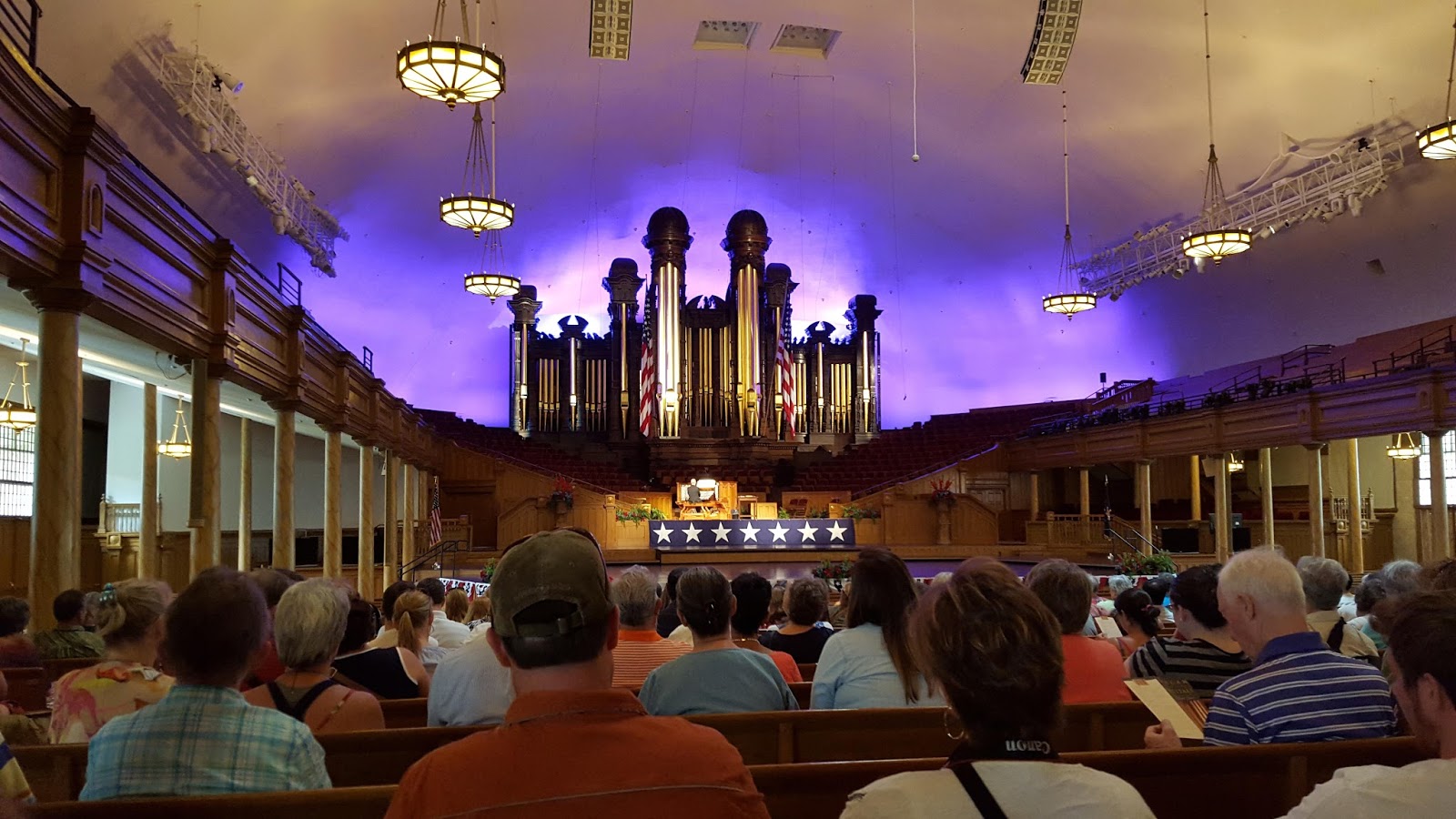
Donald and I then went across the grassy “plaza” to the Tabernacle where at luck would have it, we were in time for an organ recital. Donald really enjoyed that. He had been to Temple Square before but had no opportunity to see or go inside.

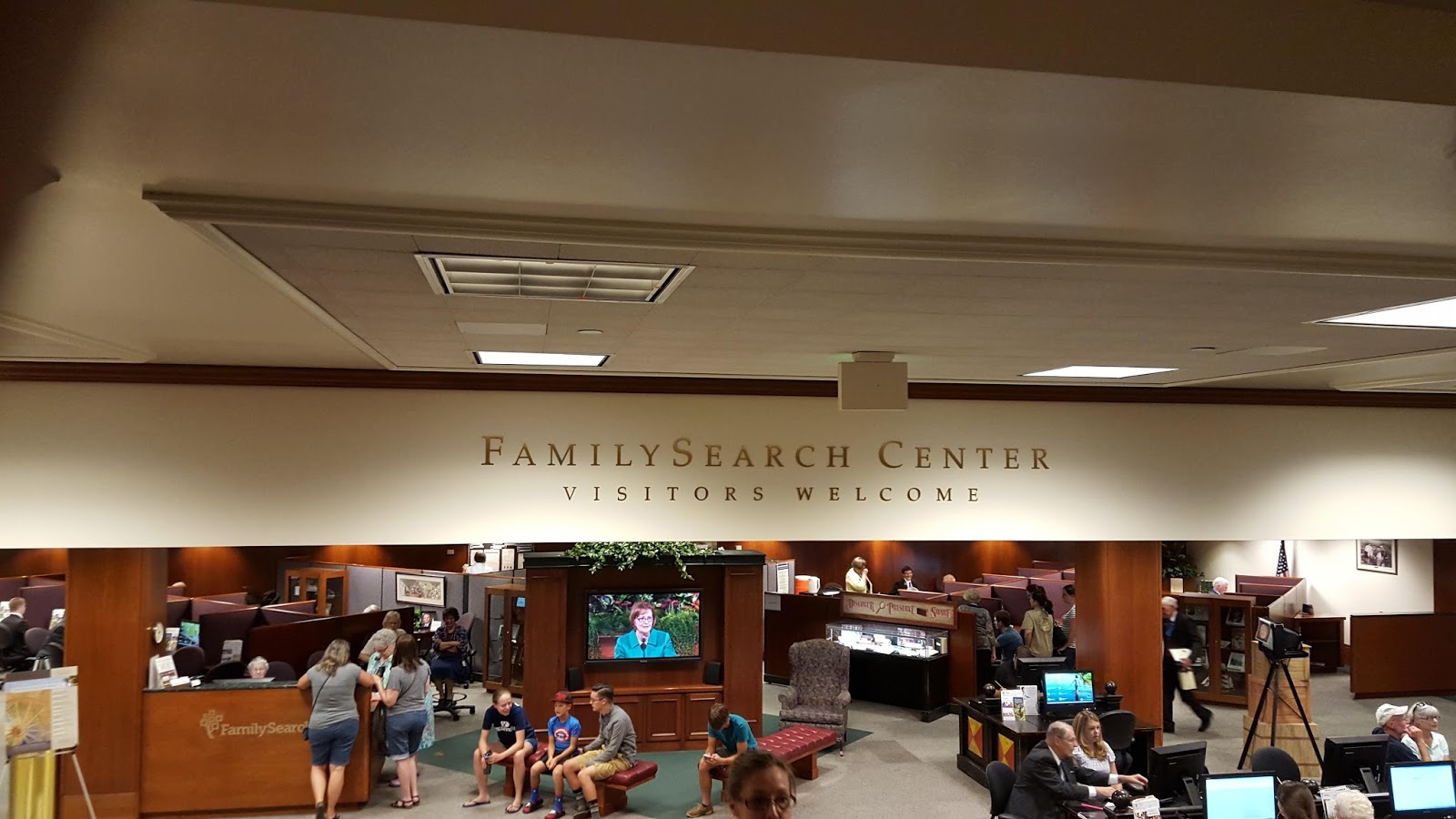
We then went to the Family Search facility where with a little help from a friendly volunteer managed to find Donald’s father in some old census records.

Donald used to work as window trimmer supervisor for various department stores throughout his life. His store would often come in second place to ZCMI department store in Salt Lake City, so he wanted to see who was winning the awards. During the past century, the LDS Church divested itself from ownership and sold the pioneer era building to Macy’s. The old building was demolished but the old front façade was preserved into the new building.

It was late by then so we returned to Lehi and prepared for our adventure on the next day.

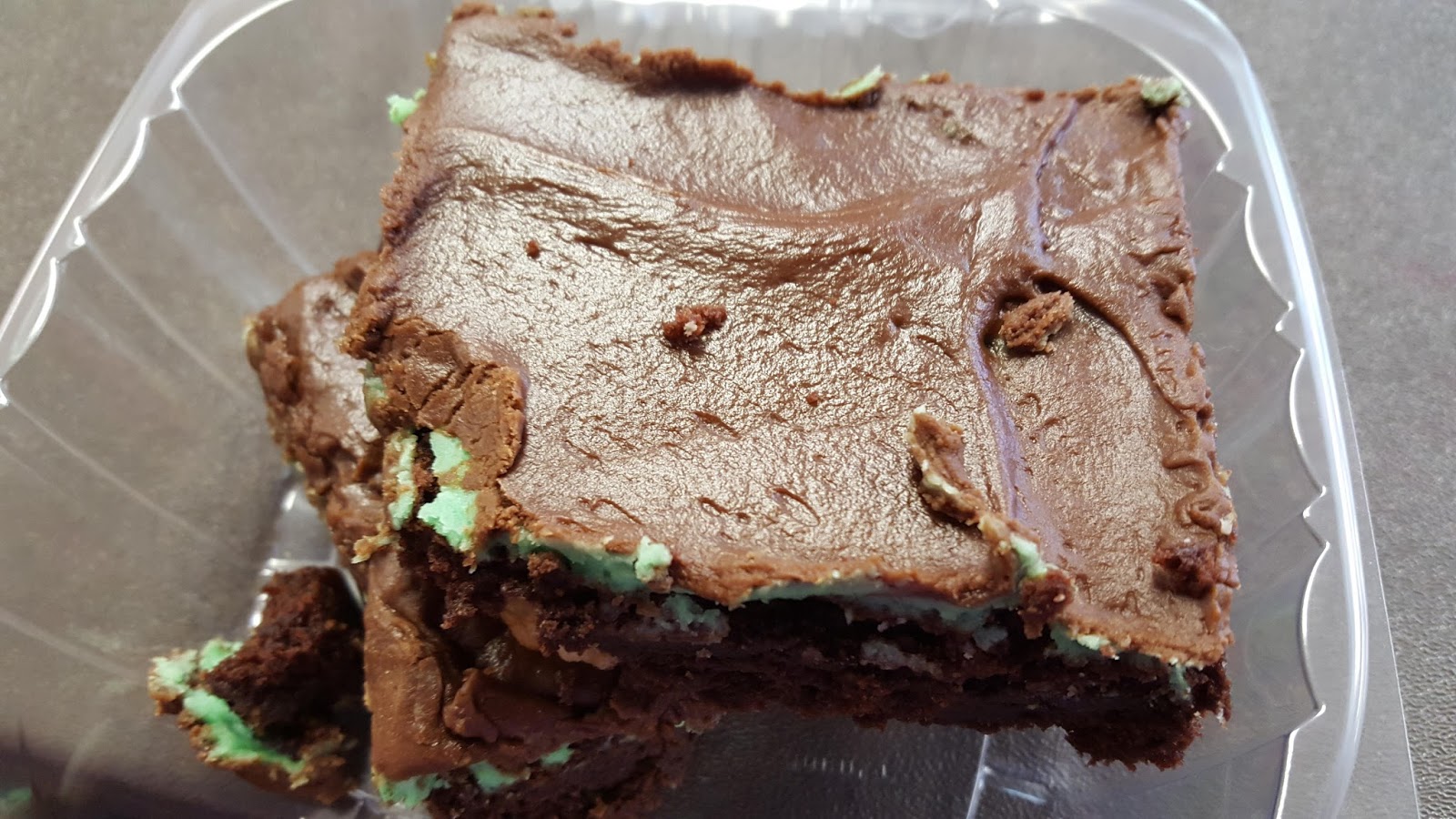
The next morning, Thursday, we drove to BYU because Donald really wanted to see where I went to college. After arriving, we walked from the parking lot to what you would call the “student union building”. While there, I bought us each a “famous” BYU Brownie. When I sent my daughters back in Lakewood the photo below, they replied I better bring them some or don’t bother to come home.

Donald and I really enjoyed them. When finished, we walked over part of the campus and I pointed out some of the landmarks. I took him to the Karl G. Maeser Memorial Building, the oldest building on the BYU campus which currently houses the honors program.

The campus is built on the shelf/plateau left behind by the receding waters of Lake Utah and consequently overlooks Utah Valley.

After Deborah gave me her “maybe” at my proposal of marriage, we drove to BYU and she took me to her favorite place which is/was on the side of the plateau not far from the Maeser Building. I tried to take Donald there to show him, but too much time had passed and the place was no longer in existence. At the time it was a small bench underneath a small arched trellis along a tree and plant lined path which ran from the bottom of the plateau upwards to the top coming out just before the university president’s house. While sitting together there, she changed her “maybe” to “YES”.

It was a HOT day and Donald and I were running out of walking power so we returned to the air conditioned car and left the campus. He really wanted to go see where the church’s Christmas programs were broadcast from so we returned to Salt Lake City.

The Tabernacle was too small to hold the crowds of people who wanted to attend the semi-annual church conferences, so the church built a new and huge Conference Center across the street to the north of Temple Square. Upon our arrival, we parked in an underground parking garage directly under the “center of town” and then went to the Conference Center.

We took the 30-minute tour and, as luck would have it, discovered that every Thursday night at 7:30pm, the Mormon Tabernacle Choir held a rehearsal in the building. We attended. Donald was mesmerized and I learned a lot about how much practice and effort goes into a professional choir performance.

Once again Donald was thrilled. I was also enjoying this trip because Donald was excited with just about everything we did and his enthusiasm was infectious. At this point we were done being tourists and were ready to return to Lehi for a good night’s rest before returning to Denver in the morning. However, one more real and unexpected adventure lay before us. 

(The following is the story all of the previous stuff was leading up to.)

As I said earlier, we had parked in an underground parking garage. When we came up from the garage, the elevator doors opened directly into what had been the old Hotel Utah. Naturally, we did not pay attention to where it was. Consequently, we had to ask directions on how to get back into the parking garage where we were parked on level 2.  A local volunteer gave us good directions but unknowingly to the wrong garage. When Donald and I got out of the elevator, we were on Level 1 and we could not find any other elevator or stairs to level 2. Eventually, a middle aged man came by and I told him we were lost and if he knew where level 2 was. He invited us to ride in his car as he drove around all of level 1 to make sure I was not confused as to which level on which I had parked.

Not having any success, we then went to level 2 followed by levels 3, 4, and 5. At that point the gentleman thought he would have to drop us off at security. Suddenly, he asked if I had a parking permit. I said I did and pulled it out of my pocket. (It was the kind of small business card size permit you usually get at any paid parking complex.) He was a bit mystified and then pulled out his permit which was much bigger, plastic, and a hang-on-the-rearview-mirror type. That is when he recognize that we, in fact, Donald and I were in the wrong garage. At that point we left the underground complex, drove around the block and entered the complex again and following my entry route arrived at my car on level 2 moments later.

We thanked him for his kindness, courtesy, and assistance and learned that his name was Phillip. Judging from another Phillip I know, I guess kindness and courtesy automatically come with the name.

© 3 August 2015

PS: Maybe if we each contribute $20 to Gillian and Betsy, perhaps they will let us have a party at their house while they are Away From Home.

About the Author
I was born in June of 1948 in Los Angeles, living first in Lawndale and then in Redondo Beach. Just prior to turning 8 years old in 1956, I began living with my grandparents on their farm in Isanti County, Minnesota for two years during which time my parents divorced. 

When united with my mother and stepfather two years later in 1958, I lived first at Emerald Bay and then at South Lake Tahoe, California, graduating from South Tahoe High School in 1966. After three tours of duty with the Air Force, I moved to Denver, Colorado where I lived with my wife and four children until her passing away from complications of breast cancer four days after the 9-11 terrorist attack.

I came out as a gay man in the summer of 2010. I find writing these memories to be therapeutic.

My story blog is TheTahoeBoy.Blogspot.com

Being Gay Is … by Phillip Hoyle

For me being gay started out as a tricky process. My childhood explorations of things sexual left me clear that I liked sex with male peers. Oh, I liked girls a lot—quite a few of them—but then I was living into societal, cultural, and biological norms that sought something more than friendships between males and females. I assumed I would take a wife, and luckily I found a superb one. Still, I knew that I was sexually somehow needy in a way my wife would never approach. I was dedicated to the marriage and to our two children and knew they would remain at the center of my life concerns

After age thirty I knew for sure my homosexual urges were not a side issue or a shadow self, but that the urges related directly and powerfully to my emotional and physical needs. I realized I was walking a rather perilous path with marriage, parenthood, career, and who knew what else at stake. I also knew I was in love with another man. So I opened myself to a bisexual world of my imagination and through a single male to male relationship and loads of reading began looking at what it might mean for me at some point in my life to live openly gay. Some years later—some twenty years later—I did just that.

Thinking that I should be living gay seemed a choice, yet the fact that I considered it and desired it seemed in no way a choice. So in essence, one might say, I am homosexual, and now in my existence I am gay. Perhaps that distinction seems inadequate, even a bit cant. I know many folk who would simply shake their heads no. But I think in this way in order to describe my experience, not to normalize or moralize it in any way.

I chose to be gay (my definition of a lifestyle) because this life most nurtures my needs. I find ironic the fact that I entered this full-time gay existence toward the end of my life, but I knew what I was doing and realized I had to do this in a loving way. My only regrets? That my life and choices have sometimes hurt other people. But my knowledge of life shows that such pains always occur in human relationships. My wife and I had a long run, produced and reared two fine and interesting people, and we all remain loving and supportive of one another.

My idea serves only as a simplistic background to what I want to tell you now—the really important things!

For me, being gay is:

          A great relief
          A real hoot
          A dubious mark of distinction I wouldn’t trade for anything
          The most sensible thing I have done in my life although I have done many sensible things
          A connection with a vast and varied community
          An experiment in life quality, and
          A beautiful, heartfelt experience.

© Denver, 2014

About the Author

Phillip Hoyle lives in Denver and spends his time writing, painting, and socializing. In general he keeps busy with groups of writers and artists. Following thirty-two years in church work and fifteen in a therapeutic massage practice, he now focuses on creating beauty. He volunteers at The Center leading the SAGE program “Telling Your Story.”

He also blogs at artandmorebyphilhoyle.blogspot