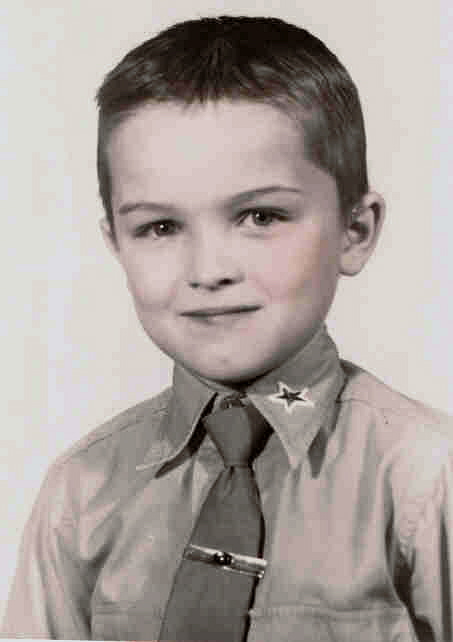
Exercising, by Ray S

What is fun about exercise? For me the word is synonymous with work. There is a sense of accomplishment, if not survival when you might have completed a certain number of circuits around the high school track—but then there is the end result—exhaustion.

Jumping Jacks, etc. were okay when you are all lined up doing the same movements, but then there is the really hard work of push-ups.

As a developing pubescent wimp, if anyone had told had told me how the weight room would have given me that classic Greek Apollo physic when I was old enough to be intrigued with other Greek gods’ bodies, I probably would have been so narcissistic I would beat the gym doors down to get started on that evasive body beautiful. Alas, I never met a barbell that I liked.

Team sports were my 6th grade downfall and ultimate lifetime avoidance of participating or watching. How validating it was to be one of the boys on the team, until my total lack of eye-hand-arms and -legs coordination disqualified me, especially after consistently striking out. Forget football; basketball—dribbling impossible. Wrestling and boxing meant you could get hurt and besides they were not only competitive, they were too aggressive for the timid soul.

It seemed I was destined to be like Ferdinand the Bull, all he could do was lie around and smell the roses. Without rigorous exercising how was I to become a man so that when the time became evident I might lie with a woman or better yet in the Biblical sense “lie with a man”?

Looking back on so many physical education failures I wonder that I have managed, in spite of myself, to live this long, loved so much, slept with wonderful people, and can still get up out of bed each day and put one foot in front of the other. Perhaps that might qualify as heavy duty passive exercising.

© 24 August 2015

About the Author

From Bell to Cell, by Phillip Hoyle

A personal history of the telephone

In 1876, some years before my birth, Alexander Graham Bell changed the world of human communications when he received the patent for the acoustic telegraph now called the telephone. Soon after my father was born, someone improved it with the rotary dialing system. That was in 1919, although rotaries didn’t make it out to our part of Kansas until sometime in the 1950s.

My first memory of the phone was a black rectangle affair with a combined ear and mouth piece on a cloth-covered cord. It hung in the breakfast room and had a very small number printed on it, our number that I no longer recall. The phone seemed magical but not so much as the older model at the farm. Watching Grandma Pink on that phone excited me so much I wanted to join in the fun, waiting for the neighbors on the party line to quit gossiping, then cranking away on the handle on the side of the old wooden box, and finally yelling into the mouth horn, “Central, Central.”

We, too, had a party line in town but one with fewer phones connected. We never had to wait so long as Grandma. Of course, young people today would be scandalized to learn that people, namely your neighbors, could listen in on your calls. Where is the right to privacy?

Then we got a rotary phone and a private line. The new wall phone looked much the same as its predecessor, except the black box now had a dialing apparatus with numbers and letters and in the middle was posted CE (for Cedar) 8-2533. I can remember Mom going to that phone to call Santa Clause when we had misbehaved. My favorite memory though, is of my sister Holly who at mealtimes sat with the phone immediately behind her. She was used to answering it during meals. But that day she was just ready to say grace when the thing rang. Picking up the receiver, she began her prayer: “Our Father in heaven….” When she realized what she had just done, she turned red, nervously laughed, and said, “Who is this?”

We still had to dial “0” for the operator to make a long-distance call, but before too many years automatic dialing of long distance became a possibility and with it the introduction of Area Codes. The prefixes tell the rest of this story for AREA CODES began to indentify the important places and phone events in my life.

913 Junction City where I grew up, Clay Center where I went to high school, and eventually Manhattan, KS where I went to college all had the same Area Code. The college dorm had a pay phone in the hallway downstairs. When Myrna and I married our apartment had no phone. If we needed to contact anyone, we walked one block to a convenience mart where we could use a pay phone if we had a quarter.

316 Three years later, we moved to Wichita, KS where I had my first full-time job. There we owned our first phone and began paying Ma Bell for the convenience. From its 316 number we made such announcements to the family as: “It’s a boy.” “It’s a girl.”

817 Some years later we moved to Ft. Worth, TX where I attended seminary. From that area code I eventually asked: “Ed, could you come to my ordination?” I wanted Ed, the minister who had influenced me to attend seminary, to deliver the ordination prayer.

314 One afternoon I received a call, my first one from Area Code 314. Jack in Jefferson City, MO asked many questions about my work in religious education. The congregation where he was senior minister extended a call, and we moved there to join him in ministry. Some seven years later I received another 314 from Jack’s wife. “Phillip,” she said at 4:00 that summer Sunday morning, “Jack’s had a seizure that knocked him out of the bed. The ambulance is here. I don’t think he is going to make it.”

505 A couple of years later there were many 505 calls to and from Albuquerque, NM. We moved there to a good job in an excellent church. But one day my good friend Ted called with news related to his AIDS illness. He told me, “Dr. Gold says it’s now a matter of months or weeks.”

970 Before too many months passed I began making calls from Area Code 970, Montrose, CO where we lived briefly to help out my aging in-laws. There I talked with editors, friends from many places, and eventually with the minister of another church where I would work.

918 Tulsa, OK. Months later, when we moved to Tulsa, we got an answering machine to go with our push button phone because I needed to know if people were going to miss choir rehearsals.

303 I brought that answering machine with me to Denver, Area Code 303, where it was useful as a tool for fielding massage appointment queries. I’d call my machine from the phone at the spa to see if I needed to get right home or if I could dawdle, shop, or visit the Public Library or Denver Art Museum. Some five years later, when I moved in with Jim, I quit using that answering machine. He and his mother were so private; I didn’t want to have the phone ringing with appointment requests. I bought a cell phone. That was almost ten years ago.

These days I’m beginning to feel somewhat like my partner Jim who long fantasized retiring to his home behind a high fence that would keep out the encroaching world. In my retirement I, too, am cutting off my accessibility related to a group of fine people. It’s not to block them out completely but, rather, to limit what I am available for. At the end of the year, 2013, I’m retiring from my massage practice but not at all from my life. I will be happily social but not available for either instant communications or for massage giving. I won’t have texting but will have a home number and will be on line with Email, Facebook, and Blogs. Surely the loss of the cell phone will spell a quieter, less bothered retirement. I am looking forward to that. Even though I won’t be available for giving massages, I’ll still be up for coffee, tea, or meals with lots of laughs. And I hope never again to change my Area Code unless to 720.

(Note: I never have got rid of my cell phone.)

Denver, © 2013

About the Author

Phillip Hoyle lives in Denver and spends his time writing, painting, and socializing. In general he keeps busy with groups of writers and artists. Following thirty-two years in church work and fifteen in a therapeutic massage practice, he now focuses on creating beauty. He volunteers at The Center leading the SAGE program “Telling Your Story.”

He also blogs at artandmorebyphilhoyle.blogspot

A Magic Carpet Ride, by Gillian

Humankind does not, for the most part, create in order to promote and honor spirituality. We make killing machines and WMD’s. We compete to see who can build the tallest sky-scraper, the biggest and fastest anything and everything, and the securest vault to store our precious gold bars.

So, it was with great surprise that I received a serious spiritual kickstart from a creation weighing an estimated 54 tons; the largest piece of community folk art in the world, honoring almost 100,000 people.

Yes, of course, the AIDS Memorial Quilt.

I first saw it, or part of it, in Denver. I don’t recall where exactly it was displayed, Betsy thinks somewhere at DU, or when this would have been. Probably around 1990. What I do remember vividly is the effect it had on me.

Each quilt is 3 feet by 6, roughly the size of a human grave. At the time it was started, in 1987, many people who died of AIDS-related causes did not receive funerals, due to both the social stigma of AIDS felt by surviving family members and the outright refusal by many funeral homes and cemeteries to handle the deceased’s remains. Lacking a memorial service or grave site, The Quilt was often the only opportunity survivors had to remember and celebrate their loved ones’ lives. Each quilt is completely unique. They vary from no more than a name written in marker pen, to an embroidered name with a photograph, or many photographs. Some are covered in messages to the deceased. Many have belongings carefully attached, sometimes covered with carefully hoarded childhood toys and clothes; baby booties wailing out a mother’s heartbreak.

I couldn’t stand it. These young men – yes, others died, and are still dying in that terrible epidemic, but it was primarily stalking young gay men – these young men, so frequently reviled and feared by society, dying horrible and very premature deaths; and what do they and those who love them do? They sew a quilt, those terrible, frightening men! The pain of each individual represented there, and my anger at an ignorant bigoted society were too much. I didn’t think I could bear it. I couldn’t contemplate one more lost life. I was about to tell Betsy I would have to wait for her outside, when something strange, something wonderful, happened.

I felt the overwhelming love that had gone into those quilts flowing back out and engulfing me. It enveloped me in it’s warmth, like that of a cozy fire on a cold night, and with it came a sense of great peace, culminating in a flash of what I can only call pure joy, such as I have felt rarely in my life. It was strange, that jolt of joy in a time and place surrounded by death. But there it was. It came and it went so fast I felt almost dizzy. But the strong sense of love and peace remained, to banish the previous pain and sorrow and rage. You understand that I am looking back at it now from a place at least slightly further along the path of spirituality than at the time, so this is how I see it from a current perspective. I doubt I would have described it in quite the same way at the time. But then, with every memory we rewrite history. But it is my history, so I guess I’m allowed.

In any event, it was The Quilt which initially precipitated my journey along the spiritual path.

I wanted that jolt of joy again. And again. And again. It had been like a momentary high, and with one shot I was addicted. I wanted to live cocooned in love; to find that everlasting peace.

Easy to say! Not so easy to do. The spiritual path is a difficult one. You don’t simply decide, I’m going this way now, and go. It takes work, and, like so many things, eternal vigilance. I frequently lose my way, stumbling off the spiritual path into those nearby dark places where all the bad things lurk – those negative thoughts and emotions, always waiting to pounce. But at least I have reached a stage where, I cannot claim always, but often, I can stop myself, wherever I am at that moment. I stop. I relax. I do some deep breathing. I rest right there, lost as I may be among the good, bad, and ugly. I gather that spiritual quilt of love and peace, and wrap myself in it’s warmth. And usually it works it’s miracle and sooner or later I find myself back in the welcoming light of my spiritual being, back once again on the right path. Rescued, again, from the dark scary places, It’s a magic carpet ride. As I continue along my path, I am treated, very occasionally, to those starbursts of pure joy. But more importantly, I am, for the most part, completely at peace: with myself, with my world, and with everything in it. So I think it very appropriate that the Quilt, or technically The Names Project which began it, was nominated for the Nobel Peace Prize in 1989, but disappointing that it did not receive the award. It seems to me the perfect candidate. If others would treat adversity in the same way, the world would be a very different place. Sadly, even trying to imagine the Nazis or those currently flocking to join ISIS, deciding instead to sew a quilt, is so impossible it’s just laughable.

Why is that? I ask myself, sadly. I hear no answering reply.

I saw a part of The Quilt once again when Betsy and I took part in the March on Washington in 1993. The last time it was displayed in it’s entirety was on the Washington Mall in 1996 – something I would love to have seen but didn’t, and I will probably never get another chance. The Quilt is now too large to be viewed all together. It is stored in twelve feet square sections, housed in Atlanta. These section, placed end to end, would run for over eight miles. If you have never seen any part of it, you might want to add it to your Bucket List; things to do before you die. I’m sure it would do just as much for your soul as gazing at the Taj Mahal in the moonlight. And the trip would be a whole lot cheaper!

© June 2015

About the Author

I was born and raised in England. After graduation from college there, I moved to the U.S. and, having discovered Colorado, never left. I have lived in the Denver-Boulder area since 1965, working for 30 years at IBM. I married, raised four stepchildren, then got divorced after finally, in my forties, accepting myself as a lesbian. I have now been with my wonderful partner Betsy for 25 years.

Grief, by Will Stanton

The emotion of grief, to varying degrees, is natural for humans but potentially very toxic. The causes of grief are both external, that is, events that happen to us, and internal, one’s own nature and how prone we may be to suffering grief.

Throughout history and continuing on through today, some people have suffered extreme traumas that can affect them the whole remainder if their lives. Victims of horrendous crime, violence, war, natural cataclysms, or massive plagues, all such victims are severely tested. As a consequence, shock, loss, grief, anger and bitterness are very hard to cope with.

Just imagine, if you can, Russia’s Empress-Dowager Maria Fednorova, barely escaping with her life to Denmark after her son Nicholas II and his young family all were brutally shot to death by the Bolsheviks and their bodies dumped into pits in the forest. She struggled with her grief for ten years. Her coping mechanism was to hold out irrational hope that one or more of them somehow had survived. Of course, we now know that all their remains have been found and none survived. For most of us, the common loss of a loved one or friend, loss of job, home, or financial security, is hard enough. That certainly has been true with me.

Then, each of us is wired somewhat differently from others. Some people are quite sensitive and vulnerable to prolonged grief. There are several potential causes. Brain physiology and chemistry differ among people. This may be caused by genetics, PTSD, emotional or psychiatric anomalies, drugs or alcohol. Too often, people lack good support systems of family, regular friends or mentors. They feel more alone, vulnerable, and less resilient.

Turning grief into an energizer, a motivator for constructive thinking and behavior, is an important coping skill that people should learn and practice. In contrast, dwelling endlessly upon grief can cause devastating effects upon one’s mental and physical health. A dramatic example of this is the character of Miss Havisham in Dickens’ “Great Expectations.” Once defrauded of all her money by the beau who promised to marry her and then abandons her, she remains for years in her yellowed wedding dress, sitting in a dark, decaying mansion where all the clocks are stopped at the time she learned of her betrayal, and with the desiccated remains of the wedding breakfast and cake lying on the table. Such a mind-set and behavior are obviously destructive to health and happiness.

Like everyone, I have had my share of grief, and for various reasons. Sometimes a sense of grief comes and goes, triggered by remembrances of past times, good or bad. This is true with the loss of my partner more than eighteen years ago. I still have moments. I also still miss my wire-hair fox terrier, who had to be put to sleep two weeks after my partner died.

I’m afraid that I also am prone to a more generalized grief that some others may not suffer. There is much about human beings and the world that is unnecessarily evil and toxic, and I morn humankind’s apparent lack of the ability to feel empathy, to change and improve.

My means of coping apparently is for me to focus upon the positive, associating with loving people, appreciating beauty in all forms. My writing about this topic “Grief” provides me with the opportunity to remind myself to remain focused upon the good.

© 10 August 2015

About the Author

I have had a life-long fascination with people and their life stories. I also realize that, although my own life has not brought me particular fame or fortune, I too have had some noteworthy experiences and, at times, unusual ones. Since I joined this Story Time group, I have derived pleasure and satisfaction participating in the group. I do put some thought and effort into my stories, and I hope that you find them interesting.

Practical but Cruel Jokes, by Ricky

I joined the
Mormon Church in December of 1968.  Soon
thereafter, I became friendly with the missionaries whom had taught me the
pre-baptism lessons I needed for the introduction to Mormonism.  As a result, I was privy to some of their
stories of missionary experiences.  I
will relate two of them below.
Practical
Joke #1
Mormon missionaries always come in pairs and are referred
to as “companions”.  Such pairs share a
modest apartment and are placed together for varying amounts of time before
being split up and paired with a different companion.  Under these circumstances companions get to
experience each other’s idiosyncrasies.
One such pair had the following habits.  One insisted on being the first one in the
shower each morning.  The other had a pet
gold fish and would always be the first to drink from the cold water jug upon
returning to the apartment each day after being outside in the hot Southern
sun.
One day, as a practical joke, the first companion
secretly placed the other’s gold fish in the cold water jug before leaving the
apartment.  As expected, the other
missionary arrived home and grabbed the water jug and began to drink from it
before he noticed the now dead gold fish inside.  Internally, he was seething with anger but
did not show any outward signs other to acknowledge the “joke”.  But he was already plotting his revenge.
The night before an important gathering of all the
missionaries in the district, when he finished his shower, he set up his
practical joke.  During the week, he had
purchased a pack of blue Rit Dye gelatin capsules.  That night he removed the shower head and put
several capsules in the pipe.  Replacing
the head, he then went to bed.  Getting
up a little early the next morning, he informed his companion the he was going
to walk to the chapel where the meeting was to be held and was leaving
early.  Thus, he left his companion alone
and departed.
During his walk, the gelatin capsules eventually
dissolved.  When the companions met at
the meeting about one hour later, the one companion said to the other after
looking at him for a moment, “Are you feeling a little blue today, Elder?”  As you may expect, his companion’s exposed
skin (head, neck, hands) was bright blue.
Practical
Joke #2

This next story takes place in the panhandle of
northwestern Florida.  A newly assigned
missionary, called “Greenie”, was assigned to a companionship for a short time
until he could be paired with his own companion.  The greenie arrived about two days prior to
another missionary meeting which was to take place in the morning in Panama
City.  It was necessary for the
missionaries to leave early in the morning in order to arrive in time for the
7:30 AM meeting.
There were two companionships and the greenie sharing a
car for the trip, 5 missionaries in all. 
After about an hour of travel, the driver pulls the car over next to a
field of watermelons and suggests that they go pick up a few for all the
missionaries to eat after the meeting. 
Everyone gets out of the car and the greenie says something like, “Isn’t
this stealing?”  He is told it is okay,
that it has been done before, and not to worry. 
The greenie agrees to help.
Just as the greenie picks up his water melon and removes
it from the vine, a young black man appears and demands to know what they are
doing in his water melon field.  One of
the missionaries pulls out a pistol and shoots the black man who falls down
mortally wounded to all appearances.  The
missionaries tell the greenie to get back to the car and start walking away
down the road towards their destination while they stay behind to hide the
body.
After hiding the body, the missionaries get back in the
car and drive up to the walking greenie and pick him up.  They explain that this type of thing does
happen occasionally, but no one cares because it was a black man, so don’t
worry.  Of course the greenie is in total
mental turmoil.
After arriving at the meeting and unloading the melons
the missionaries attend their appointed sessions.  The greenie is then informed that they will
be staying for regular church services. 
Just before the services are to begin, a black family arrives and the
greenie is startled to see the young black man who was shot and buried walk
into the chapel.  The four missionaries with
whom he rode then introduced the family and privately explained that they had
set him up as an initiation prank.
Practical jokes may be fairly common, but most are cruel
and not very funny.  I do not condone
them because they usually result in escalating rounds of revenge jokes and can
easily result in violence.
© 28 July 2014 
About
the Author
   

I was born in June of 1948 in Los Angeles, living first in Lawndale
and then in Redondo Beach.  Just prior to
turning 8 years old in 1956, I began living with my grandparents on their farm
in Isanti County, Minnesota for two years during which time my parents divorced.
When united with my mother and stepfather two years later
in 1958, I lived first at Emerald Bay and then at South Lake Tahoe, California,
graduating from South Tahoe High School in 1966.  After three tours of duty with the Air Force,
I moved to Denver, Colorado where I lived with my wife and four children until
her passing away from complications of breast cancer four days after the 9-11-2001
terrorist attack.
I came out as a gay man in the summer of 2010.   I find writing these memories to be
therapeutic.

My story blog is, TheTahoeBoy.Blogspot.com

Feeling Loved, by Phillip Hoyle

As a college freshman I heard a lecture in which the
professor pointed out how Americans love many things, everything from cars to
mashed potatoes. We celebrate the love of clothes, looks, hairdos, decorations,
and cities. We love our ball teams. But we don’t expect most of the things we
say we love to love us. Mostly we limit the hope of being loved to our relationships
with other humans except, of course, our pets, especially our dogs who we are
sure love us in return. In this story I’ve made an incomplete list of my
experiences of being loved by that one someone who figures centrally into our
American mythos of being loved, but obviously I’ve expanded my list to more
than that one and only—woman or man.
I was deeply loved by Myrna my wife. I felt loved. And
I loved her in so many ways in this most complicated relationship of my
life—one with a professional career, children, parents and siblings and in-laws
and many, many friends over a period of many years. I was happy about it
basking in such warm and complete love.
About two years into that marriage I was loved by a
gay friend. I loved him, but I had no experience and didn’t understand the
order of things. He loved my wife and didn’t want to hurt my marriage. I loved
him but not in the way I finally realized he wanted me to love him. I was very
young. I think I hurt him deeply. Still our friendship flourished for many years.
In the meantime I fell in love with a man who probably
loved me but whose life was too encumbered, whose imagination couldn’t deal
with what that might mean about himself and his life. As a result his love for
me became stunted. I loved what feeling I received from him although I hoped
he’d never want me to give up my married life for him. I also knew I’d never
ask him to give up his married life for me.
Then I loved a man who may have loved me but had built
a barrier around his feelings. Oh he wanted sex with me but he didn’t want to
give or receive the feelings of it all. So when we started the sex, I agreed to
his demand there be no emotions since I realized the advantage of his program
to my marriage. Still I wondered at his request but like a good soldier turned
off my emotions—at least some of them—but not so much as to miss experiencing
the thrills our play created.
Then I loved a man who really loved me. I warned him
that my love, while real and deep, was quite different than his. Now I was the
one defending the two of us from one another for quite complicated reasons. I
loved being loved by him although I could not imagine living with him.
I was loved by a man who had nothing to offer me
except his adoration. We lived in two greatly different worlds, his with Okie
twang, mine with educated artifice. I was nice and kind but never in love with
him. Still I appreciated his devotion even with its great impediments. I was
relieved when he no longer pursued me.
I liked a man who seemed to like me. Eventually I fell
in love with him and he with me. The experience was new to me since I was
recently separated from my wife and could actually go live with him. He loved
me. We lived together. I watched him die. I grieved.
I loved a man who really loved me. Our love had all
the markings of classic falling in love: the ancient lover and beloved, the
medieval romance, and the extremely baroque and renaissance drama of an opera
plot. Sadly this love affair was also a tragedy although a gentle one. I
grieved unlike ever before in my life when he died.
Again I love a man with whom I live. He loves me. We
don’t match very well but do live together successfully. Neither of us is
especially romantic, but I seem to have a much greater proclivity for romance
than he. We have a nice social life with mutual friends. His mother lives with
us. I know I am loved, but again it is a new experience with dynamics unlike
any of my other loves.
Perhaps the nice thing about my loves is that my wife
and the man I first fell in love with and the man I first allowed my love to
grow with all continue to be my good friends. My current love is also a good
friend. I have come to realize that I love any number of men for any number of
reasons. I will refrain from counting the ways in this story. Perhaps another
day there will be a poem describing that matter! Of course, these listed affairs
of the heart are only one category of being loved. But I have always realized
that I am loved by many different people for many different reasons and in many
different ways. I really feel loved. I guess it proper to say the one-and-only
aspect of my being loved is to be found in the individuality of each loving relationship.
© Denver, 2013 

About the Author 
Phillip Hoyle
lives in Denver and spends his time writing, painting, and socializing. In
general he keeps busy with groups of writers and artists. Following thirty-two
years in church work and fifteen in a therapeutic massage practice, he now
focuses on creating beauty. He volunteers at The Center leading the SAGE
program “Telling Your Story.”
He also blogs at artandmorebyphilhoyle.blogspot.com

Any Writing is Experimental, by Will Stanton

Any
writing, especially when one first endeavors to write, is experimental.  This is particularly true for those not well
versed or prone to writing.  As one
becomes more accomplished, the need for experimentation is reduced but rarely
eliminated.
The
primary function of writing (and speaking, for that matter) is to communicate
clearly, conveying accurately what is meant to be said.  If that is achieved, the secondary
consideration is to communicate in an engaging manner through a good command of
language and perhaps, when appropriate, with humor.
The
main advantage of writing, versus attempting to speak extemporaneously, is one
is given the chance, in advance of presentation, to organize one’s thoughts and
words.  In that way, the presenter has a
good chance of eliminating pauses or non-verbal utterances while searching for
the next thing to say.  This also
prevents one from repeating or wandering astray onto unrelated and unnecessary
sidetracks.  The presenter also has the
advantage of not droning on, losing the main point or topic meant to be
conveyed and, consequently, driving the listeners to distraction.  The presentation should be no more nor less
than required.
A
colleague of mine, Dr. Hughes, made an in-depth study of well-known
speakers.  He concluded that the most
effective, extemporaneous speaker was, unfortunately, Adolf Hitler.  Winston Churchill found it impossible.  He had to write and re-write his speeches and
then practice them until he felt comfortable presenting them.
Over
the years, I regularly was required to speak extemporaneously in my
therapeutic-group sessions, in lectures regarding some of my other interests,
and even, for fun, spontaneously creating and relating stories.  Apparently, I’ve inherited a modicum of
verbal skills.
I
still find, however, reviewing and fine-tuning early drafts beneficial.  The main reason is that imagery and memories
are clear to me, yet they may not be clear to listeners unless I make sure that
I express them clearly.  As a
consequence, I always begin early thinking through and writing about a topic,
rather than waiting to the last moment or, perhaps, not writing at all.
I
am aware of only one super-genius who never had to rethink or revise what he
wrote, and that was the superlative composer Mozart.  He could perform one of his piano concertos,
then at the same time compose another in his head, and finally, upon returning
home, set the new concerto down on paper without a single change or
correction.  Obviously, that skill is
astonishing.  Most of us, however, are
not so astonishing, and experimenting with our writing still is required.
© 14 July 2015 
About the Author 
 I have had a life-long fascination with people
and their life stories.  I also realize
that, although my own life has not brought me particular fame or fortune, I too
have had some noteworthy experiences and, at times, unusual ones.  Since I joined this Story Time group, I have
derived pleasure and satisfaction participating in the group.  I do put some thought and effort into my
stories, and I hope that you find them interesting.

Exploring, by Phillip Hoyle

I was a Boy Scout but never an Explorer. Still I had
explorations I really enjoyed. They usually took place in the stacks at the
public library, at the piano when facing a new score, or at home or office when
fulfilling a project for school or work.
These explorations kept me busy and mostly out of trouble
for years, but things have changed so much that these days I most enjoy messing
around with words in an exploration of rhythm, contrast, and other aspects of
storytelling.
You might conclude as have I that my life-long explorations
are mostly projects of mind and imagination. That’s been quite enough for me
although I do like to go to the same places by differing routes, say take the
scenic lane, stop by and see something I’ve always missed, or approach a
similar project in a slightly different manner. So today I’m reading something
again related to my childhood and continuing fascination with Native American
cultures but this time in poetic form. My interest in a peyote fan at the
Denver Art Museum served as the starting point, but the verse tells of my
childhood imaginings.
© Denver, 2013
Magic Fan
By Phillip E. Hoyle
The clutch of feathers
worked magic, at least for the boy
Who slid them over the
back of his hand,
Between his fingers,
On the skin of his face
Transporting him to a
world of freedom
Where he was one of the Indians
he had read,
Who moved freely through
the life
Of prairie and forest,
Of hunt and survival,
Through the endless
tracks of his mind.
His room, his lodge
festooned with portraits
And costumes of leather
and feather
Faithful companions in
his world of flight,
This fullness of fancy
barely
Tethered by nearness of
family.
There in his lodge, he
worked his feathers
Formed into headdress,
bustle, and fan,
Costume for his great
dream
Of being an Indian
dressed up in style
That spoke of tribal
belonging.
The basement, the space
for a dance
Of adoption, the
footwork of fancy,
Steps made real by the
presence of
Feathers that moved air
and spirit
Through ceremonial smoke
of love and desire.
His dances were brief,
three minutes or less
—sad frontier of 78s—but
He practiced the joy
Shown in dip, turn, and
stomp;
The movement expressing
the life he could feel.
His fan led the way as
he pranced,
Swift feet moving in
moccasins that
Circled the room of
ceremony and smoke.
Bustles shimmering,
bells resounding
Sisters worrying, ‘He’s
at it again.’
In echoing basement his
beads bounced
His body the drum, the
people, the dream
Of roach and shirt,
breechclout and leggings.
Of such transportation:
The magic of feather and
fan.
© Denver,
2012 
About the Author 
 Phillip Hoyle
lives in Denver and spends his time writing, painting, and socializing. In
general he keeps busy with groups of writers and artists. Following thirty-two
years in church work and fifteen in a therapeutic massage practice, he now
focuses on creating beauty. He volunteers at The Center leading the SAGE
program “Telling Your Story.”
He also blogs at artandmorebyphilhoyle.blogspot.com

The Big Bang, by Gillian

Was
there only, ever, just one? The Big Bang, I read, created a new reality. So it
must follow that for something to be considered another Big Bang, or at least
analogous with it, it must change reality. Completely.
My
mind roves backwards over the history of our planet. Little blobs of floating
rock became continents which joined together and split asunder, and floated
from pole to equator. Talk about creating change! It was completely covered in
ice. It spewed out lava from deep fissures in it’s surface for millions of
years. It was bombarded by missiles from space, including the one which
created, literally, the big bang which is held responsible for the demise of
the dinosaurs. Surely no-one could deny that those events created new
realities?
It
seems to me that history is peppered with Big Bangs. Take just the short space
of human history. Invasions. Whether your little village on the Asian Steppes
was slashed and burned by Genghis Khan or your little village in the Andes was
hand-delivered deadly diseases by Cortez and his cronies, I bet it changed your
reality. Revolutions, from French to American to Communist to Industrial,
change realities. That child working twelve hours a day down the coal mine
surely had a very different reality from his parents who had slaved away their
childhoods in the fields. Every country invaded by another, from the Roman
Empire to British India to the U.S. occupation of Iraq, suffers an inevitable
change in reality. The World Wars altered huge swathes of the world, never to
be the same again. Yet so often, in fact, I suppose, always, there is some
previous contributing factor to these humanoid Big Bangs. So perhaps, they are
in fact the Big Bangs. 9/11 was a Big Bang all it’s own, but it became the
excuse for the next one, the invasion of Iraq. The justification for WW1 was
the assassination of Archduke Ferdinand. If Princip had failed, perhaps there
would never have been that terrible war (though I suspect they would have found
some other excuse) so was the assassination the real Big Bang? Or does it go
further back? Probably it’s somewhere in that miasma of territorial, ethnic,
and religious struggles which seem to have plagued the Balkans for ever.
It’s
all too complex. I think I’ll stick, in blissful egocentricity, to my own
history, which seems to me equally liberally peppered with alternate realities.
I have already written about them; moving at a young age to to remote
countryside, leaving there to go to college. Emigrating to The United States,
most certainly a new reality. Marriage. Divorce. Coming out. Meeting my
beautiful Betsy.
Now
that was a real change of my reality. I had only come out, to myself and the
world, a few years before. Although chronologically in my forties, in lesbian
years I was a wacky teenager all set to sow that brand new bushel of oats. I
had NO intention of settling down with one woman for the rest of my life. In a
nanosecond Betsy burned through that reality, and, Big Bang, I settled down to
happiness ever after. Not that I’m too sure Betsy would care for being referred
to as my Big Bang. It does have a certain sexual slant to it. In fact, on
further reflection, it sounds like soothing you’d find on the bathroom wall.
I
guess you could think of death as the final Big Bang. If it doesn’t change
reality, your own, at least, I don’t know what does. But change it to what, is
of course the big question. In my new reality, will I be reincarnated as a
squealing newborn in Borneo, or one of those Amazon butterflies which change
realities around the globe with a flutter of their gossamer wings? Or will I be
….. nothing. Gone. No reality. Or a reality so changed it is way beyond my
imagination?
What
is reality, after all? For us humanoids it is what we must do to live; we must
have oxygen, food and water, and shelter. Down at the nitty gritty, that is
reality. Being invaded by the Mongol hordes or sold in slavery does not change
that. So perhaps there is only one Big Bang after all.
I
don’t even understand my own Big Bang theory. My head, which was beginning to
throb in the second paragraph, feels about to have a Big Bang of its own.
I
wish I’d never started this.
I
think I’ll just have a nice cup of tea.
© 20 Oct 2014
About the Author 

I
was born and raised in England. After graduation from college there, I moved to
the U.S. and, having discovered Colorado, never left. I have lived in the
Denver-Boulder area since 1965, working for 30 years at IBM. I married, raised
four stepchildren, then got divorced after finally, in my forties, accepting
myself as a lesbian. I have now been with my wonderful partner Betsy for 25
years.

My Earliest LGBT Memory, by Will Stanton

Five years old (or should I
say, “Five years young?) is very early for such a clear memory.  The experience must have had quite an impact
upon me to remember it so well.   The visual
aspect was powerful enough not to forget, but the excited feeling in my stomach
is what really affected me.
I was five, he was six.  He lived just two houses over from my
home.  To my regret, he and his family
did not stay there very long.  I have no
idea where he went after they moved.
I recall one spring evening
when I tagged along with my older brother to my neighbors’ home.  We didn’t actually play.  There were five of us there, and we simply
sat on the grass and chatted about whatever children of that age talk
about.  That I don’t remember, for it is
what I saw that captured and held my attention.
A traditional belief is that
children that age are not sexual, whatever is meant by that term “sexual.”  Sexual or not, I do know that, from a very
early age, I have had an unusually heightened sense of the aesthetic.  And, at the age of five, that came into play,
big-time.
The first thing that struck me
(and, the word “struck” certainly denotes the impact that I felt) was the
extraordinary beauty of his face.  The
aristocratic, finely sculpted features – – high cheek-bones, arched eyebrows,
narrow, straight nose, ideal line of the jaw and chin, and perfectly shaped
lips worthy of a Cupid.  I was
mesmerized.  As often appears to be the
case with the young, his warm-colored skin was flawless, and his richly colored
locks had avoided the shears and were allowed to flow downward toward his
eyes.  Those shining clear eyes had a
demure expression, not the more intense, self-confident look of the other boys
around him.  The others around him?  I barely remember them, almost as though they
already sat in the shadows of approaching dusk.
As the others talked among
themselves, he sat quietly, his long, lithe limbs side-saddle in the
grass.  I was not used to seeing boys sit
that way.  He seemed preoccupied with his
own thoughts.  Only occasionally did he
speak, and then in very soft tones. 
Those few moments of speech were music to my ears.
The full impact of this vision
raised strange and powerful emotions within me. 
I felt “butterflies” in my stomach, an adrenaline rush that was a whole
new experience for me.  It is that
shivering excitement that I felt which amazed me at the time and was so
indelibly imprinted upon my memory.
That remarkable moment
awakened in me a powerful passion for beauty in the human form that has stayed
with me my whole life.  It has inspired
in me the desire to express that passion through many forms of artistic
endeavor – – music, art, and writing, as I am doing now.  It often has dominated my feelings, perhaps
even plagued my thinking.  I often feel
like Gustav von Aschenbach in “Death in Venice,” overwhelmed by bitter-sweet
sensations each time I encounter beauty in human form.
Now that I am decades older
than that first experience at age five, even a generation older than von Aschenbach,
I sense no evidence that I shall change. 
Like Gustav, I shall be mesmerized by beauty to the very end of my days.
© 14 July 2015 
About
the Author 

 I have had a life-long fascination with people
and their life stories.  I also realize
that, although my own life has not brought me particular fame or fortune, I too
have had some noteworthy experiences and, at times, unusual ones.  Since I joined this Story Time group, I have
derived pleasure and satisfaction participating in the group.  I do put some thought and effort into my
stories, and I hope that you find them interesting.