Don’t Touch Me There by Phillip Hoyle

I don’t believe those words have ever come out of my mouth. I’m not kidding, but I don’t want to claim too much for I was a ticklish boy. Tickling made me laugh and squirm, caused my throat to constrict and tire, made me try to get away from my tormentor. And I especially liked it when Paul tickled me, Paul a tall, muscular man, family friend and member of our church, who worked construction or some other physical job. We knew Paul and his wife and daughter because the daughter, like my next younger sister, had contracted polio and went to regular doctor’s appointments in Topeka, Kansas, sixty miles away. Rides were shared by the two families, so we spent a lot of time together, and we kids got to know each other and each other’s parents. Paul was almost like a kid himself. He loved to play. He loved to tickle us. I loved to be tickled by him. I’d run from him; he’d pursue me, get me down on the ground or floor and tickle me until I squealed. I had no other such relationship with an adult, certainly not with an adult male and couldn’t get enough of his attention. This giant would grab me with his huge paws, lift me high, then lower me to the ground and tickle my ribs until I was laughing, screaming, kicking, and trying to escape. I loved the attention.

There were other men who paid me mind: my dad who encouraged my singing by accompanying me on the piano, my grandfather Hoyle who sat in his chair smoking his pipe but occasionally talking with me or driving me somewhere in his Pontiac, my grandpa Pink who when he drove the tractor would lift me onto his lap and kid me and tell me stories and sing me songs, Mr. Lown the preacher who talked with me about becoming a minister, Bob who took me along with other boys to powwows and taught me to dance, and Mr. Martin who encouraged my singing in high school. I had plenty of attention from men but no other adult ever played with me like Paul. Still I loved the attentions of all these men and none of them ever crossed the line, caused me to say, “Don’t touch me there.”

Of course I don’t know that I would have said it anyway. Writing this I feel a bit like my friend who complained that the priest he served with at the altar for many years never molested him. But now, really, I’m just kidding.

Denver, 2013

About the Author

Phillip Hoyle lives in Denver and spends his time writing, painting, and socializing. In general he keeps busy with groups of writers and artists. Following thirty-two years in church work and fifteen in a therapeutic massage practice, he now focuses on creating beauty. He volunteers at The Center leading the SAGE program “Telling Your Story.”

He also blogs at artandmorebyphilhoyle.blogspot

Scars by Betsy

I can hear it now. “She will be scarred for life if she tries to live a lesbian life-style.” Had my mother not died as a young woman, had she been present when I came out, I believe this is what she might have said. Her mother, my grandmother well may have said this too. The two women had a great deal of influence on me as I was growing up. Neither knew I was homosexual as they both died well before I came out.

They may have been right in making that imaginary statement, however. We all have scars—physical and emotional or psychological. Growing up gay in a homophobic society will inevitably produce wounds. Even after wounds heal scars can be left as evidence of the damage.

I have some scars on my physical body as well as my psyche. Most people do. One I acquired early in life represents a wound caused when I lost control of my bicycle going about 20 MPH down a hill hitting a curb head on, and landing completely unconscious by a street lamp. I was rescued by my dentist who happened to be looking out his window when the accident happened. I had a bad cut on my face which had to be sown up by a surgeon. The scar is still visible, but barely.

I suppose analogous to that might be that I was born into a world which had no understanding, certainly no acceptance, of gays or lesbians—most certainly not of their lifestyles. One might say the accident was that I was born homosexual, but I don’t see that as an accident—just the way it is. There are most definitely scars left from being born into and living in this non-accepting environment. As I have written before I have a passion for the truth and a great respect for living honestly and with integrity. Yet I lived half my life in a life-style that was a lie.

It was not an unhappy time of life, but it was basically flawed. That flaw of the fraudulent lifestyle is the wound. The wound is now healed, but a scar reveals that there had been a wound—a wound caused by an accident?

While I’m making analogies, allow me one more. Another scar is in the middle of my lower back, about a 10 inch line right down my spine. The reason I have this scar is because I had pain brought on by spondylolisthesis. Because I had pain a surgeon cut into my back and treated the source of the pain. The corresponding scar in my psyche might be represented as the result of treating a deep emotional hurt. The pain in this case I see as the years of self denial and the fear of rejection brought about by my unwillingness to express my true self that resulted.

All in all I think it is safe to say some scars, probably most scars, are good. Why? Because they are the result of healing. They are what is left of a wound or an adverse condition which causes pain. A scar implies that a fix has been made. The wound cannot fester and the pain is just a memory.

It is said that one cannot remember pain. I translate that to: one cannot reproduce a former pain, however one can remember that a particular wound or experience was painful. In this case HOLD THAT THOUGHT. Living freely the life style of one’s choosing is a precious thing.

It can also be a precarious thing. Never to be taken for granted.

© 22 June 2015

Betsy has been active in the GLBT community including PFLAG, the Denver women’s chorus, OLOC (Old Lesbians Organizing for Change). She has been retired from the Human Services field for about 15 years. Since her retirement, her major activities include tennis, camping, traveling, teaching skiing as a volunteer instructor with National Sports Center for the Disabled, and learning. Betsy came out as a lesbian after 25 years of marriage. She has a close relationship with her three children and enjoys spending time with her four grandchildren. Betsy says her greatest and most meaningful enjoyment comes from sharing her life with her partner of 25 years, Gillian Edwards.

Acting by Ricky

All the world’s a stage,
And all the men and women merely players,
They have their exits and entrances,
And one man in his time plays many parts,
His acts being seven ages. At first the infant,
Mewling and puking in the nurse’s arms.


Did I mewl as an infant? Of course. All infants do; but I refused to puke “in the nurse’s arms,” because I had class even as an infant. Because I had class, I only burped up on my parents.

Then, the whining schoolboy with his satchel
And shining morning face, creeping like snail
Unwillingly to school.


As a schoolboy I never carried a satchel, just a binder and a handful of books. Those were the days before backpacks became popular to carry school supplies. Naturally, I never, never whined about school; only about having to walk 5 miles to school and back in 3 feet of snow, uphill–both ways. Even then that was only to my children not other school mates and only for those times I missed the school bus.

And then the lover,
Sighing like furnace, with a woeful ballad
Made to his mistress’ eyebrow.


Romeo, Romeo, wherefore art thou Romeo?
Down here you fool. The ladder broke.

(I’m just playing my part as the group’s smart alec.)

I must admit I was hot with passion to and for my female better half and my coming out was quite woeful but I just couldn’t put it into a ballad. Somehow singing, “I’ll be coming out the closet when I come. I’ll be coming out the closet when I come,” just didn’t seem appropriate. Unfortunately, while my ladder still works, it just doesn’t reach the balcony anymore.

Then a soldier,
Full of strange oaths, and bearded like the pard, 

Jealous in honour, sudden, and quick in quarrel,
Seeking the bubble reputation
Even in the cannon’s mouth.

I hold that being an officer in the Air Force is better than being a soldier, at least comfort wise. In any case, we did take an oath and we couldn’t have beards “like the pard.” (A “pard” is a literary noun meaning a leopard or panther.) There is much emphasis on honor in the military and in-fighting or back-stabbing among members who should be cooperating with each other is also common. Even when facing the “cannon’s mouth” soldiers will defy logic and do the most selfless and heroic deeds but not to advance their reputations; that honor goes to the leaders who order men into foolish battles.

And then the justice 

In fair round belly, with good capon lin’d,
With eyes severe, and beard of formal cut,
Full of wise saws, and modern instances,
And so he plays his part.

I’m not sure my children would agree that I ever meted out justice. They would agree about the round belly but the “fair” part is questionable. My eyes are not severe (unless I’m angry) and once again I have no beard–this week. My wise saws are mostly interpreted to be wise cracks, but I do play my part.

The sixth age shifts
Into the lean and slipper’d pantaloon,
With spectacles on nose, and pouch on side,
His youthful hose well sav’d, a world too wide,
For his shrunk shank, and his big manly voice,
Turning again towards childish treble, pipes
And whistles in his sound.

I’ve definitely arrived in this age but still passing through. I wear slippers and also wear sleep-pants which in my opinion can pass for pantaloons here. Clearly I wear spectacles on my nose but my pouch is a paunch and is in front. My youthful hose I abandoned long ago when they began to smell up the house. Fortunately, I’ve not lost my big manly voice, yet and I’m not looking forward to it either.

Last scene of all, 

That ends this strange eventful history, 
Is second childishness and mere oblivion, 
Sans teeth, sans eyes, sans taste, sans everything.

I’m not sure I ever left my first childishness but when I get to the “last scene,” I suspect that I will not be in any condition to recognize it — or any other actors still on stage with me.

© 29 Mar 2012

About the Author

I was born in June of 1948 in Los
Angeles, living first in Lawndale and then in Redondo Beach. Just prior to
turning 8 years old in 1956, I began living with my grandparents on their farm
in Isanti County, Minnesota for two years during which time my parents
divorced.
When united with my mother and
stepfather two years later in 1958, I lived first at Emerald Bay and then at
South Lake Tahoe, California, graduating from South Tahoe High School in 1966.
After three tours of duty with the Air Force, I moved to Denver, Colorado where
I lived with my wife and four children until her passing away from
complications of breast cancer four days after the 9-11 terrorist attack.

I came out as a gay man in the
summer of 2010. I find writing these memories to be therapeutic.

My story blog is
TheTahoeBoy.Blogspot.com

Once upon a Time by Gillian

Progressive Dinner parties were the in thing, at least with my social group, once upon a way back when. I guess they’re still around, but I haven’t been involved in one in decades. It must have been the 1970’s when I was, because I was still married to my husband and living in Jamestown in Boulder County. Did you ever get caught up in those things?

Between about ten and twenty people gather, say, at our house. We have a drink or two to kick off the evening. Cocktails were popular then, though beer was always my drug of choice; or becoming a wino held a certain appeal, but I never cared for mixed drinks. Most of us, of course, puffed cigarettes as we chugged our drinks in those carefree days. After all, you’re already wrecking your liver so what’s the point in worrying about your lungs? From Jamestown we convoy to, say, South Boulder. There we gather at another home for hors d’oevres and another drink. Then on to Longmont and another home for what I think we called, back then, the main course, or simply dinner, the term entree not coming along until later. And, needless to say, more drinks. And off to Lafayette, then still a small town out in the sticks, for desert and after-dinner drinks, then to one of those new things called condos for a night cap. Finally off home in different directions, not a designated driver in sight. By some miracle no-one ever had an accident amongst all this. Nobody even got a drunk driving ticket. But of course in those days, even if you were spotted weaving your way along the center line, it usually earned you little more than an urge to be more careful next time, which you knew you could translate freely as, be more careful not to get caught next time.

In the here and now, Betsy and I might go to East Denver in the morning, to take an old friend who can no longer drive, out for lunch. On the way home perhaps we’ll make a detour to deliver a favorite candy bar to another old friend in a nursing home. Not so very different from a Progressive Dinner, is it? OK, maybe, but at least we’re sober. There is nothing good about the headline, “Great-grandmother arrested for drunk driving.”

Once upon a time, my calendar was covered in scrawled names, places, and times. But only around the edges. Essentially everything was crammed into evening and weekends. The big black hole in the middle was all WORK, leaving little opportunity for personal life. The other little squares were crowded with ferrying kids to endless varieties of activities, and adult celebrations.The future was looking wide and bright on a limitless horizon, and we were ready! We celebrated friends’ new jobs, new cars, new babies, new homes, new marriages, new lovers, and new divorces: promotions, graduations, undreamed of vacations.

In the here and now, the calendar on the fridge looks very similar. Except that it’s reversed. All the crowded-in names and places and times are in the middle, in that space once occupied solely by WORK. The outer squares are largely empty. We, like many older people, really do not like to drive after dark unless absolutely necessary. So we, and our friends and those accommodating family members, plan most things so that we can get home before dark. Somewhat in the same way, if not to the same extent, we tend to schedule activities on weekdays. Weekends are all crowded out with those wild young working folks who have to be accommodated so that they can keep on paying our Social Security.

If we are among the really fortunate, our children’s calendars are now covered in times and places they are ferrying us. The very fact that we’re still here means we are still having birthdays.

We probably still go on great vacations, but although many of us continue our education in one form or another, we don’t bother much about promotions and graduations – our own, that is. Our celebrations have taken on a different view. They tend to be celebrations of the past rather than future.Our calendars have a few too many memorials scheduled on them, our friends number among them too many now living alone, and if someone is moving it is usually to somewhere smaller, and sometimes to a place where they really do not want to be.

So the once upon a way back whenever was a much better place than the here and now? I’d go back in an instant given the chance?

NO WAY!!

For one thing, there’s one mighty steep learning curve I had to struggle my way up between there and here. I never want to have to do that again. And anyway, I sincerely love life, here and now.

Yes, the calendar has a few too many memorials and hospital visits, but it still denotes many other wonderful things – like Monday afternoons. The dates I now keep with friends seem so much more meaningful somehow than the endless get-togethers of my youth. The people mean more to me. In reviewing the memories of those Progressive Dinners, I realized that, other than my ex-husband, I couldn’t recall who any of the people were. Back then, anything that happened was just another excuse for a party rather than a true celebration of the event, or even the people involved. A “Celebration of Life” as we like to call memorials these days, has a whole lot more sincerity about it, and in some ways more true joy, than all that meaningless round of long ago parties.

No, of course they were wonderful times. My life has been great, I have terrific memories. But, from my current viewpoint, I have to say it seems almost as ridiculous to wish I were in my twenties as it would for someone twenty-five to yearn to be seventy-five.

© May 2015

About the Author

I was born and raised in England. After graduation from college there, I moved to the U.S. and, having discovered Colorado, never left. I have lived in the Denver-Boulder area since 1965, working for 30 years at IBM. I married, raised four stepchildren, then got divorced after finally, in my forties, accepting myself as a lesbian. I have now been with my wonderful partner Betsy for 25 years.

Sports by Ricky

While growing up, I loved to play some physically active games that would be called by the general term “sports”. In grade school in Cambridge, Minnesota, I liked to play one version of marbles.

During some past construction on the school grounds a couple of 8-foot tall piles of dirt were left on the edge of the playground right next to the surrounding woods. As a 3rd and 4th grader, I played “King of the Hill” with classmates. It was fun to climb to the top while others tried to do the same all the while trying to keep me from getting to the top. Of course I was also trying to stop them as well. I got to the top many times but it was impossible to stay there with all the pushing and shoving. Sliding or rolling down the side of the dirt hill was also fun. Sadly, the playground teachers finally put a stop to our play and made the hill forbidden territory. Being boys, we naturally disobeyed and played on the hill anyway but more secretively.

In the winter we would build snowmen and snow-forts on the playground from which we would have snowball fights. The teachers did not interfere as long as we were not throwing “ice balls”.

Back in California, in 5th grade we would play organized games for some PE class times, games like kick-ball, jump rope, and tether-ball. Organized PE time did not occur very often so we boys chose to play softball in the spring and autumn and touch or flag football in late autumn and throughout the winter.

The summer I turned 11, I began to try out for Little League baseball. I was not good enough for a “major” team but I did play two years on a “minor league” team.

In high school during PE classes, I learned to play football much better but I could not throw the ball well enough to be a quarterback and I was too light to be of much use blocking. Also, I was not all that fast running so while I enjoyed playing the game, I was not future NFL material. During our basketball scrimmages, I loved to play but could not dribble the ball very well nor could I shoot and sink baskets consistently. My shooting never got better. My best friend and I did do very well in the badminton tournament however and we loved to play it.

During those four years of high school, the New York Yankees were my favorite baseball team because my favorite players were on that team. They were Mickey Mantle (my favorite), Roger Maris, and Yogi Berra. While most of my peers could cite team and player statistics ad nausium, I could not care less about those statistics, the same for professional or college teams. My favorite football team was not formed until the Minnesota Vikings was formed. It might seem strange that a California boy would have a Minnesota team as his favorite, but we were connected by circumstance. I lived for a time in Minnesota and my high school’s mascot was and still is the Vikings.

After high school my interest in sports gradually waned as I grew older. The only exception is for my college’s teams. But even then, I grew tired of watching the football team snatch defeat from the jaws of victory. The last time I got excited for a sport was when my oldest daughter developed a crush on Jose Canseco and his baseball team. So, for three years I became a baseball fan again. She lost interest and one year later so did I. Not until the Colorado Rockies went to the World Series did I catch baseball fever again. Fortunately, I recovered.

It all boils down to this. For me, I would rather play a game for fun rather than sit, watch, or listen to it. Sports like boxing, golf, swimming, track and field, auto racing, horse racing, air races, fencing, bobsledding, mountain climbing, and skiing, hold no interest for me even to participate in them. The only sport I would enjoy would be to lie on a deserted beach with my companion some late evening and watch the submarine races while making out.

© 3 November 2014

About the Author

I was born in June of 1948 in Los Angeles, living first in Lawndale and then in Redondo Beach. Just prior to turning 8 years old in 1956, I began living with my grandparents on their farm in Isanti County, Minnesota for two years during which time my parents divorced.

When united with my mother and stepfather two years later in 1958, I lived first at Emerald Bay and then at South Lake Tahoe, California, graduating from South Tahoe High School in 1966. After three tours of duty with the Air Force, I moved to Denver, Colorado where I lived with my wife and four children until her passing away from complications of breast cancer four days after the 9-11 terrorist attack.

I came out as a gay man in the summer of 2010. I find writing these memories to be therapeutic.

My story blog is TheTahoeBoy.Blogspot.com

Artistic by Ricky

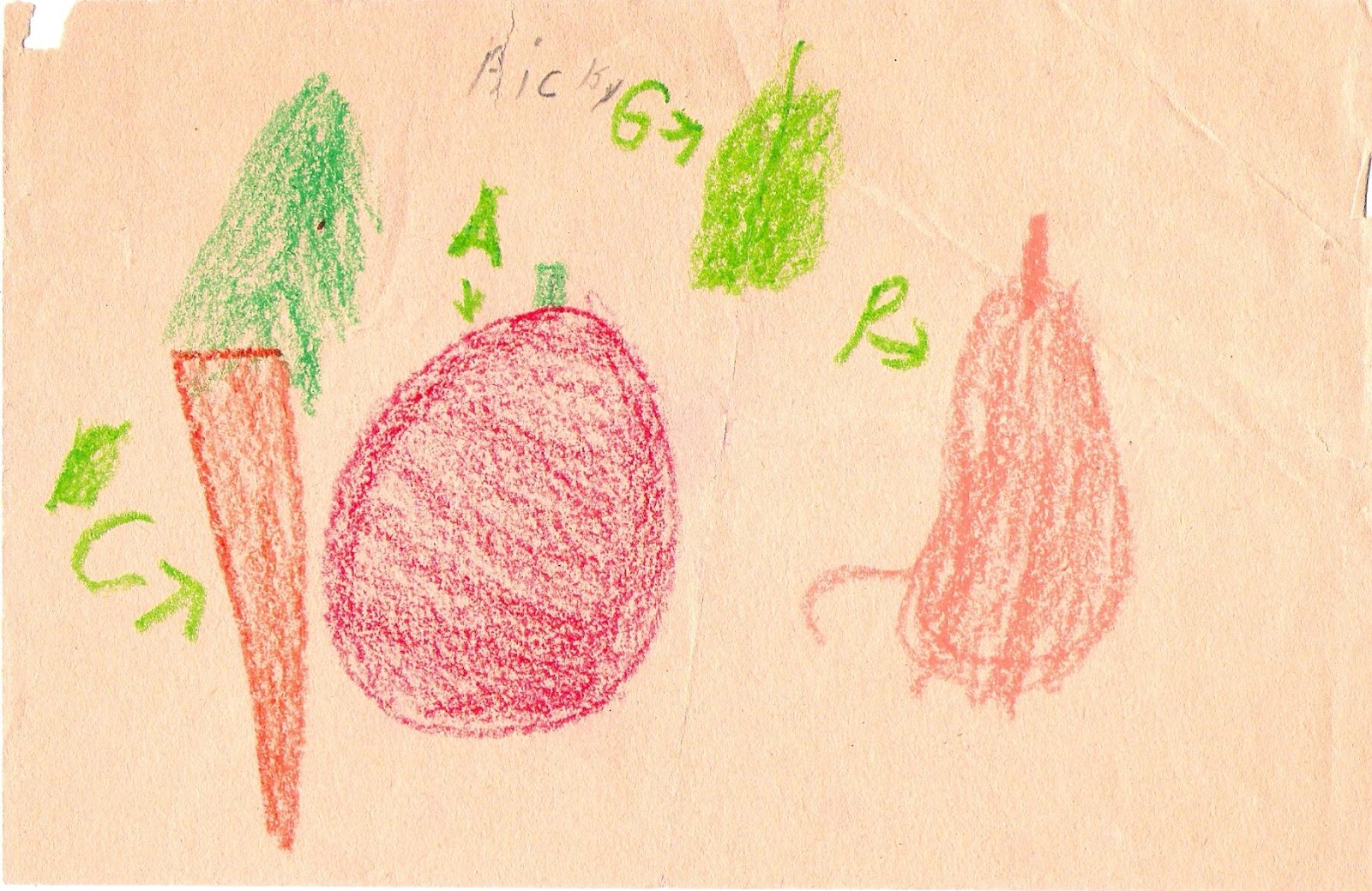
Anyone who knows me at this point in my life will know that I am mostly a critic of the artistic skills of others. I learned all about the art of being critical from 66 years of living and listening to others criticizing me and my efforts and activities. I also have some practical learning in the world of art. At one point, while attending art classes for two years, my teachers gave me high marks for my creativity and technical skill with media and color application.

So as not to seem braggadocios, I will share with you some pieces of my work to prove the accuracy of my statements about my skill.

The first piece of art I will expose you to is from my early career. Like many an artist, I began with still life, in this case some fruit. Notice the excellent application of color and texture.

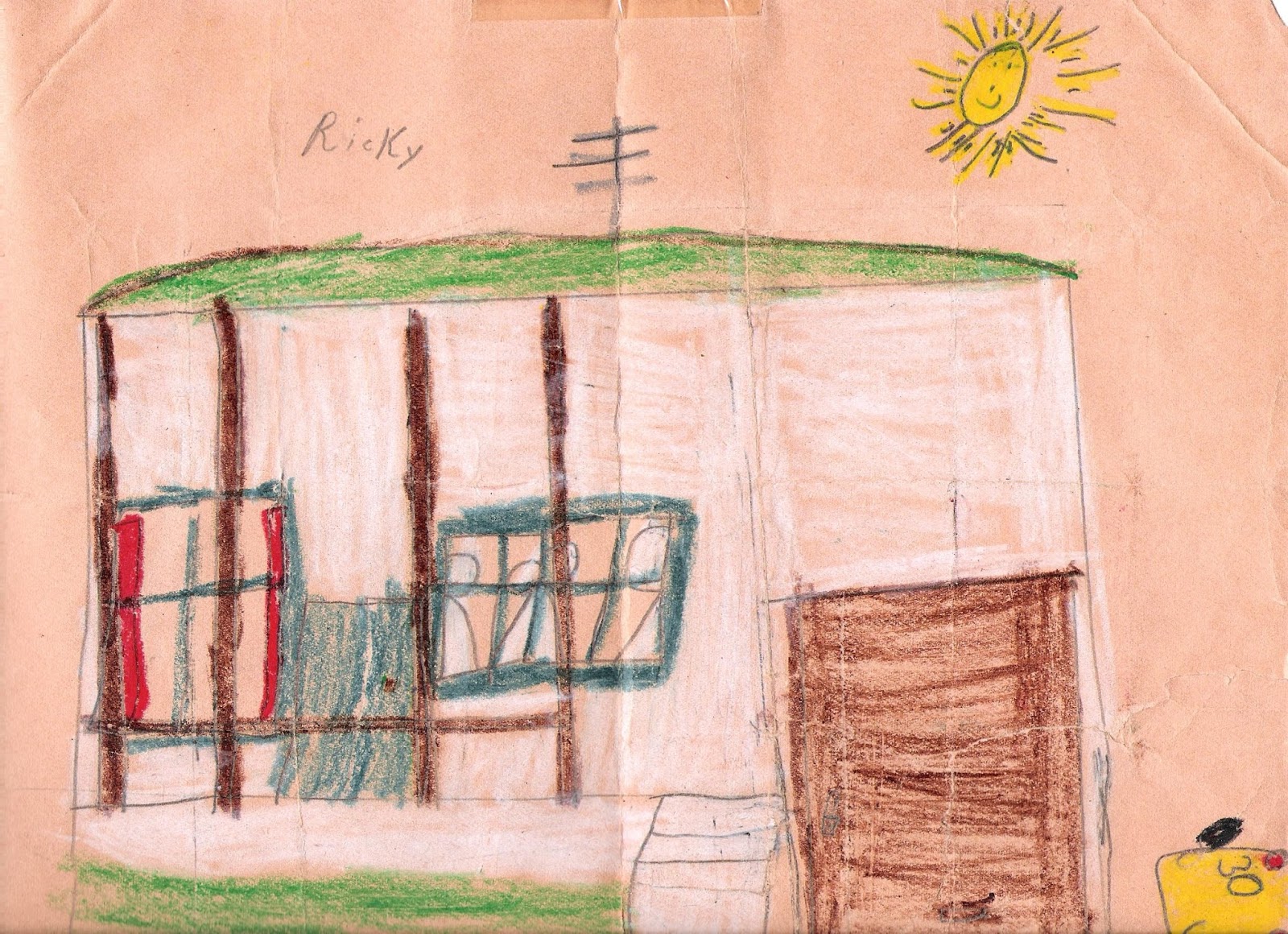
While living with my grandparents in Minnesota and being somewhat depressed, I next entered into what I refer to as my blue period. Using a waxy medium, I created this beautiful colorful drawing of my home back in Redondo Beach, California, complete with school bus.

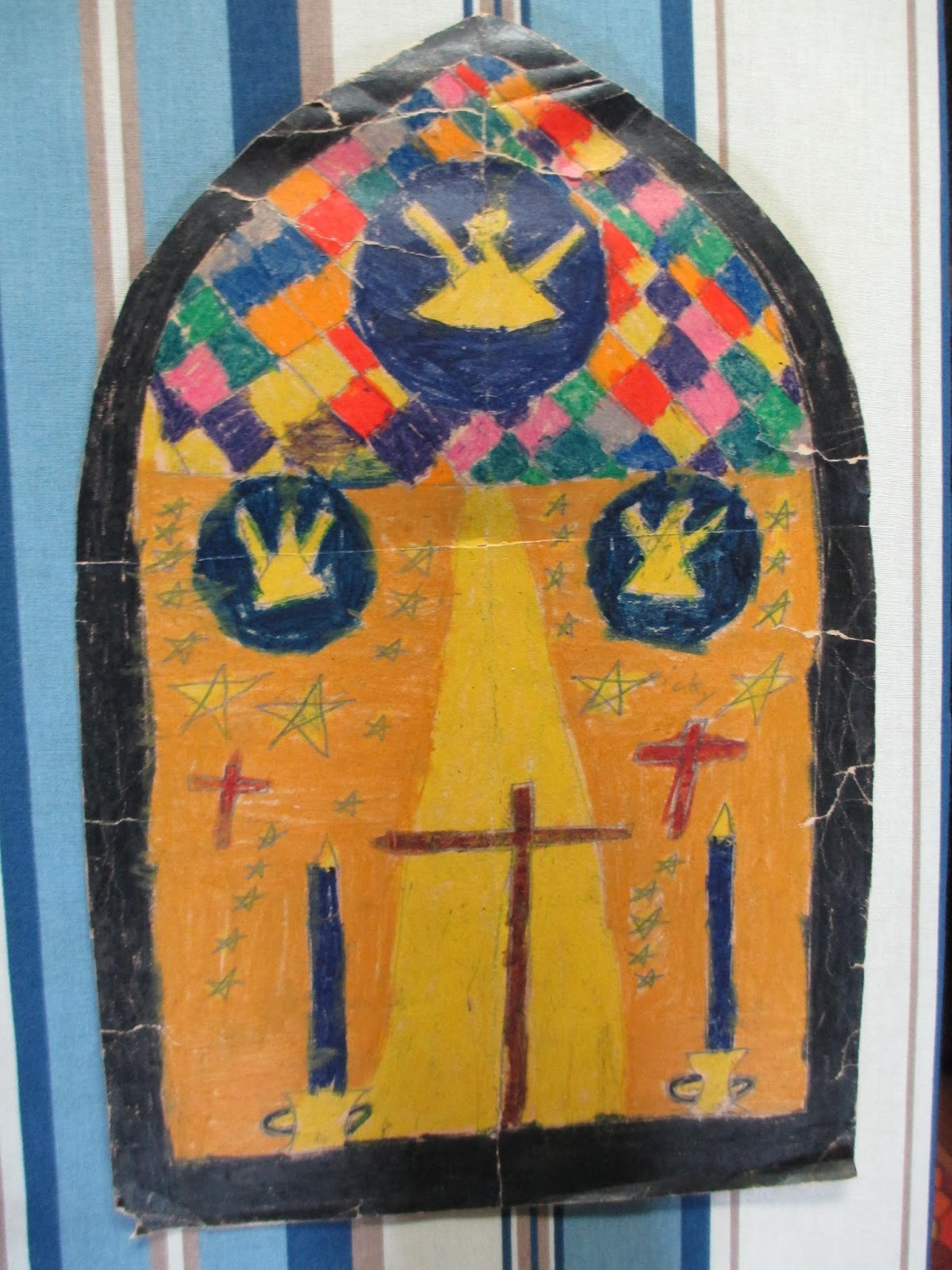
I then improved my style and technique to the point that my next piece you will see was described by my art teacher as nearly as good as Michelangelo’s work on the ceiling of the Sistine Chapel. Modesty prevents me from contradicting her opinion.


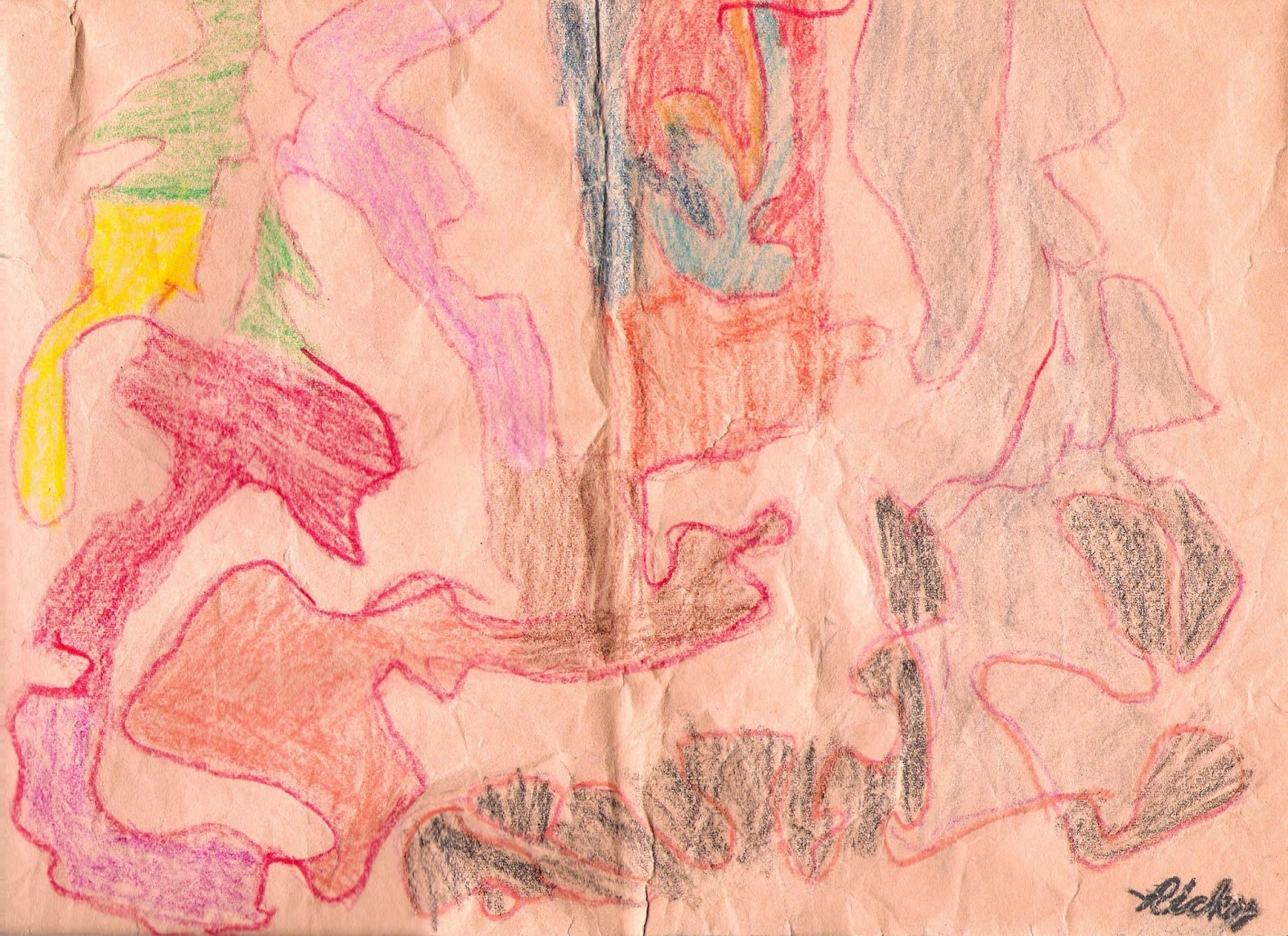
Having reached the pinnacle of my technical skill in the world of traditional art, it was time to let my creativity run loose. The result was a decision to “marry” the styles of Salvador Dali with that of Picasso’s later works in impressionism and cubism.

The response was less than I had hoped for and I vowed to withhold my obvious talent and skill from the sight of the artistically insensitive, critics, and public.

By way of contrast with my work above, here is a recent piece of art by a famous artist. If my work doesn’t qualify as high quality, neither does her piece, in my opinion. Yet she is elevated to fame, while my works are dismissed.

Pablo Picasso once said, “It took me four years to paint like Raphael, but a lifetime to paint like a child.”*

My knowledge of artistic techniques is now used to evaluate the work of others and hold them to the same rigorous standards applied to my works.

I have created nothing of quality art since that time.

*Read more at http://www.brainyquote.com/quotes/authors/p/pablo_picasso.html#GRum34Xqs3xA2eIB.99

© 8 Sep 2014

About the Author

I was born in June of 1948 in Los Angeles, living first in Lawndale and then in Redondo Beach. Just prior to turning 8 years old in 1956, I began living with my grandparents on their farm in Isanti County, Minnesota for two years during which time my parents divorced.

When united with my mother and stepfather two years later in 1958, I lived first at Emerald Bay and then at South Lake Tahoe, California, graduating from South Tahoe High School in 1966. After three tours of duty with the Air Force, I moved to Denver, Colorado where I lived with my wife and four children until her passing away from complications of breast cancer four days after the 9-11 terrorist attack.

I came out as a gay man in the summer of 2010. I find writing these memories to be therapeutic.

My story blog is TheTahoeBoy.Blogspot.com

From the Pulpit by Phillip Hoyle

In the churches where I worshipped and worked, rants about homosexuality did not come from the pulpit but, rather, from the pew. In fact, the only homosexual statement I heard from the pulpit was a quote from an early 1950s semi-autobiographical novel, Go Tell It on the Mountain, by James Baldwin. The preacher made no allusion to Baldwin’s sexuality or any condemnation of the writer. He made no apology for using a quote from a literary best seller. What the preacher knew of Baldwin, I don’t know.

But there was a history in America, a tradition in Euro-American societies that made homosexuality more than a bad thing. Years of silence over the matter continued in the 20th century by sending homosexuals to counseling or to sanitariums. Folk who lived homosexual lives ran away to cities getting lost in urban concentration. Surely their condition was something foreign, out of the ordinary, and ‘here in our little Eden, will not be tolerated.’ Any change of public or even family perception of one’s sexuality caused folk to move away. Silence reigned.

Then the US saw the beginnings of the Civil Rights movements. With it came sensitivity training. The women’s movements, Black power movements, Gay Pride movements, and other liberation movements began to influence law making and law enforcement. They changed even the way the military went about its training and work.

Fears of these new powers fed the growth of conservative reactionary movements. Evangelical churches ended their lethargy and began focusing on influencing public life. They increasingly removed themselves from moderate and liberal denominations. For instance, many evangelicals left the United Presbyterian Church when that denomination’s Social Action committee helped fund Black woman radical Angela Davis’s defense in court. Then the same reactionaries rose up against what they saw as an attack on the modern American family. They wrote books on the way things were supposed to be. They were disturbed by their own children’s refusal to follow traditional ways. Their middle-class kids preferred to live with their spousal picks without the advantages of marriage. Someone had to pay. Very hurt, nice folk turned the accusing finger against gay males condemning them for trying to destroy the family with their gay agenda. Their vitriolic attack resulted in a split in public life.

While in college in the late 1960s I focused on reading about homosexual experience. Then I made my first adult friendship with another musician who was gay. Throughout the 70s I continued reading a rapidly expanding literature and minutely examined the nature of my own sexuality in which I was not really surprised to find a homosexual core. My self-consideration meant to create and maintain a balancing act of faith, morality, and ethics.

In 1968 the church denomination in which I worked voted to proclaim publically that gays and lesbians deserved the same civil rights as all other American citizens. I went to seminary a few years later. There I met more gays, fell in love with a man, read more about what churches were saying and doing, and costumed myself as a gay man when attending a minorities group at the seminary. I did so as a show of solidarity. Surely my actions were also a self-revelation of my own bisexuality.

As church clergy I started teaching my balancing act of faith, morality and ethics. My wife, children, and I were open and affirming of gays and lesbians. We welcomed gays and lesbians into our home. We travelled with two homosexuals to celebrate our 25th wedding anniversary. My studies embraced the issues. In one local congregation I led a seminar about human sexuality positing a bi-sexual norm for its consideration.

Finally I understood that I was going to live a homosexual life. My affairs with men pushed me into a much deeper understanding of myself. I was tired of church work. I didn’t know how to solve my domestic dilemma. I dropped out of church leadership and eventually of congregational life.

In my thirty-two years of ministry, I had observed a marked change in congregational attitudes toward homosexuality, particularly toward homosexual ministers. In fairness, I believe that lay attitudes didn’t so much change as they got expressed. In our denomination the discussion at times became vitriolic being attached to a larger fight for dominance between conservative and liberal factions.

I heard heated words: accusations of not being biblical, arguments arising from holiness code excerpts from Leviticus, assumptions that anyone involved in any homosexual activity must repent or go to hell, and so forth. Eventually I received messages from family members registering both their rejection of me while living in such a sinful life and prayers for my reconciliation and redemption. I had to receive them as truly hopeful but reject them as a path I might follow.

Early on in my ministry I realized I might get in trouble over homosexual issues in the church when I suggested to a man I really liked that he shouldn’t use anti-homosexual humor. I did so because he was using it among the men in the cast of a play we were producing for a Maundy Thursday service. The young man playing the Jesus role was homosexual. The man I criticized was playing Judas. There was the obligatory kiss. Perhaps my Judas was simply playing out his part or perhaps he was also secretly homosexual. I have no idea and say none of this as accusation. Both men were beautiful to me. I didn’t want the church member to be making the guest Jesus uncomfortable. I also realized that my non-public warning to the jokester might be just the kind of thing that I would pay for. Still, for the greater good of the play and of the persons involved, I suggested such humor was out of place.

I saw this kind of thing several times in my career. I tried to keep an even keel for the old ark of the church, one that didn’t alienate the more conservative but also made a place for the more liberal or, as some conservatives thought, the more sinful or worldly. I preached that the world and the world of the church was very large encompassing unimaginable diversity. I encouraged loving forbearance and acceptance of that diversity. I quietly preached such a doctrine for thirty-two years. Finally I had preached enough.

I have read and heard the anti-gay rhetoric. I have analyzed the pick-and-choose approach of scriptural proofs. I came to realize I had made different picks and choices of proofs to maintain a consistent logic in a commitment to the image of the creative and ultimately loving God. I declare myself a Christian, and although I’ve retired from the clergy and haven’t preached in a church for over fourteen years, I have one last sermon to preach. Listen.

Some folk seem to think that one cannot be Christian and gay. Well, I’m announcing from my pulpit that I am one such person, a gay Christian. There are thousands, tens of thousands others like me, who do not accept the rejecting authority of would-be representatives of the Truth. These accusers assume the role of the god in their communications of condemnation. Tens of thousands like me also reject the more subtle settlement of many churches that one can be homosexual but cannot live in that way. These judges condemn having sex with a person of the same sex even in a committed marriage, itself anathema in their view.

My pulpit announces the beauty and norm of gay marriage or any other loving, living arrangements. My pulpit announces the end of the holiness code like any self-respecting dispensationalist preacher should. My pulpit announces a new beginning of the ancient standards of love, felicity, and creativity in all human relationships. Oh well, lest this sermon go on too long, I’ll follow the advice of one preacher’s wife who told her husband when he was done, he should simply say “Amen” and sit down.

Amen.

© 2015

About the Author

Phillip Hoyle lives in Denver and spends his time writing, painting, and socializing. In general he keeps busy with groups of writers and artists. Following thirty-two years in church work and fifteen in a therapeutic massage practice, he now focuses on creating beauty. He volunteers at The Center leading the SAGE program “Telling Your Story.”

He also blogs at artandmorebyphilhoyle.blogspot

Gifts from Afar by Lewis J. Thompson, III

or, so goes my story–

Gifts from a Farm

I did not grow up on a farm. It wouldn’t have suited me at all, despite the fact that my dad grew up on a farm and made his living as a farm loan manager and rural appraiser and my mother grew up with chickens and a couple of cows in a rural small town. No, farm boys have to get up very early to do chores, drink raw milk, shovel really nasty stuff, and work on dirty machinery. Besides, farm work is dangerous. Believe me, I know.

One of my mother’s three brothers had a farm near the teeny, tiny town of McCune in far southeastern Kansas. A couple times a year, we would make the two-hundred-mile journey by car to pay a visit. One of my cousins was a boy close to my age. The other male child, Richard, was eight years older than I. He had contracted spinal meningitis when he was about ten years old and nearly died. It left him mentally disabled, though physically OK. He dropped out of school at about age 14 and later got work as a farm and ranch hand. The only time I can recall that he stayed overnight at our house in Hutchinson was when he was on his way to Wyoming or Montana to work on a ranch. He was about 20 and I was 12.

I recall my mother being upset because she had learned from her brother or sister-in-law that Richard was in the habit of sleeping “in the altogether”, which seems an odd expression for sleeping in nothing at all. I remember being somewhat titillated by the thought of lying next to a naked boy, cousin or not. To my disappointment, I soon found out that he would be sleeping on an Army cot at the foot of my bed.

On one of our visits to the farm, I and a couple of my cousins went on an egg-collecting excursion to the hay loft above the shed where machinery were stored and the corn was husked. This required that one go up a ladder and through a hole in the floor of the loft that measured about 2 feet by 2 feet. Bales of hay were stacked to within a foot or so of the opening on three sides. This made getting down from the loft more than a little tricky. Although I prided myself on being a pretty good climber and not especially afraid of heights, I found my attempt to make the transition gracefully woefully lacking. I slipped and soon was falling feet-first, arms straight up in the air through the opening toward the hard floor 12′ below. As luck would have it, a horizontal wooden beam crossed the space directly below the opening in such a way that my body missed it but my out-stretched fingers were perfectly positioned to reflexively close on it as I passed by. There I dangled, feet swinging two feet above the ground. Lucky me!

Luck did not seem to play such an active role in the life of Bobby, the cousin just a few months younger than I, especially when it came to fire and modes of transportation. When Bobby was old enough to own a car, he had been using gasoline to clean off his engine. When he finished, he started the engine. There was a back-fire through the carburetor that set the engine on fire. Much damage was done.

Not too long after that, he and my uncle were burning stubble in a field. Bobby accidentally splashed gasoline on his legs. His pants caught fire and he was badly burned. The final calamity came when we were both about 16. He had been riding his motorcycle when a driver ran a stop sign and he hit her broadside. His head hit the car’s roof where the pillar behind the driver’s door joins it. He died instantly. We drove down for the funeral. I had taken a suit from my closet to wear for the occasion. When we arrived at the chapel, I discovered that there were no pants hanging under the jacket. I had to remain in the car during the service. It was one of the worst goofs of my life.

My point in writing all this, I guess, is to provide an opportunity to thank all those Americans who till the soil, shovel the dung, shoe the horses, milk the cows, and get up at dawn every day so that I have what I need to survive. It troubles me to think that the days of the family farm are rapidly fading away but along with them the great risk those families took each and every day–truly a gift to all of us from a farm.

© May 11, 2015

About the Author

I came to the beautiful state of Colorado out of my native Kansas by way of Michigan, the state where I married and I came to the beautiful state of Colorado out of my native Kansas by way of Michigan, the state where I married and had two children while working as an engineer for the Ford Motor Company. I was married to a wonderful woman for 26 happy years and suddenly realized that life was passing me by. I figured that I should make a change, as our offspring were basically on their own and I wasn’t getting any younger. Luckily, a very attractive and personable man just happened to be crossing my path at that time, so the change-over was both fortuitous and smooth. Soon after, I retired and we moved to Denver, my husband’s home town. He passed away after 13 blissful years together in October of 2012. I am left to find a new path to fulfillment. One possibility is through writing. Thank goodness, the SAGE Creative Writing Group was there to light the way.

Aw Shucks! by Gillian

I really want to thank whoever came up with this topic because it made me dig way down in my memory and dredge up a story I have not thought about for fifty years. I wasn’t sure I had ever actually heard anyone use the expression aw shucks, except possibly Andy Griffith in 1950s Mayberry, but then slowly it bubbled up in my brain; an old black man in Houston in early 1965, and the story that goes with him.

His name was Noah. His age was indeterminate but my best guess would be mid-seventies. He worked as the gardener at the apartment complex where I was living with my friend Lucie. We had only arrived in this country from England three months before and were not quite familiar with all of the U.S. mores, especially those of the South. Houston of the early 1960’s was apparently unaware of such things as a minimum wage and equal rights. As far as we could tell, we were the only people among the apartment complex’s all-whites residents who ever spoke to Noah. He was apparently invisible to all our neighbors. Lucie and I managed to converse with him on most days, complimenting him most sincerely on the crisply trimmed bushes and the gorgeously colorful arrays of flowers, and his reply was always more or less the same.

“Shucks, Ma’am, just doin’ mah job.”

I would love to report here that he said aw shucks but I honestly remember it being, more simply, shucks. He had offered that his name was Noah, but although we had told him our names, he invariably addressed us, whether singly or collectively, as Ma’am.

And clearly it was more than just doing his job. He loved those plants. He coaxed and gentled them along, and they responded to him in all their glory.

I was in awe of him. He always looked so pristine. His gray hair was neatly barbered, the white tee-shirts he wore were unfailingly spotless, at least at the start of his day, and his bib overhauls always clean and crisp with a sharply ironed crease.

He had such a quiet dignity about him, giving off an air of a soul at peace, that I found myself envying him. Yet he puzzled me. I wondered about his life, the details of which he firmly shied away from if we tried to question him. Born …. when? Late in the previous century, perhaps. The things he must have seen and heard and experienced were unlikely to be the kind that would, in most people, engender this aura of dignified tranquility.

One day, just as we arrived home from work, a group of rowdy young men, white of course, were running across the lawn, whooping and giving their best rebel yells while tossing a football back and forth and tossing back beer from cans. They shouted derogatory things at two young women, also white of course, who quickly turned away down another path. Noah, trimming bushes at the far side of the lawn, was almost hidden by the thick foliage, and as the men crashed through the bushes they knocked him to the ground. Lucie and I could see him, slowly sitting up, and ran over, rather wondering how to act. We wanted to show concern but knew that offering to help him up would only cause embarrassment.

“Bloody hooligans!” Lucie growled as we reached him.

“Aw shucks, Ma’am, they wasn’t meanin’ no harm. Ma’am, do y’all see my glasses?”

He was fumbling his fingers in the grass about him.

“Huh!” responded Lucie. “Not meaning any harm indeed. They didn’t stop to see you were OK though, did they?”

Noah gazed speculatively at Lucie. and it occurred to me that perhaps concern for his health and safety was the last thing that life had taught him to expect from a group such as that.

“Here,” I handed him the glasses from where I found them still suspended on the branch that had snagged them as he fell. They were small and thick with thin steel frames, and looked more fit for a German scientist than an old black Texas groundsman. Noah curled them behind his ears and got to his feet, but he was favoring one foot.

“Stand still!” commanded Lucie. “Let me look at it.”

She knelt down and pulled up his pant leg, feeling his ankle gently. I could see it was already swollen.

Three white men in business suits just getting out of a car in the parking lot looked askance at the young white woman kneeling before the old black man and caressing his ankle. The N word was tossed back and forth loudly between two of them but the third walked over to us, just as I unthinking put my arm around Noah’s waist so he could lean his bad side on me.

The young man, I had met him briefly at some pool party or something, and thought his name was Howard, pried me gently away from Noah, frowning at me and shaking his head.

“Here, let me he’p you” he said, taking my place. “Can you put weight on that foot?”

“No, he can’t,” snapped Lucie before Noah had time to insist he was OK and they hadn’t meant no harm.

“It’s not broken,” Lucie always said things with supreme confidence, “but it’s badly sprained.” She launched into an indignant account of what had happened, while Howard lowered Noah back down onto the lawn and I trotted off to our apartment to get ice and look for bandages.

We bound up his ankle with a strip I had torn off an old shirt we planned to use for dusters, then tied ice over it, securing it with the rest of the shirt.

Howard helped Noah to his feet, but putting weight on his badly swollen ankle was clearly a problem.

“C’mon,” said the ever-decisive Lucy, “We’ll take you home.”

A look of alarm crossed his face.

“No Ma’am! I come on the bus, I go home on the bus.”

Lucie snorted.

“Don’t be ridiculous! It’s five or six blocks to the bus stop just from this side. You can’t walk. Of course we’ll take you home.”

Noah’s look of alarm became one closer to fear.

He glanced in appeal at Howard, a look that said, these women are foreigners and don’t understand. Help me!

“I live th’other side of Lazy Bayou,” he offered to Howard in a tone of desperation. “Lizard Creek Muddy.”

Howard shook his head at Lucie and me.

“NO!” he said, firmly. “Y’all cannot go there.”

Never tell Lucie she cannot do something. She tossed her hair at both men in disdain.

“Ugh. Men! C’mon.” She headed for the car as I followed behind, fumbling to find the car keys.

Howard and Noah struggled in some kind of three-legged gait behind us, neither apparently able to come up with a reasonable alternative course of action.

“I’ll come with you, then,” said Howard resignedly, helping Noah into the front passenger seat, and I slipped the car into gear as Noah offered grunted, reluctant, directions.

I had no idea where we were by the time we sloshed over a muddy crossing of what must have been Lazy Bayou, and followed the dirt road as it disappeared into thick trees. The road was suddenly lined on either side by wooden shanties in various stages of disrepair, and an occasional tattered trailer. Everyone in sight was black, and every single one of them stopped whatever they were doing to stare at the car, and, perhaps more than the unaccustomed car, the three shiny white faces in it. If any of you have watched that old TV series, Heat of the Night, this place was very like the area that program depicts as The Bottoms.

But this was well before that series existed; Lucie and I, innocents that we were, had no idea places like this existed.

Following a silent wave of Noah’s arm, I pulled the car to a halt in front of rickety steps below a screen door. I heard Howard mutter in the back seat.

“Goddammit!”

I knew he referred to the steps.

“Y’all he’p him. Less antagonism that way. An’ git right back. We need to go!”

An old woman with a deeply wrinkles face was creaking down the steps. She pushed Lucie and me out of the way, turned her back on us, turned Noah’s back on us, and hustled him up the steps and in through the screen door which slammed shut behind them. Despite Howard’s hissed,

“Come on!” we stood there, non-plussed. We hadn’t exactly expected to be invited in for tea, but neither had we expected a look that might have turned lesser mortals to stone. In silence the three white faces in the black car left Lizard Creek Muddy.

Our relationship with Noah, though his courteous dignity remained, was never quite the same after that. His dignity had become cool and distanced, like that of an English butler. We had crossed some invisible line we had not even known existed.

I think of that wonderful old man after all these years, as I read of the recently documented 4000 lynchings of people of color in the South from 1877 to 1950, the racial hatred in certain fraternities, the institutionalized racism in Ferguson ……. sadly I could go on and on.

I need to say something a whole lot stronger than aw, shucks!

© March 2015

About the Author

I was born and raised in England. After graduation from college there, I moved to the U.S. and, having discovered Colorado, never left. I have lived in the Denver-Boulder area since 1965, working for 30 years at IBM. I married, raised four stepchildren, then got divorced after finally, in my forties, accepting myself as a lesbian. I have now been with my wonderful partner Betsy for 25 years.

Horseshoes by Phillip Hoyle

Both my dad Earl and my maternal grandpa Charley had horseshoes. Dad had large ones he threw at an iron rod hoping to make a ringer. He smiled when he played and enjoyed his conversation with the other men. But I liked Grandpa’s horseshoes better for they represented something more essential than a game even with its skill and camaraderie. Grandpa’s horseshoes represented a way of life, one close to the soil, close to history, actually an extension of that history. The imagination of living on a tract of land that had been farmed for hundreds of years by American natives and nearly one hundred years by American immigrants from German and Sweden held more attraction for me. Grandpa’s farm and life invited me into a world in which horseshoes were actually worn by horses. I really liked that.

My father’s life was much more disconnected from the essentials of a farm. Oh he sold groceries, sometimes even local produce, but he sold them, not raised them. He worked hard, dealt with many people, hired quite a few employees, and following the example of his grocer father, sometimes gave groceries to folk who were too broke to afford them. He offered monthly credit to many people who lived on monthly-paid incomes. His life did exemplify a deep dedication to people. But his horseshoes were stored in a box on a shelf in the garage and taken out only when he and some other men were meeting at the park for a game. Grandpa’s horseshoes had holes in them to accommodate real nails to be pounded into horse’s hooves; dad’s horseshoes were only for sport.


Because of its difference from city life, the farm was magical for me. I was amazed by all its elements that didn’t occur in our home on a city lot: its location alongside a gravel road and a ravine, its tall barns and squat hen house, its underground cellar and the large wood stack, its wood-burning stoves and deep wells, its tractor and truck. The farm seemed nearly foreign when compared to the things I knew. We had cats at home, but Grandpa had dogs that brought in the cattle each evening, cows that gave milk. He sometimes had calves that were auctioned off at the local sales barn. In the cellar sat large cans of milk and eggs that Grandpa took to the mill each Saturday. The chopping block next to the wood stack displayed the heavy ax that he used to split logs for cooking meals and heating the house. And the place had stories of an ancient ceremonial ground down by the creek, a place that was used annually by the native folk who had lived there before my great grandfather. There were also stories of the old sod house my forebear built when he homesteaded the place in the 1870s, of Indians stopping by to trade, of the old two-story house that used to stand there but that burned down when two girls were playing and lit a fire in their play oven. I treasured these stories; the farm captured my imagination becoming the site of my dreams. In addition to dreams, I clearly recall the saddle that hung in the central part of the barn, the leather, wood and metal gear to hitch the horses to the wagons, and the lucky horseshoe Grandpa had tacked to the barn wall. I liked Grandpa’s horseshoes.

By contrast, Dad’s horseshoes represented another world of sports and competition. They went to church picnics at the city park. I watched the play, even tried it but was neither strong nor accurate enough in my tosses. Even as I grew my game did not improve for I still threw the shoes wildly, rarely hitting the rod or making points, certainly making no ringers. I did like watching the older guys—my dad and others—toss them. The players had their own techniques: how they held the horseshoe, how they tossed it, how they followed through the throw, how they cheered or rued the results. They relished their sport with Sears and Roebuck fake horseshoes. Although my dad liked sports and mild competition, I never got into it.

Growing up I saw my grandpa work. Farming allows that; at least on family farms where the children help. Actually I helped Grandma mostly in her garden and sometimes collecting eggs. Still, Grandpa was always around—milking cows, making things in his shop, working fields, keeping his equipment in good order. He invited me to ride with him on the tractor or to go with him in the pickup to a nearby mechanic’s shop. By contrast dad’s work took place away from home. For years I rarely saw Dad’s work at the store, only occasionally a bit of bookkeeping on a Sunday night when the store was closed. What work I did see him do was at church where he played the organ for two or three services each Sunday. I thrilled at his playing and singing, his accompanying and service music, his improvisations on hymns and gospel songs, and his tasteful selections of classical pieces. But soon I was sent off to children’s church and didn’t hear him except on Sunday evenings. When I was in junior high choir I did again hear the morning service, and in the 8th grade started conducting the choir calls to worship and amen responses to prayers. In this I got to collaborate with Dad; I liked that—very much.

Grandpa died while I was in 5th or 6th grade. I matured without him. He remained a wonderful element of my imagination inspiring me with his love, humor, and gentle kidding. Soon after his death I entered dad’s world of work at the store and, thankfully, his world of music and artistry at the church.

I keep alive a great memory of hunting with dad and grandpa. They carried shot guns. I walked along and I carried the rabbits they shot using a handle Grandpa fashioned from a branch with just a few cuts with his pocket knife. I loved that afternoon even though the rabbits got very heavy. I cherish my memory of hunting at the farm with these two men who loved me and whom I adored.

Denver, © 2 March 2015

About the Author

Phillip Hoyle lives in Denver and spends his time writing, painting, and socializing. In general he keeps busy with groups of writers and artists. Following thirty-two years in church work and fifteen in a therapeutic massage practice, he now focuses on creating beauty. He volunteers at The Center leading the SAGE program “Telling Your Story.”