Joey, by Will Stanton

I was in my car, driving to
a friend’s house in town.  The
destination does not matter.  What
happened along the way is what is important, something very poignant that I
just cannot forget.
It was 1974.  The Vietnam War was supposed to be over – –
“Peace with honor,” we were told.  My
classmate Bernard had lost his younger brother Larry in Nam and still was
having a hard time dealing with it.  The
little blond boy in the class ahead of me, the one who looked to be no older
than an adolescent, he was dead, too. 
Ours was a very small town, yet we had our share of losses.  Maya Lin was the talented designer who later
would be chosen to create the Vietnam Veterans Memorial honoring the 58,000
American lives lost.  I remember her as
the little girl who once lived in our town.
As I started up a steep
hill, I saw an older man slowly making his way up the sidewalk.  Head down, he moved as though he had the
weight of the world upon his shoulders. 
As I drew alongside of him, I recognized him as Mr. Bodnar.  I stopped next to him and offered him a ride
up the hill.  Expressing appreciation, he
accepted and wearily sat in the passenger seat next to me.
Mr. Bodnar was from
Hungary.  He was an educated attorney in
his home country.  Here in the U.S., he
worked for a pittance doing furniture repair and as a handy man.  His knowledge of Hungarian law was of no use
to him in this country, and his limited English also was a handicap.
The Bodnar family fled
Hungary in 1956 when the Soviet army invaded his homeland in response to the
Hungarian people’s abortive attempt to bring a modicum of freedom to their
lives.  The Bodnars chose America to come
to, the land of peace and opportunity.  I
imagine that they were proud when they received their American citizenship.
Nicholas Bodnar was in my
class at school.  He was deemed
unsuitable for the draft, but his younger brother Joey received his draft
letter.
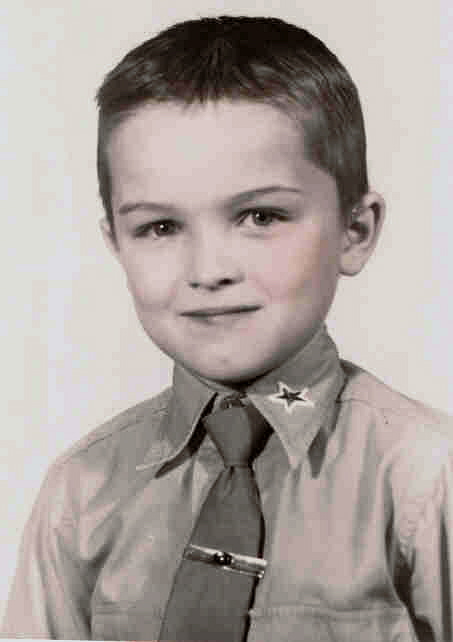
Joey was a very impressive
person, exceptionally bright and very talented. 
In addition to being a very good student, he was a remarkable
artist.  He was very athletic, too.  Blond, small but compact, he could swim more
than two lengths of the pool underwater in just one breath.
Because Joey now was an
American citizen, he had the honor of being drafted into the American army in
1966 and being sent to Vietnam to go to war to save the world for
democracy.  On one unfortunate day when
he was slogging through the rice paddies or dense jungles, he contracted
malaria and was removed to the rear.  He
was given time to recover his strength and eventually returned to the front
lines.  His company received enemy fire,
and Joey did not survive.  His family was
notified.  He was only twenty-two.
As I drove Mr. Bodnar up the
hill, I mentioned that Nicholas was in my class.  Mr. Bodnar then quietly asked me, “Did you
know Joey?”  I replied, “Yes,” and said
that I had admired him.  There was a
moment of silence, after which Mr. Bodnar, in a soft, tearful voice, said,
“They killed my Joey.”
It was clear to me what Mr.
Bodnar meant.  The “they” that he was
referring to were not the Vietnamese people who had killed Joey; the “they”
were not some faceless enemy.  The “they”
he was referring to was the American government that had the legal right to
draft this naturalized boy and send him off to war, adding him to the 58,000
others who were killed in Vietnam – – a boy from a family that had fled Hungary
to escape violence and governmental oppression, who had come to America to find
peace and safety.  I deeply felt the
tragic irony of Joey’s fate.
We came to the address where
Mr. Bodnar was to do some work.  He
opened the door and got out, thanking me for the ride.  I sincerely wished him well.  After the door closed and I continued on, Mr.
Bodnar’s painful lamentation continued to haunt me, “They killed my Joey.”  I never have forgotten.  Those words and the mournful sound of Mr.
Bodnar’s voice have remained with me ever since.
© 23 August 2014
About
the Author 
I have had a life-long fascination with people
and their life stories.  I also realize
that, although my own life has not brought me particular fame or fortune, I too
have had some noteworthy experiences and, at times, unusual ones.  Since I joined this Story Time group, I have
derived pleasure and satisfaction participating in the group.  I do put some thought and effort into my
stories, and I hope that you find them interesting.
Birth Experiences, by Ricky

        I don’t remember being born, but I
imagine it was not a pleasant experience being squeezed through a small opening
like toothpaste from a tube and suddenly finding oneself in a cold unfriendly
environment without mom’s heartbeat to supply normalcy.  I’ve since learned that it wasn’t an
enjoyable experience for my mother either.
        I do remember
that the births of my four children filled me with happiness.  Considering what my wife went through and
what she put me through during “transition”, it jolly well better had made me
happy.
        There were some
rather humorous events during the birth of our first daughter in 1977.  At about 5AM, I was awakened by a swift poke
in the ribs and a voice that said, “My water broke.  Go get a towel.”  I sleepily replied, “What?” after which the
first message was repeated.  I then
staggered to the bathroom to get a towel, but first answered the call of nature
for about 1-minute.  Meanwhile, Deborah
was repeatedly yelling at me to hurry up. 
Well, this is only funny in hindsight but the excitement of the
impending birth quelled her anger.
        By 10PM she
still had not dilated sufficiently for birthing nor had she eaten anything
since dinner the day before.  Deborah was
famished so I went to a McDonald’s and brought her back a Big Mac and a vanilla
shake, which she wolfed down reasonably slow considering.  At the midnight nursing shift change, an
unsympathetic nurse took over and decided to “move things along” by trying to get
Deborah to push, attempting to use the baby’s head to stretch the cervix.  At one point, Deborah was told to tuck her
chin down and push hard.  Deb tried once
but told the nurse that it made her gag. 
The nurse told her it was nonsense and to tuck her chin and push.
        The nurse was
standing where the doctor would stand during delivery so she could monitor the
cervix stretching.  Deb did as she was
told and again told the nurse it was making her gag.  The nurse again insisted that Deborah to tuck
her chin down and push hard.  At this
point, the nurse learned an important and disgusting lesson as Deborah threw up
her recently ingested Big Mac and vanilla shake.  It was a perfectly cylindrical projectile
that arched over her chest and stomach and hit the nurse squarely in the chest.  I was mortified on behalf of the nurse and
did not laugh until the nurse had angrily stomped out of the room.  After all, she had been warned, apparently she
was a “know-it-all” type.
        With some more
suffering on Deborah’s part, but no more drama, our first daughter was born
26–hours after Deb’s water broke.  The
smile and happiness on her face when she was able to hold our baby made it all
worthwhile for the both of us.
        Each of the
following children took less and less time to deliver.  The only other unforgettable event was during
the birth of our third baby, our son.  He
was two weeks overdue and large.  It was
decided that Deborah would be “induced” using Pitocin.  The day for birthing arrived.  We had never needed Pitocin before and did
not know exactly what to expect.  We
waited and waited and waited for the Pitocin drip to take effect.  After about two hours, nothing had begun and
it was explained that the Pitocin did not work because Deborah’s body was not
ready to give birth.  So, the doctor
decided to wait another week.
The next delivery day also arrived
and all went well with the preparation until the nurse administered the
Pitocin. Again we waited and waited and waited but nothing was happening.  After about an hour, another nurse arrived
and discovered that the first nurse had missed the vein and the Pitocin was not
getting into Deb’s blood stream.
        So, while the
nurses were now preparing everything to insert the drip needle properly, I went
to another wing of the hospital for a brief visit with a family friend who was
in the hospital due to heart issues. 
After about 20-30 minutes, I returned to Deborah only to find out that
she was in transition, yelling at me for not being there (I was her Lamaze
labor coach) and was about to be wheeled into the delivery room.  Apparently, Pitocin works very fast and I
barely had time to change into the delivery room green scrubs.  I arrived just ahead of the doctor.
        One week later, Deb
and I were driving two cars to Florida from Montana, as I had just been
discharged from the Air Force.  That was
the trip that was hell for Deborah.  But
that is another story probably best not remembered or told—the modern version of the pioneers
crossing the prairie in covered wagons or on foot.
© 27 January 2014 
About the Author 
I was born in June of 1948 in Los Angeles, living first in
Lawndale and then in Redondo Beach.  Just
prior to turning 8 years old in 1956, I began living with my grandparents on
their farm in Isanti County, Minnesota for two years during which time my
parents divorced.
When united with my mother and stepfather two years later
in 1958, I lived first at Emerald Bay and then at South Lake Tahoe, California,
graduating from South Tahoe High School in 1966.  After three tours of duty with the Air Force,
I moved to Denver, Colorado where I lived with my wife and four children until
her passing away from complications of breast cancer four days after the 9-11-2001
terrorist attack.
I came out as a gay man in the summer of 2010.   I find writing these memories to be
therapeutic.
My story blog is, TheTahoeBoy.Blogspot.com.

A Travelogue of Terror, by Phillip Hoyle

I suppose I’ve always held an
exaggerated sense of the word terror and an exaggerated sense of my own safety.
Still, I do recall one dark night thirty years ago when I realized some of the
big things might not go well. It was during a family trip to celebrate Christmas
in western Colorado. Packed into our VW Jetta, we left our home in mid-Missouri
stopping overnight at my parents’ home in central Kansas. The next morning we
continued on our way with my sixteen-year-old son Michael driving. I wanted him
to experience driving on a long trip since in my teen years I did the same
thing. I recall that while driving those long hours I had become used to where
the car was on the road and no longer had to calculate its position by keeping
the white marks on the right of the lane lined up with a certain point on the
fender. It worked for me and I hoped it would for him. He drove well, but on
our approach to Limon, Colorado, a light snow began to fall. “I’m not ready to
drive in this,” Michael announced, so he and I switched places. Like a good
navigator, he tuned in the radio for more information about the storm. Since it
was moving toward the southeast, I decided we should change from our plan to
drive through Colorado Springs and continue on I-70 through Denver and over the
mountains. I couldn’t imagine crossing the high plains country on US-24, a
two-lane highway that had always seemed rather narrow. I didn’t want to risk
getting stranded out there with its few small towns and few snowplows. Certainly
I didn’t want an accident. I hoped by going northwest we would drive out of the
storm.
The snow picked up just west of Limon
in that high country known for its terrible winds and difficult driving
conditions. In fact it became so bad we saw lots of semi’s jackknifed in the
ditches along the road. I had driven in snow many times, so confidently and
carefully we continued west. As we neared Denver the snow on the road got
deeper and deeper and the Interstate became nearly deserted. Since I didn’t
want to get stuck in Denver for Christmas, I proposed we stop briefly for
gasoline and a quick meal.
We got back on I-70 as evening darkened.
The snow kept falling, the driving conditions steadily worsened. As we started
into the foothills, I said to my family, “I’m going to follow that tan 4-wheel-drive
vehicle. Its big tires should keep a track open for us.” My idea worked well
enough. Then we were climbing the incline past Georgetown, still in the tracks
of another SUV. Entering the Eisenhower tunnel at the top of the divide gave me
a great sense of relief. With no snow falling, the windshield warmed up and I
felt calm; that is until we emerged into a whiteout with 20-miles-per-hour
winds and a minus 20° F temperature. Immediately the windshield frosted over.
All I could see were the out-of-focus red lights on the car in front of me. “See
those lights?” I told my family. “I’m going to follow them and hope for the
best.” That road is steep, a fact I was all too well aware of as I downshifted and
said my prayers.
We made it safely to the bottom of
the incline, exited the road at the first opportunity, and pulled into a
service station with a restroom. I ran inside only to find a long line of
people impatiently waiting to use the all-too-inadequate toilet facilities. The
terrifying ride into Denver, up the divide, and back down was bad, but the wait
in that line with the prospect of wetting my pants was for me an even greater
terror. By the time I got into the restroom, I was shaking. Some minutes later
more relaxed, a thankful man emerged. I ate some unhealthy but comforting snack
food, drank a Coca Cola, filled the gas tank, and gathered the family again to
travel on to Battlement Mesa. Thankfully the snow gave out on Vail Pass. The
snowplows kept that part of the road passable. We spent the night at the home
of one of my wife’s relatives before driving the rest of the way to Montrose the
next morning in full, dazzling, comforting sunlight.
That’s about as close to terror as I
have come, and I freely admit it was quite enough for me. Furthermore, I
realized far beyond the fears of driving snowy roads that needing to pee and
not being able to do so presented a new threat of terror to a middle-age man.
Now as an old man, I have known that terror way too often.
© 28 Oct 2014 
About the Author 
Phillip Hoyle
lives in Denver and spends his time writing, painting, and socializing. In
general he keeps busy with groups of writers and artists. Following thirty-two
years in church work and fifteen in a therapeutic massage practice, he now
focuses on creating beauty. He volunteers at The Center leading the SAGE
program “Telling Your Story.”
He also blogs
at artandmorebyphilhoyle.blogspot.com

House Cleaning, by Lewis

I
have been doing housework since I was no more than eight years old.  I remember this very specifically because the
summer of my eighth year I contracted ringworm of the scalp.  It was the summer that my nuclear
family—granddad, dad, mom and me—drove Granddad’s 1952 Packard sedan to New
England and Washington, DC.  We hadn’t
been home one week when my scalp started to scale and itch.  We had a pet cat, which had every reason to hate
me but, when checked, it showed no sign of the skin disease.  I might have picked it up in the Big Apple
but my favorite theory is that I got it from putting the nozzle of the vacuum
cleaner up to my cheek and making funny faces at myself.
In
any event, that was only the beginning of a series of odd associations with
house cleaning in my early life.  My
parents were lower middle class folk who rarely could afford to pay a cleaning
person but my mother hated—that’s H-A-T-E-D—housework—so, when she was working,
it was necessary to pay someone to clean our house.  One day, according to my mother, she found a
black cleaning woman asleep on her bed. 
That was the last time she ever paid anyone to do housework and, as far
I know, the last time she ever spoke kindly of a black person.  No, from then on, if house cleaning needed to
be done and I was around, I did it (or, so it seems, looking back across so
many foggy years).
Luckily
for me, I kind of liked doing housework. (Please note the past tense!)  I put cleanliness and order above godliness
and I was the only person I trusted to do the job right.  When I started working at the public library
at the age of 15, my favorite job was to “read the shelves” on Saturday
mornings.  That meant putting hundreds of
fiction books in alphabetical order by author and title and a similar number of
non-fiction books in Dewey Decimal System order.  I could do it faster and more accurately than
anyone else on the staff though they seemed only upset that I lay on the floor
to read the bottom shelf.
My
second-favorite job was working the basement stacks.  Down there was a large “squirrel cage” that
housed back issues of periodicals, including National Geographic.  Growing
up in the 1950’s meant that there were a number of native peoples in the world
who were accustomed to wearing little other than a loin cloth and, sometimes,
some body paint or other ornamentation. 
The only magazine store in my home town was a great source of comic
books and Christian literature but most definitely lacking in anything that
would appeal to the prurient interest of a nascent adolescent.  National
Geographic
filled the gap nicely, especially articles on the golden, stocky
tribes of the Amazon River basin.
In
my senior year of college, I took a job cleaning house for a retired professor
and his wife.  He was wheelchair bound
and she was his primary caregiver.  Their
house was a two-story colonial with a half-finished basement.  The finished half was the professor’s office
and the unfinished half a place to store books, magazines, and other
paraphernalia.  My job was to clean only
his office every other week, which only took two hours.  I think they paid me $2.50 an hour but that
would pay for soda, movies, and cigarettes for the month.  Soon I discovered that the professor was a
collector of National Geographics.  Suddenly, my job satisfaction improved by
leaps-and-bounds.
I
now no longer do house cleaning—for myself or anyone.  The thrill has gone.  I still get a kick, however, out of watching
the houseboy in La Cage aux Folles as
he combines his flouncing with his feather dusting.
© 1 April 2013 

About
the Author 
I came to the beautiful state of Colorado out of my native Kansas by way of Michigan, the state where I married and I came to the beautiful state of Colorado out of my native Kansas by way of Michigan, the state where I married and had two children while working as an engineer for the Ford Motor Company. I was married to a wonderful woman for 26 happy years and suddenly realized that life was passing me by. I figured that I should make a change, as our offspring were basically on their own and I wasn’t getting any younger. Luckily, a very attractive and personable man just happened to be crossing my path at that time, so the change-over was both fortuitous and smooth. Soon after, I retired and we moved to Denver, my husband’s home town. He passed away after 13 blissful years together in October of 2012. I am left to find a new path to fulfillment. One possibility is through writing. Thank goodness, the SAGE Creative Writing Group was there to light the way.

Lonely Places, by Gillian

The
recent hundred-year anniversary of the beginning of WW1 started me thinking
about how war, above any other single cause, creates lonely places of the soul.
After all, the very essence of the armed services is to nullify that; to create
a sense of belonging and total commitment to your military comrades. To a
considerable extent, I’m sure it succeeds. But at the same time it still leaves
ample room for lonely places. Did that man hanging on the barbed wire of no
man’s land in agony, screaming for one of his buddies to shoot him, feel less
alone and lonely in his terrible circumstances simply because he had
buddies? I cannot imagine so. Did that 
tail gunner of the Second World War, huddling cold and frightened in his
rear turret, not feel impossible alone?
But,
sadly, it is not just the combatants who inhabit such lonely places. It is
also, very often, the survivors, and certainly the people who love the ones who
died or returned as shattered pieces of their former selves, to occupy their
own lonely places. We only have to hear that someone is a Vietnam Vet to
immediately conjure up a vision, alas all too frequently correct, of someone
with  …. well, let’s just say, a
vulnerable psyche. The estimate of total American Vietnam Vet suicides is
currently about 100,000; approaching double the number of Americans killed
during the twenty-some years of that seemingly endless, fruitless, war. Right
there are 100,000 vacated lonely places. And of course it’s not just the
veterans of that war who inhabit places so lonely that eventually they have to
take the only way out they can find. The U.S. right now suffers an average of
22 Veteran suicides each day, most of the younger ones having returned
from Iraq or Afghanistan with battered bodies accompanied by memories dark
enough to extinguish the light in their eyes, and their souls. 22 more lonely
places available every day, and no shortage of new tenants.
World
War 1, was a terrible war that was supposed to end all wars and instead gave
birth to the next, already half grown. Whole villages became lonely places.
They had lost an entire generation of men in two minutes “going over the
top,”, leaving only women, old men, and children, to struggle on. Children
dying before their parents is not the natural order of things, and creates
empty spaces so tight that they can squeeze the real life from those held in
their grip, leaving only empty shells to carry on. Consider that awful story of
the Sullivans from Waterloo, Iowa; all five sons died in action when their
light cruiser, USS Juneau, was sunk, (incidentally, one week after I was born,)
on November 13th, 1942. How on earth did their parents and only sister cope
with that one?
Several
years ago I spent some weeks in Hungary. A Jewish friend in Denver had given me
the address of her cousin in Budapest, and I arranged a visit. This poor woman
had lost her husband and their only daughter, thirteen at the time, in
Auschwitz, but somehow survived, herself. She showed me the numbers on her arm,
and talked of nothing but her child, proudly, sadly, showing me photos of this
shyly smiling young girl. I had never met a Concentration Camp survivor before,
nor anyone who had lost their family in one. I felt physically sick but bravely
sat with her for two hours, hearing every nightmare of this family’s holocaust
as if it had just happened the week before. That was how she talked of it, and
I’m sure that’s how it felt to her. She had not lived since then, but simply
drifted on through that huge empty place of the lonely soul, going through the
motions.
One
of my own, personal, lonely places, and I suspect most of us have many of them
we can topple into at any unexpected moment, is the one I can get sucked into
when I find myself forced to confront Man’s constant inhumanity to Man. It’s
not only war as such, but any of the endless violence thrust upon us by
nations, religions, and ideologies. On 9/11/2001 I sat, along with most
Americans and half the world, with my eyes gazing at the TV, somehow mentally
and physically unable to detach myself. The one horror which burned itself into
my brain, out of that entire day of horror, was two people who jumped, holding
hands, from the hundred-and-somethingth floor, to certain death below. I wish
the TV channel had not shown it, but it did. I wish I hadn’t seen it, but I
did. It recurs in my protesting memory, and tosses me into my own lonely space,
even as I involuntarily contemplate theirs. Can you be anywhere but in a lonely
space when you decide to opt for the quick clean death ahead rather than the
slow, painful, dirty one fast encroaching from behind? How much comfort did you
get from the warmth, the perhaps firm grip, of that other hand? Did these two
people, a man and a woman, know each other? Were they friends? Workmates? Or
passing strangers? I have no doubt I could find the answers on the Web, but I
don’t want to know. Those two share my lonely place way too much as it is. They
estimate about 200 people jumped that day, but the only other image that stayed
with me, though not to revisit as often as the hand-holding couple, was a woman
alone, holding down her skirt as she fell. I felt an alarming bubble of
hysterical laughter and tears rising in me, but in the end did neither. To
paraphrase Abraham lincoln, perhaps I hurt too much to laugh but was too old to
cry. No, I doubt I will ever be too old to cry; in fact I seem to do it more
easily and with greater frequency. And perhaps that’s good. At least it’s
better than being, as I was that day, lost in my lonely place, too numb to do
either.
In
May of 2014, the 9/11 Museum opened. It occupies a subterranean space below and
within the very foundations of the World Trade Towers. That sounds a bit creepy
to me. Then I read that hanging on one wall is a huge photograph of people
jumping from the burning building, propelled by billowing black smoke. Why?
Talk about creepy. Why is it there? These people have loved ones, we
presume. Do we have no reverence, no respect, for the dead or for those who
remain? I feel my lonely place approaching. It rattles along in the form of an
old railroad car; doubtless it contains doomed Jews et al. My lonely
place has much of Auschwitz within it. I know for sure that I will never visit
that 9/11 museum. I did visit Auschwitz, and it was awful, but still there’s
the buffer of time. I hadn’t, unlike 9/11, watched it live on TV. I breath
deeply and feel my biggest, deepest, lonely place, pass on by. No, I won’t be
visiting that museum. There are times when those lonely places can only be
fought off with a big double dose of denial.
© August 2014
About the Author 

 I
was born and raised in England. After graduation from college there, I moved to
the U.S. and, having discovered Colorado, never left. I have lived in the
Denver-Boulder area since 1965, working for 30 years at IBM. I married, raised
four stepchildren, then got divorced after finally, in my forties, accepting
myself as a lesbian. I have now been with my wonderful partner Betsy for 25
years.

A Picture to Remember, by Carol White

In the early 1980s my
partner Judith and I had attended the Gay Games in San Francisco, the second
one to be held in that city.  It’s
actually the Gay Olympics, but the “real” Olympics would not allow us to use
that word, so the founders decided to call it the Gay Games.  And they decided that the third one should be
held outside the United States, but not too far away, so that it would have
more of an “international” flavor to it. 
They decided on Vancouver, British Columbia for August 1990, and they
would call it Celebration ’90: Gay Games and Cultural Festival, since they were
adding many of the arts as well as the sporting events.
Around the beginning of 1988
I got a harebrained idea that it would be fun to organize and conduct a world
chorus to sing at that event, and that it would be called the Celebration ’90
Festival Chorus.  So I made a couple of
trips to Vancouver to meet with the organizers of the games and managed to convince
them to let me do it! 
We formed a small organizing
committee in Denver that met in our living room, and we began two years of
effort to make that dream come true.  At
that time we had no computers and no email and no Facebook or websites to aid
us in our recruitment efforts.  So we
began to put ads in gay and lesbian publications across the country, as well as
advertising through the Gay Games themselves, and trying to use GALA Choruses
too, although most of the choruses were not interested because they were so
busy with their own rehearsals and concerts. 
I rented a P.O. Box at a nearby post office, and I would go by there
every day and check to see if we had a new soprano or alto or tenor or bass. 
I decided what music we
would sing and we raised money to order all the music, as well as black folders
and T-shirts that one of our members had designed.  Somehow I got rehearsal tapes made, which
were really the old cassette tapes, and as the time approached, we had mailing
parties to send out all the music and tapes and fold and pack all the
shirts. 
Meanwhile we were working
full time at our jobs and we were not out at work.
After many trials and
tribulations, we flew to Vancouver on a Friday in August of 1990 with great
anticipation but not knowing exactly what to expect.  The next morning we went to the church where
we were supposed to rehearse, and 400 singers showed up with music in hand and
ready to go.  We had members from 20
states, seven Canadian provinces, the Yukon Territory, Australia, England,
Germany, France, and South Africa.  We
arranged them in sections where the congregation would normally sit, and I was
up front.  You can just imaging that the
first sounds that came out of that choir were absolutely thrilling! 
We had three hours to
rehearse that morning, then a lunch break, and that afternoon we rehearsed at
B.C. Place, which was Vancouver’s domed stadium, to perform there that very
night with three songs for Opening Ceremonies. 
They had built risers for us and they were set up on the field. 
By the time we got to the
stadium that night for Opening Ceremonies, the energy was through the
roof.  There were approximately 10,000
athletes from all over the world, and approximately 10,000 spectators from
around the world in the stands who had come to observe.  The chorus went out onto the risers and sang,
“Come celebrate, come celebrate, come celebrate our spirit.  The sound of hearts that beat with pride, now
let the whole world hear it.” 
Then we sat together in the
stands while we had the parade of athletes just like the Olympics, where they
marched in in teams from all the different countries and they congregated in
the middle of the field.  After some
speeches and other performances, the chorus went back out and sang “Do You Hear
the People Sing” from Les Mis.  This song
happened while they were running the torch into the stadium, and just as they
ran up the stairs and lit the Olympic flame, we finished the song with “Tomorrow
comes.”  It was midnight. 
The next morning I could
hardly get out of bed.  My body ached all
over.  But we had to rehearse all morning
every morning for a concert that we were going to give on Friday night at the
Plaza of Nations, an outdoor venue which had been built for the World’s Fair
when it was held there. 
So Sunday through Friday we
worked on the concert program as follows: 
Diversity, Music of the Night from Phantom of the Opera, March of the
Hebrew Captives from Verdi’s Nabucco, Song of Peace from Finlandia, Living with
AIDS, The Great Peace March, Brothers and Sisters, and Singing for Our
Lives.  And early Friday evening we
performed all of those selections to a packed crowd at the Plaza of
Nations.  Here is the “picture to
remember” from that concert.
Then we rehearsed
again on Saturday for the Closing Ceremonies that were to be held that night
back at B.C. Place, where we sang “We’re gonna keep on moving forward, Keep on
moving forward, Keep on moving forward, Never Turning Back, Never Turning Back.” 
After the chorus sang
that night, Judith and our friend Bob and I went up into the stands to watch
the rest of the show.  They used the
chorus on the field to form two long lines holding up flags for the big parade
to pass through.  I remember looking down
at that scene as the happiest time in my whole life.  We had actually pulled it off!  I think it was an extremely happy time for a
lot of other people there too.
After everyone went
back home, several of the individuals who had sung in that chorus organized gay
and lesbian choruses in their home towns, including Winnipeg, Manitoba;
Toronto, Ontario; Victoria, B.C., and Sydney, Australia. 
I have not attended
any Gay Games since then, but it is my understanding that each one has included
a Festival Chorus.
© April 2015
About
the Author 
I was born in Louisiana in
1939, went to Southern Methodist University in Dallas from 1957 through 1963,
with majors in sacred music and choral conducting, was a minister of music for
a large Methodist church in Houston for four years, and was fired for being gay
in 1967.  After five years of searching,
I settled in Denver and spent 30 years here as a freelance court reporter.  From 1980 forward I have been involved with
PFLAG Denver, and started and conducted four GLBT choruses:  the PFLAG Festival Chorus, the Denver Women’s
Chorus, the Celebration ’90 Festival Chorus for the Gay Games in Vancouver, and
Harmony.  I am enjoying my 11-year
retirement with my life partner of 32 years, Judith Nelson, riding our bikes,
going to concerts, and writing stories for the great SAGE group.

Multi-Racial, by Betsy

In the New Jersey
suburb where I grew up there was very little diversity in the groups of people
to whom I had any exposure.  My friends
and family, my parents friends, and most of the people in our community were
white and Christian.  Black people entered
our community to do work for the white people–always house work, child care,
or yard work.  This was the extent of my
exposure.
Later in the early
1950’s we moved to the Deep South.  My
eyes were immediately opened to not only the presence of an entire culture made
up of black people, but also to the injustices and insults that routinely were
dealt them.  In Louisiana at the time
everything was highly segregated. I have to say that the denial of access to
public services, stores, parks, recreational facilities, schools, some jobs, etc.
was indeed shocking. This was the highly valued way of life in the South, they
declared.  Always had been, and always
would be.  Everyone, white and black,
wished it to be so, I was told. Every man knew his place in that culture and
every man was content with the status quo. 
Why ever change it?  It worked for
everyone, didn’t it?
I left the Deep South
after three years in high school.  I left
for college and I deliberately chose to leave that part of the world.  I never felt like I belonged.
Given this deeply
entrenched way of life it is no wonder that when I returned to Louisiana to
attend my step-mother’s funeral two decades after the civil rights legislation
had gone into effect, I discovered that what had changed was that many public
facilities had become private, thus giving legality to excluding certain people
from entry.  One positive change,
however, that I observed was that many skilled labor positions previously reserved
only for whites were now occupied by black people.
In college as a student
of sociology I learned that there were three races. White, black, and
yellow.  Detailed studies had been done
to describe the respective features of each race.  The implication, if not the direct message,
was that each race would retain its own distinctive features, and would always
be identifiable if the individuals of each race kept to themselves.  Of course, there was no mention of any social
inequities among the three races–no mention of unequal rights.
Then came the civil
rights movement of the 1960’s.  Being
occupied as a new mother at that time, I did not become active in the movement
except for cheering for the civil rights advocates and mostly observing what
was happening.  I saw that John Kennedy
was on was I deemed to be the right side, so I switched sides and became a
Democrat.  There were Republicans on the
side of justice, too, but they were working much too slowly and not making
enough noise.  Kennedy and later LBJ, became my heroes.
When we moved to Denver
in 1970 I observed a much more multiracial society than I had seen in
Rochester, NY or anywhere else.  Blacks,
Asians, Latinos, and whites all going about their daily business together.  At least on a given day in down town Denver
it appeared that way.  We chose to live
in Park Hill neighborhood because it was an “integrated neighborhood.”  True, it was integrated to some extent.  Apparently those who did not want to live in
an integrated community had been part of the “white flight” that had taken
place years earlier.
I soon began working
for the Girl Scout Council after we became settled in Denver.  The mission of the organization at the time
was to serve the entire community. 
Although the mission was not written as such, those of us in the membership
Department knew it meant we were to change our image from a white christian
organization to that of a multiracial organization with spiritual values not
identified with any specific religion–but all inclusive.  The traditional image of the Girl Scouts is
that it is an organization for   white,
Christian women and girls.  Although in
truth, my experience has been that the organization has always been pro-active
when it comes to including all races, religions, and socio-economic
groups.  In fact, during my 22 year
career with GS Mile Hi Council, a huge part of my job was to see that the Girl
Scout experience was delivered the to girls of all ethnic, racial, and
socioeconomic groups.  For example, I
remember planning how to approach a newly established community of Vietnamese
immigrants to assure them that the Girl Scout organization welcomes their
girls.  Of course, there was no way to do
this successfully at the time.  It would
take a couple of generations before the families had any interest in joining
our ranks.
We have always had a
multiracial staff at the Girl Scouts. 
When I first hired on, my supervisor was an African-American woman.  When she left for greener GS pastures in the
National Council Office, of course I got a new boss.  This time a woman of Hispanic descent. Many
of our board members, the real bosses, and many volunteers who carry out the
programs have been women of color.  When
I became a team leader my staff was multiracial.  In fact, at one time, of the seven of us,
three were white.
My grandfather was a
reasonable man, a wise man.  However he
was a product of his generation and a bit misguided when it came to racial
issues. I remember arguing with him about the injustice of racial inequalities
in our society. My parents had instilled in me a strong sense of justice.
Because of that and, I am sure, because I was becoming sensitive to the feeling
of being different when in the minority, I could not accept my grandfather’s
ideas and had to tell him so.    For me
life was easy though.  My difference
could be hidden; it did not show up in the color of my skin. (Furthermore I had
escaped the dreaded queer-o-meter at birth.)
I have a so-called
multiracial family.  I recently came
across a photo of my daughter with her partner at the time, a black man from
Africa, and my son and his new Asian wife from China.  In another photo next to it, sits my oldest
daughter and her partner of 15 years, an African American woman who calls me
“Mom.”  My younger daughter later married
a black man from Cuba.
Let me tell you about
the importance the concept of race has for me. 
What comes to my mind when someone mentions the word “race” are the
following memorable and multiple experiences: the high school track team, NASTAR
ski racing at Winter Park, a race against my aging body on a cross country
bicycling trip, a swim-bike-run triathlon at Cherry Creek State Park, the Race
for the Cure, and the Cherry Creek Sneak.
© 16 April 2013
About the Author 
 Betsy has been active in the GLBT community
including PFLAG, the Denver women’s chorus, OLOC (Old Lesbians Organizing for
Change).  She has been retired from the
Human Services field for about 15 years. 
Since her retirement, her major activities include tennis, camping,
traveling, teaching skiing as a volunteer instructor with National Sports
Center for the Disabled, and learning. 
Betsy came out as a lesbian after 25 years of marriage. She has a close
relationship with her three children and enjoys spending time with her four
grandchildren.  Betsy says her greatest
and most meaningful enjoyment comes from sharing her life with her partner of
25 years, Gillian Edwards.

Reputation, by Ricky

In 8th grade I was given a reputation as a DAR, Damn Average Raiser, when my teacher pointed out to my classmates that I received the highest grade on a test when I only had one night to prepare and they had two weeks.

In high school that reputation followed me but was undeserved as I was mostly an “A” and “B” student, mostly because I did not study but just crammed information the night before a test. At that point in my life, I still had a pretty good memory.

In the military as an enlisted member, my reputation was outstanding because I had a logical oriented brain and I could accomplish multiple tasks in a timely manner. As an Air Force officer, in the eyes of the enlisted men/women I supervised, I had a reputation of always helping the enlisted force rather than being a severe disciplinarian. In the eyes of my commanders, my reputation was one of being too soft and not “hard core” by building my career on the number of careers I could destroy.

As a deputy sheriff, my reputation was of being very tough on DUI drivers and speeders. But my patrol district traffic accidents dropped from 93 to 47 in one year with traffic related deaths from 7 to 3. So locals could call me what they will; I don’t really care. We saved at least 4 lives my first year on the job.

As a husband and father, my family set my reputation as a “fix-anything” person. I has taken me a life-time to dispel that belief, but it just won’t go away.

In this group, you all know me for a pun loving smart ass.

© 27 October 2014

About the Author

I was born in June of 1948 in Los Angeles, living first in Lawndale and then in Redondo Beach. Just prior to turning 8 years old in 1956, I began living with my grandparents on their farm in Isanti County, Minnesota for two years during which time my parents divorced.

When united with my mother and stepfather two years later in 1958, I lived first at Emerald Bay and then at South Lake Tahoe, California, graduating from South Tahoe High School in 1966. After three tours of duty with the Air Force, I moved to Denver, Colorado where I lived with my wife and four children until her passing away from complications of breast cancer four days after the 9-11 terrorist attack.

I came out as a gay man in the summer of 2010. I find writing these memories to be therapeutic.

My story blog is TheTahoeBoy.Blogspot.com

Reputation: Too Precious to be Trusted, by Phillip Hoyle

Reputation has little to do with the way I see other people. I’ve come to this rather strange way of thinking because for me people are much too interesting and potent to be known for what actually is an outsider’s point of view and idolization. A fine reputation is the result of the appearance one makes in regard to his or her adherence to reified social norms. I developed quite a reputation as an effective minister. I was nice to people, worked hard, provided creative and unusual programming for people of many ages, prepared my choirs adequately, appreciated the work of volunteers, spoke publically with enough charm not to offend, had a great attendance record in the church office and in hospital calling, worked well with the church staff, and had a family that also participated in the congregation’s life. People liked me. I didn’t embarrass them with my ideas. They knew I was not afraid of the strange folk like foreigners, poor, and needy. I was a great resource for a large church organization for my ability to work with difficult people. And eventually I wrote curriculum resources for religious education. I was somewhat known for whatever that is worth.

I took a job at a church in a western city. I loved the church facility. I found the congregational leaders delightful. I appreciated the strong core of folk who nurtured liberal concerns and practical approaches to church work. I enjoyed the support of a cadre of retired ministers in the congregation. I liked the music program. On and on. The Senior Minister, Bill, told me one day I was supposed to be a woman. I responded, “I’m trying as hard as I can.” We laughed. He said that the search committee for the associate minister had made obtaining a female clergy as its goal. They found me. He also said the hiring was influenced because of my fine reputation.

I thought about that and realized that the Area Minister, Jim, had wanted me to come to that Region because he trusted my leadership, appreciated my willingness to work in summer camp and conference programs, and liked my cheerful disposition. I wondered what all he had said to move the committee away from their original intention. Although I knew that one person’s likes often influenced committee members, I also knew the appeal to reputation actually set up a minister for failure since the minister would never really know how he or she was represented, what actually was the content of that reputation. I trusted that work-wise I would sufficiently meet the needs of staff and congregation. I was already doing so when I heard I was supposed to be a woman and about my fine reputation. But I wondered.

Some years before I had known a past minister of the church where I worked. His divorce from his wife several years after leaving our congregation made the local gossip. People expressed such deep disappointment to me about the divorce. I don’t recall if the minister or his wife initiated the proceedings, but do remember clearly that the critics didn’t voice much interest in the whole picture of his life. Still, like is true in the kind of church I came from, they did fall short of saying “tut, tut,” this last probably out of deference for his then ex-wife. I listened and wondered how this change affected their feelings about what he had taught them, what leadership he had provided, what sense of faith he had engendered. Their sense of disappointment seemed larger than necessary to me. He had spoiled their ideal.

So when in my next congregation I knew the search committee had been influenced by my reputation, I became extremely alert to the function of reputation and its relation to ideals and expectations. When I learned I was hired because of my reputation, I wondered over my work and its consequences, especially were it ever to come out that my life might have changed within just a few years after my exit from that fine church. What would those fine folk think when they got the gossip that I, who was widely appreciated, left ministry fifteen years before retirement age, left my wife, moved to a large city to live as a homo (probably the largest reputation spoiler), and took up a new career as a massage therapist (oops, maybe this was the main spoiler). I knew I couldn’t control whatever people chose to think. I couldn’t save them from themselves. And I knew exactly why I could never believe in reputation. Besides I have lived through too many American general elections cycles. Even the best—and the worst—reputations are far too fragile, too precious to trust.© Denver, 2014

About the Author

Phillip Hoyle lives in Denver and spends his time writing, painting, and socializing. In general he keeps busy with groups of writers and artists. Following thirty-two years in church work and fifteen in a therapeutic massage practice, he now focuses on creating beauty. He volunteers at The Center leading the SAGE program “Telling Your Story.”

He also blogs at artandmorebyphilhoyle.blogspot

Scarves by Gillian

I know those of you who’ve been in this group for some time are just tired of hearing me whine about poor battered Britain in the years immediately after WW11. Well, too bad! It happens to be the environment I grew up in and so the time and place which generated many of my childhood memories and so my stories.

And here we go again!

In the U.K., children began (and still do begin) elementary school at the age of five, not six as we do here. So in 1947 I began the daily walk to and from the same little two-room school where my mother taught. That winter has gone down in history as one of the worst U.K.winters ever, with snow on the ground for over two months and bitter cold. I developed a bad cough and what appears in my memory as a constant cold, but then most kids were sick, as I’m sure were many adults. Most of our houses were cold and damp, without central heating – for which there would have been no fuel anyway – and few people had adequate clothing and food which were still severely rationed, as were most things until well into the 1950’s. Frequently, even if you had saved enough coupons, whatever you wanted was simply unavailable anyway.

My mother decided that to survive the bitter cold, we needed scarves. But we had no clothing coupons as my growing feet had gobbled them all up in a new pair of boots. So she would knit them. Now, I doubt that wool was actually rationed, but it was not to be had. If you had old knitted garments that were simply beyond further darning, you unravelled them and saved the worn and kinky wool for future use. My mother had a cardboard box, which probably should have been sacrificed, as just about everything had been, to the War Effort, always spoken of in capitals. Somehow this tatty old thing had survived and Mum used it for storing various balls of recycled wool. We took them out reverently, handling them like cut glass. The cats had been banished from the room lest they decide that wool is a perfect plaything. I recognized some scarlet wool which I knew came from an old sweater I had had when I was little, (I now considered myself quite grown. I had started school for goodness’ sake!) and which I had worn until it threatened to inhibit my breathing. Some very ratty gray wool I recalled came from out-at-heel socks of my dad’s. Where the rest of the bits and bobs came from I had no idea. It didn’t matter anyway, they were moving on!

Perhaps a more skilled needlewoman than my mother would have been able to knit patterns, or at least stripes, with all the different colors. But Mom’s skill level was, shall we say, elementary. Before the War, when there was material available, she used to teach basic knitting to the six-year-olds. It was always facecloths, knitted on big fat needles so they came out looking more like fishing nets for the Little People. I suspect it was invariably these easy square pieces more because of my mother’s limitations than that of the kids. But my dad and I both had faith she could do scarves. What is a scarf, after all, but an elongated facecloth? She just started out with one color, tied the last piece of it to the beginning of the next, and created quite an interesting hodgepodge of colors. But Mom’s knitting was always a bit erratic. She would start out tense, her stitches too tight. But soon she would be distracted by some entertainment on the radio and the stitches got looser and looser. Before long the scarf was taking on a somewhat rolling countenance, swelling and shrinking like ocean waves. Also, to be fair, the fact that the wool was of different thicknesses did nothing to add to the consistency of the stitches. So each scarf ended up with very wavy edges, and considerable variations in width and thickness. If I could only recreate them now, I’d think they would have a pretty good chance of becoming THE fashion accessory.

My father did have a scarf but was badly in need of a new one. His apparently dated from some time Before the War and he had worn it During the War but now, After the War, it was in rags and must not have offered much protection from the bitterly cold winds of that 1947 winter.

We didn’t talk of decades in those days. All of life was divided into three time periods, always spoken of in Capitals as was The War Effort. There was Before the War, During the War, and After the War, sometimes simply referred to as Now. Before the War was a wonderful place of endless sunny days, with peace and laughter; a land of relative abundance. During the War was the land of stoicism and heroics and carrying on and making do and tightening belts and stiff upper lips, and a lot of pride. But Now, After the War, was disillusion and resentment following rapidly on the heels of the euphoria of the long-awaited peace. What had it all been for? So many dead, even more homeless and everyone was broke. Rationing and shortages were even worse Now than they were During the War.

Mum also already had a scarf from Before the War, but it was flimsy and, though pretty, not made to provide warmth. Not only was it from Before the War, but it came from some mysterious place called The Twenties. Most of the things my mother had, seemed to have come from The Twenties. She never referred to it as The Nineteen-Twenties, so I had no idea that she was talking about a time. I envisioned The Twenties as being some huge department store loaded with wonderful things – even more exciting than Woolworth’s.

Now, three strangely serpentine scarves lay proudly stretched out on the table. My mother watched proudly, waiting for Dad and me to pick the one we wanted. Dad shook his head.

“By heck! This’ll be a decision.”

He gazed solemnly at me and offered a grave wink. I wanted to giggle but somehow knew I must not. Instead I entered whole-heartedly into the game. I gave a little girly squeal, which I have to say did not come naturally to me, and wriggled in excitement.

“That one! Can I have that one?”

Mum wound it around my neck, Dad and Mom each wore one and we looked appreciatively at ourselves.

“By heck!” said my dad again, “that’s just grand!”

I have often thought, looking back, how absurd the three of us must have looked when we were out together in those ridiculous scarves; like escapees from some Dr. Seuss book. But in those days, everyone wore strange combinations of mend-and-make-do clothes, and nobody thought much about it. The aim was warmth, after all, and that we got.

Success went completely to my mother’s head. A few days later found her once again studying what was left of differently colored little balls and scraps of wool, and various needles, then at my eternally red, raw, and chapped hands.

“Gloves,” she was saying rather doubtfully to herself. “We all need gloves.”

A fleeting look of panic crossed my father’s face, to be replaced instantly by a bland smile.

“Ay, that’d be grand.” He winked at me. “But mittens,” he added, “they’d be warmer.”

“Ooh yes, mittens! Mittens!” I echoed, though I’m not sure I knew what mittens were. But I knew what gloves were, with all those fingers sticking out of them and, young as I was, I knew, as my dad did, that Mum’s knitting was not up to gloves.

“Yes,” she agreed with great relief. “Mittens. Mittens are much warmer.”

My dad was away for the next two weeks. He was an engineer, and deemed too valuable by the powers that be to be allowed to volunteer as canon fodder. Instead he worked at a huge factory a long way, at least for those days, away from home. To get to work he had to take two buses, then a train, then another bus, then walk two miles. He also worked very long very erratic hours, and so stayed in a rooming house near the factory for several days and sometimes weeks. Whatever they made at this distant factory was classified as Top Secret, another phrase which was always capitalized, so Dad never, in his whole life, talked about it. The question, what did you do in The War, Daddy? went unanswered for many a child as so many adults lived in terror of contravening the Official Secrets Act (in capitals) by saying too much, and disappearing into some distant dark dungeon. My dad did say, in some unguarded moment, that if the most exciting thing you did throughout the war was wash milk bottles, they’d find some way of sweeping it in under the Official Secrets Act.

When my father returned home this time, he was greeted by three pairs of mittens, all more or less identical except for size. The colors of all were the same random multi-colored blotches as the scarves and, on closer inspection, the shapes were not so different from the scarves. After all, with a little imagination, mittens are little more than short scarves folded over across the middle, the sides sewn up, and elastic threaded around near the open end to fit them to your wrist. But wait! What about the thumb? I had watched in fascination as poor Mum tried to knit the thumb part but could not seem to get the hang of it. After many failed attempts, she fell back on her old favorite, the elongated square. She knit what was in fact a very tiny scarf, folded it over as in making mittens, and sewed up both sides. Then, having left an opening when closing up the side of the mitten, she stitched the end open of the tiny mitten to the opening in the side of the big mitten and, voila! a mitten complete with thumb. Though in fact they looked, lying flat on the table, like nothing more than the old knitted facecloth with a miniature facecloth attached.

“Ay, that’s just grand!” Dad slid his hands into his and held his hands up, waggling his fingers open and closed. I learned later that they were way too big and would have fallen off if he had not held up his hands, and the little thumbs, as I also discovered about mine, were way too short and not quite in the right place. Who cared? They were warm! I simply tucked by thumb into my palm where it stayed nice and cozy, and ignored the little thumb addition. I must say, though, it gave me a better understanding of why hominids didn’t get far with the use of tools until they developed opposable thumbs!

Again, in hindsight, I marvel at the vision of this engineer, too valuable to be allowed to fight, turning up at this huge, Top Secret, factory, in those wildly colored, sadly misshapen mittens.

Especially in combo with the equally wildly colored and misshapen scarf, it conjures up quite a picture. And in a time and place where men rarely wore anything other than dark, conservative, clothes! But, to be honest, it wouldn’t surprise me if Dad didn’t wear them once away from home, though he always wore them when he left and when he returned. What makes me suspect this is that I caught him out in another way. I went to where he was planting potatoes in the garden, to tell him tea was ready. He started for the house and then stopped. Pulling the mittens from his jacket pockets he winked at me.

“Mustn’t go in without my handbags,” and he slid them on. And always after that I noticed him popping them on before returning indoors.

Oh, and I was so delighted with that term. Handbags. Hand bags. It described them perfectly. Bags to put your hands in! For many years after that, when Mom mentioned her handbag – it was never called a purse in Britain – I would giggle and my dad would wink solemnly, which only made me giggle more. My father said much much more to me with his wonderful winks than he ever did in words

I know this is where I’m expected to say how much I loved those mittens and that scarf, and carried them everywhere with me like Linus with his blanket. Sorry! Not so. I was ever grateful for the added warmth, but they … what is the word? To say they frightened me is way too much.

But perhaps they did make me a little uneasy. They had something of living creatures about them as they constantly changed shape. The bigger gaps in the relaxed stitching snagged too easily on things; particularly on little fingers. There was an occasional dropped stitch in there too, increasing the problem. The wool was old, some of it several times recycled and so, brittle and thin. It broke here and there, causing further unraveling, as did the slow mysterious undoing of my mothers knots. I seemed eerily to me as if they were slowly but steadily unknitting themselves, some future day to disappear, returning to little variously colored balls of yarn.

After clothing rationing finally ended, after fourteen years, in 1954, we had the luxury of store-bought gloves and scarves and my mother was relieved of the challenges of knitting. But for sure nothing ever again had such character. Nor did any clothes ever again represent so much love and laughter. My mother taught me that for those you love, you do what you must the best you can. And that is all any of us can do. And my father taught me to see the humor in just about anything, and to be ever solicitous of the feelings of others.

I searched through my old photos after I wrote this, hoping to do a show and tell of those mittens and scarves. No luck. Then of course it dawned on me. Mom did have an old camera which came, of course, from The Twenties, but even if it had still worked there would have been no film available over many years.

And that reminds me of one of my dad’s favorite expressions. It’s not original, it was a common saying used by many at the time. It’s also probably the longest sentence my father ever spoke.

“If we had any eggs, we could have bacon and eggs, if we had any bacon.”

© March 2015

About the Author

I was born and raised in England. After graduation from college there, I moved to the U.S. and, having discovered Colorado, never left. I have lived in the Denver-Boulder area since 1965, working for 30 years at IBM. I married, raised four stepchildren, then got divorced after finally, in my forties, accepting myself as a lesbian. I have now been with my wonderful partner Betsy for 25 years.