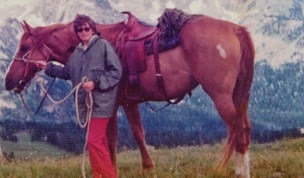
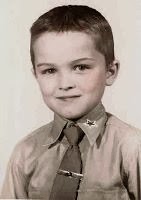
The Party by Ricky

During my 13th or 14th year, while in 8th
or 9th grade, A female classmate invited me to her birthday
party.  Sadly, I do not remember her
name, but I do remember the highlight of the party.  There were no adults present as we began to
play spin-the-bottle.  Time passed
excruciatingly slow while I watched the bottle top consistently spin pass me
and settle on other boys in attendance – some two or three times.  We each got only one spin per turn and if the
bottle stopped on the same sex or between two people, your turn was over.
According to our rules, every boy/girl partner got three
minutes alone in a large storeroom.  I
guess everyone was supposed to know what to do in that room, which I thought,
was to “make out” but no one said anything at all to confirm that belief or to
explain what was or was not expected. 
Consequently, when the bottle finally stopped on me there was an awkward
moment in the storeroom as we negotiated what we would do.  It turns out the girl did not know what was
expected either.  We admitted that we
really did not want to “make out” so we just stood there talking until the time
was up.  I was not invited to another
party as an adolescent.
After I married, I returned to college to finish a degree in
Justice Administration.  While there, I
joined Air Force ROTC.  Since I already
had four years of enlisted experience, I only needed to do the last two years
of ROTC classes and obtain a degree to become an Air Force officer.  The timing, although unplanned on my part,
was perfect and both goals aligned precisely.
One day I read on the ROTC bulletin board that there was a
mandatory “social event” at Captain Williams’ home that night; casual
dress.  I told my wife and we both
attended.  I was somewhat bewildered upon
my arrival when I did not know any of the other ROTC cadets.  It turns out that there were two Captain
Williams; one Air Force and one Army. 
Since I did not know either of their first names I accidently crashed
the Army’s social.  Captain Williams was
very gracious and invited us to stay.  We
did.
As we partook from the bountiful refreshments, Deborah asked
me to get her some of the fruit punch.  I
shortly returned with two glasses and gave her one.  I found it to be a delicious blending of
various pieces of fruit, sherbet, and 7-Up. 
Deborah sipped her’s slowly while I “sipped” much faster and went to get
another.  A short while after I returned
with my second drink, Deborah had finished and asked me to get her
another.  Before I left, I asked her if
she liked it and she responded that she did. 
I retrieved another cup of the punch for her.
After she had drunk about half of the second cup, I asked
again if she really liked it.  Deborah
was no dummy so she immediately got suspicious and asked me why I was asking
her.  I said, “Just curious.”  She replied, “What’s in it?”  I told her that there was a variety of fruit
flavors but the predominant flavor was banana. 
Deborah has hated bananas even before she could talk.  She communicated her dislike by spraying
whatever her mother had mixed bananas into all over her mother, table, and
wall.  Her mom was consistent and so was
Deborah; her mother finally gave up.  At
the social, she put down her punch cup and did not drink from it again.
This past New Year’s Eve, I went alone to a party held in the
Constitution
building.  I paid my Greenbacks and entered.  All the big Whigs were there spouting the usual
Anti-Federalist
propaganda – sounding very Republican
The Tories
family arrived at the party wearing Bull Moose headdresses.  I thought they appeared rather Progressive
but everyone else said it made them look like has-beens; so the family members
promised to Reform
and wear something more Libertarian in the future.  The hostess tried her best to provide
nutritious refreshments which included Greens
Some Bostonians took offense and wanted to hold their own little party
in another room, but a Prohibition on violence effectively prevented
them from throwing out the Tea.  A few
Silver
haired guests wanted to ruin People’s games by starting an Anti-Monopoly
chant.  Shortly thereafter, a cadre of American
Socialists
demanded Justice in entertainment and began to light up
the Marijuana.  The police responded when a Communist
and an American
Nazi
engaged in fisticuffs.  I
tried to have an Objectivist attitude towards all the activities, but since I
value Peace and
Freedom
and I am a Pacifist at heart, I left the party early along
with other Citizens.  All in all, it was a very Democratic
affair.
© 7 January 2013  
About the Author 
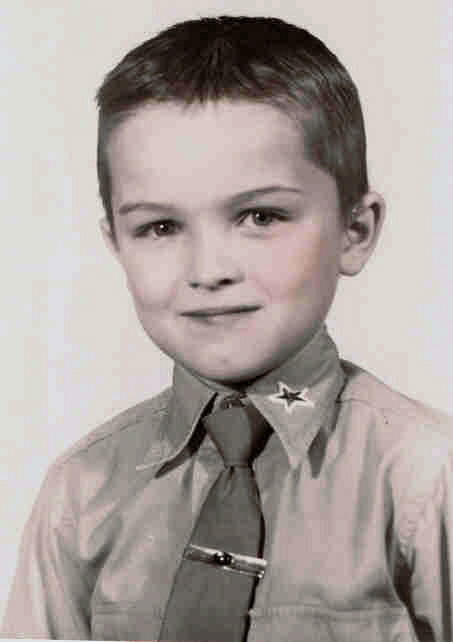
I was born in June of 1948 in Los Angeles, living first in
Lawndale and then in Redondo Beach.  Just
prior to turning 8 years old in 1956, I began living with my grandparents on
their farm in Isanti County, Minnesota for two years during which time my
parents divorced.
When united with my mother and stepfather two years later
in 1958, I lived first at Emerald Bay and then at South Lake Tahoe, California,
graduating from South Tahoe High School in 1966.  After three tours of duty with the Air Force,
I moved to Denver, Colorado where I lived with my wife and four children until
her passing away from complications of breast cancer four days after the 9-11-2001
terrorist attack.
I came out as a gay man in the summer of 2010.   I find writing these memories to be
therapeutic.

Dreams by Pat Gourley

I have always had a very active “dream-life”. It is hard to
actually measure this for sure but it seems that at least half of my sleep is
dreaming. These would be the dreams that I am aware of or can remember in the
morning. The dream recollection process is not something I often bother to do
and I do not keep dream journals and probably never will. I take the same stance
toward my dreams that the Grateful Dead took with their music. The reason they
allowed even encouraged people to tape their shows was the attitude “we are
done with it and you can do whatever you want with it”. An attitude greatly
facilitated by a huge repertoire of tunes often performed with unique
improvisation with each rendition. I view my dreams the same way – well that
was interesting but it is over and I need to get on with the day and besides I
have to really pee.
Though I have always spent a good part of my night from back
to early childhood dreaming a lot these nocturnal adventures seem to be in
sharper focus than ever these days. Perhaps that is due to the recurrent
interruption of my REM sleep with the need to get up and urinate mid-dream.
Usually I am able to go back to sleep easily and it seems I swear that the
dream picks up where it left off. I often think, usually in a dense fog or semi-dream-state,
how exhausting is this to revisit the same idiotic situation, aren’t we done
yet?
 My personal bias is
that most pharmaceutical sleep aides are bad for you certainly if used
frequently and particularly those that actually create an amnesiac state are
not good for a healthy and vibrant dream life and may, at least in a transient
fashion, contribute to waking memory loss issues. I try to live by the old
Buddhist axiom that if you wake up and can’t get back to sleep it is actually a
call to the cushion. Nothing like trying to meditate late at night in the dark
to make you start to nod off in a hurry and for me it can be as effective as
Ambien. The only time I have taken Ambien was on a transatlantic flight to
Paris, which essentially resulted in me waking up in Paris feeling dopey,
anything but rested, wondering at first how the hell I got here and second why
no one was speaking English.
In poking around the ether a bit before writing this I was
looking for a current theory on dreaming and I happened on an article from
Scientific American from a few years back. A few sentences from that piece
seemed at least somewhat applicable to my own dream life:
Dreams seem to help us process emotions by
encoding and constructing memories of them. What we see and experience in our
dreams might not necessarily be real, but the emotions attached to these
experiences certainly are. Our dream stories essentially try to strip the
emotion out of a certain experience by creating a memory of it. This way, the
emotion itself is no longer active.  This mechanism fulfills an important
role because when we don’t process our emotions, especially negative ones, this
increases personal worry and anxiety. In fact, severe REM sleep-deprivation is
increasingly correlated to the development of mental disorders. In short,
dreams help regulate traffic on that fragile bridge which connects our
experiences with our emotions and memories.
Scientific American:
July 26, 2011. Sander van der Linden
It seems to me that there is some heavy-duty
Zen implications implied in this explanation that I will not ruminate too much
on but just say we can’t always control the shit that happens to us but we can
usually choose how we react emotionally to it. Apparently dreaming may be a
great and safe way to address all sorts of unfinished waking business.
Let me relate a few of the general
dream themes I have personally and you are all free to psychoanalyze them or
not. I most often tend to pay them little heed. The closest I come to a nightmare
these days is a recurrent dream I will have about getting to the airport on
time, needless to say I am frustrated at every turn and never do make the
flight.
A dream I had repeatedly, now several
decades in the past, was that I was going to be called on to fill in and play rhythm
guitar for the Rolling Stones because Keith Richards was not able to make the
show or perhaps was passed out back stage with a needle in his arm. I would
awake from this in quite an agitated state just as Mick looked at me to bring
the opening cords of Sympathy for the Devil or Tumbling Dice. Why this always
involved the Rolling Stones and not the Grateful Dead is a bit of a mystery to
me. Oh and by the way I can’t play a single cord on any type of guitar.
The only nasty type of childhood dream
I really remember having involved being chased down a long hallway by some
demon or the other and getting to a door that was always very big and
inaccessible to me. The door of course required a key I did not have. This
would seem to go on forever and never ended well.
The most vivid and intense dreams of
my life followed the death of my partner David in 1995. These dreams reoccurred
periodically for more than a year after his death and always had to do with my giving
away his stuff and that dear old queen left me with a lot of stuff.  I actually was slowly giving his things away
to friends or charity so I suppose I had those dreams coming. He was never
happy with the choices I was making in dispersing his estate.
I would say that overall my dreams these
days are extremely mundane and boring and rarely ever a source of consternation
while occurring or upon awaking. Often they involve very mundane things about
work, like did I give the right drug to the right patient or did I wind up
killing someone. Something that has apparently never happened since I still
have a job. I suppose I should examine for a minute a why my dreams about filling
in for Keith Richards were more disconcerting to me when they were occurring
than making a medication error at work and killing someone.
The closest dreams ever come these
days to exciting are the rare sexual ones. Ironically these always end in a
very frustrating manner with the much anticipated happy ending always just
outside of my reach.  And the age-old
phenomenon of a nocturnal emission never happens. But I guess a guy can dream
can’t he?
© November 2014 
 About the Author  
I was born in La Porte Indiana in 1949, raised on a farm and schooled
by Holy Cross nuns. The bulk of my adult life, some 40 plus years, was spent in
Denver, Colorado as a nurse, gardener and gay/AIDS activist. I have currently returned to Denver after an
extended sabbatical in San Francisco, California.

In Praise of Drifting by Gillian

Do not go gentle into that good night,
Old age should burn and rave at close of day;
Rage, rage against the dying of the light.
Dylan Thomas
Frequently, drifting,
as applied to people, is used negatively. There are those scruffy old bums or drifters
in Depression-era movies; not anyone you want to grow up to be.
“Come
on,”  parents admonish
their adolescent offspring.
“You
need some direction in your life. You can’t
just drift!“
In the old days,
and I mean even before my time, maybe people simply drifted much more than
today. Sons drifted into continuing whatever trade their father had, or farming
the same family acres, and marrying some vaguely distant cousin from the next
valley. Many people did not contemplate these moves, they simply drifted into
the next phase of their lives without considering too deeply what in fact they
actually wanted. They did not have the options we have now; perhaps in fact
just drifting has become a negative because, being privileged to have so many
options, we are committing some act of betrayal by not taking complete
advantage of them.
I didn’t
see myself as drifting, in my younger days, but looking back I see clearly that
I was. I drifted my way through life letting others design major life changes
for me, until I came out to myself.  Then
decision-making on behalf of the real me versus that character acting my part,
became meaningful. But I’ve written about
all that several times before and I won’t
go into that again.
So, in praise of
drifting.
I think most clearly,
most productively, when I’m drifting in that
warm pool of unconsciousness just below the waking level. I am unaware that I’m
thinking, but I must be because I so often wake up with the puzzle solved, the
solution at hand, the decision made, the story written. No, I haven’t
taken to sleep-walking, let alone sleep-writing, but usually I decide, as I
drift just below the surface, what I want to write for Story Time, or on that
difficult Sympathy card, or in that note of apology.
I also love
physical drifting. I lie on my back in the swimming pool, letting every muscle
go limp, and just drift. I empty my brain of all thought, my body of all power,
and just drift. Usually I’m bumped out of my
reverie by an irritated hand or foot pushing me away, or the cold hard edge of
the pool impeding my slow, aimless, motion. Drifting is not as easy as it
sounds!

The first time I
was married, my husband and I, and his children, lived in Jamestown, an old
gold-mining town in the Foothills above Boulder. We had a horse, and the town
is surrounded by National Forest. I loved to spend any free time I managed to
grab, which was not much, riding along the endless trails. But this wan’t
really riding, it was nothing more than sitting on the back of a horse. I
rarely touched the reins, the old mare wandered wherever she wanted; we
drifted. At least I did. She had very definite ideas on where she was heading.
She had been trained as a cutting horse, and, having spent most of her life
among them, I don’t think it had ever
occurred to her that she was not, in fact, a cow. In the summer months herds
summer-pastured in the forests around town, and instinct always told her where
they were on any particular day. She wandered lazily in their direction. I
drifted idly in the saddle. Idyllic moments. Until, reaching a certain
closeness to the herd, she would, without warning, break into an excited gallop
which, inevitably, tore me from my drifting state and propelled me into an
equally excited grab for the reins. After cutting out a couple of resentful
cows from the herd, to keep her hand in so to speak, she settled in to graze
with them for the rest of her life, each time resulting in a battle of wills
when I decided it was time head for the barn. But once her reluctant head was
turned in that direction, she usually being the only one who knew the way home,
we returned to our peaceful pattern, she wandering, me drifting.

We love to drift
when Betsy and I go off on trips in our camper-van. Of course we usually have
some vague plan of when and where, but we have no reservations, no deadlines.
We change decisions frequently; staying longer here, less time there, ending up
in a campground we had no intention of using, or didn’t
even know existed. I have no desire to live like that every day of my life, but
it’s
wonderfully free and relaxing for a while. Just drifting.
I find, as I age,
that actually I do live more like that, more of the time. It’s
so much easier to do a little more delicious drifting in the latter part of
life. Drifting doesn’t go down well with
teachers and bosses. When you have successfully escaped their strictures, it
becomes much easier to decide not to do that today, or to go there next week,
or to stay a few days longer. Betsy and I both find ourselves shrugging a
casual “whatever,”
in
answer to questions to which we would have had very definite responses not so
long ago.
And of course we
are all carried along, inevitably, in the Big Drift, which will deposit us,
sooner or later, in the Big Sleep. We have always known this, but it hangs
around the front of my mind rather more as later becomes less likely
with each passing day, and sooner approaches with indecent haste. I don’t
know what awaits me where the Big Drift pours over the cliffs, but I do know I
will not burn in some eternal fire any more than I shall play the harp upon a
cloud.
I have no fears,
and find myself at odds with my adored Dylan Thomas. Perhaps, for some psyches,
it is healthier to rage against the dying of the light, but I think not for
mine. When that time comes I hope to drift, peacefully, towards the light.

©
July 2014
  
About the Author  
I
was born and raised in England. After graduation from college there, I moved to
the U.S. and, having discovered Colorado, never left. I have lived in the
Denver-Boulder area since 1965, working for 30 years at IBM. I married, raised
four stepchildren, then got divorced after finally, in my forties, accepting
myself as a lesbian. I have now been with my wonderful partner Betsy for 25
years.

Drifting by Phillip Hoyle

In a very important sense I was drifting through life back then. Oh I had goals in my career and a highly structured schedule, but I was living into the common cultural expectation of marriage with children. I appreciated that my ministerial work afforded me the luxury of reading, researching, teaching, and the like. I easily tolerated the work conditions. In regard to family, I lived with a wonderful woman and by then two very interesting and creative children. I floated my way downstream keeping in the current but letting it move me along well-worn channels.

Then Mike A drifted into my life. He showed up one afternoon at the church where I worked, out on Camp Bowie Boulevard in west Fort Worth, Texas. I didn’t know what he expected, but there he stood looking a little beat down yet clean in cowboy boots, western shirt, Levis, and sporting a tooled leather belt with a big metal buckle that announced in all caps STUD. I was amused as well as concerned. We talked. He wanted help getting his life back together.

I don’t remember if Mike had his equipment with him but he told me he was a welder and needed to get a job. He may have had his welding mask and gloves and probably a suitcase or a box of clothes. He did have a rather pleasant manner and spoke working-class Texan with a distinct twang, drawn-out syllables, and what seemed to me, strange pronunciations. He also had a sense of humor and a charming smile. He was down on his luck but he wasn’t done with life or with living it.

Mike assured me he would be able to get work if he could just get to a particular place to apply. Realizing he’d have to rely on me for a few days, I drove him to a fabrication shop way out in east Fort Worth where he secured a job. Maybe he’d worked there before; I didn’t know. In fact I knew nothing about this world, but Mike did start work at that shop the next day.

Mike knew his trade. While returning to our apartment, he said my car was “arkin’” and asked me to pull into the grocery store and give him a dollar. He’d fix it. I knew there was something draining the power from my car and had wasted quite a bit of money paying mechanics who didn’t repair it. I had no idea what was wrong, nor had I ever heard the word “arkin’.” For 89 cents Mike bought electricians tape and wrapped the places where the insulation had worn off a couple of spark plug wires. He knew the sound of an electric arc; after all he was a welder. And his fix held for many years!

Mike went home with me to my wife and two kids and stayed for a week. I gave him a ride to work and picked him up at the end of his shift—what in the church office I called my paper route. One parishioner overheard the reference and asked the secretary if the church wasn’t paying me enough to live on. That week as we traveled back and forth across the city, I picked up random details about his life, his loss of job, his estrangement from his wife, their two girls who lived with her. I felt like I’d gone down this road before; assisting someone, wondering if my efforts would really help.

Within a week Mike arranged two-way transportation for work. It didn’t occur to me that he was probably back into a network of relationships he had known for years; I was too busy with my life to worry over his details. Mike met church people at our apartment. For him being around educated folk may have seemed odd. One of them perceived Mike’s alcoholism. I knew he drank; she knew of his disease. Her insight made sense of some things I had observed.

One night Mike called me. He had burned his eyes at work—a common hazard for welders. “Could you get some eye drops and bring them to me?” he asked. “Of course,” I answered inquiring just what kind he needed. I drove over to his by-the-week motel, knocked on his door, and administered the eye drops. That’s when Mike gave me one of the most precious gifts I’d ever received. As the sting was abating from his eyes he looked up and said, “I love you, Phillip.”

“I’m happy to help,” was my defended reply to this rather crass, beer-guzzling, Texas cowboy stud. But I was stunned. No man had ever said those words to me, not even in my family.

I knew about love. In college years I had learned to speak words of love to my girlfriend, who became my wife. Actually she taught me how. Saying such words seemed a requirement to get married. I’d said “I love you” many times to her, to my son, to my daughter, and I meant it. A couple of years before Mike drifted into my life I realized that I had fallen in love with a male seminary classmate. I refrained from saying “I love you” to him lest it seem manipulative or, worse, scare him away. Now this drunk said “I love you” to me. I took it to mean he deeply appreciated my help. At the same time I realized I was not interested to explore any further dimensions of its potential with him. My heart was already elsewhere—way too committed to my family and to the one male friend I adored.

I also came to realize my patient and caring help to this man who may have been starved for any kind of love—that along with his lowered threshold of defenses due to his drinking—left him open to say whatever he felt. I received his drifting expression with deep appreciation and realized how much I wanted, even needed to be loved deeply by a man, especially one who might open his non-alcoholic heart to me.

It took twenty more years of maturing for me to do what my heart of hearts desired: to live with a man I loved and who loved me. But I wonder how many more years may have passed if I had not heard those words from my Texas cowboy STUD. His gift to me far exceeded mine to him, and I continue to appreciate that Mike A. had drifted my way.© Denver, 2014

About the Author

Phillip Hoyle lives in Denver and spends his time writing, painting, and socializing. In general he keeps busy with groups of writers and artists. Following thirty-two years in church work and fifteen in a therapeutic massage practice, he now focuses on creating beauty. He volunteers at The Center leading the SAGE program “Telling Your Story.”

He also blogs at artandmorebyphilhoyle.blogspot.com

Believe It or Not, This Really Happened to Me by Lewis

In 1954, when I was eight years old, my family embarked upon the most ambitious vacation of my childhood. All four of us piled into my granddad’s 1952 Packard and headed northeast to Washington, DC; Lynn, Massachusetts; New London, Connecticut; and New York City. The sights and delights of that trip will perhaps be the subject of another day but today I begin my story with what happened a few days after we arrived back home that summer.

What began as a persistent itch at the back of my scalp that kept spreading turned out to be ringworm. I had not even heard of the condition and as soon as I did I had to wonder–as did my family and doctors–how I ever came to be exposed to a condition caused by a fungus that is usually spread through skin-to-skin contact with an infected animal, often a cat (we had none), or another human (I was an only child and was not a wrestler). I remember thinking that I might have “self-infected” in a sense by putting the end of the vacuum cleaner nozzle against my cheek but was told by the doctor that that was unlikely.
The early 1950’s were the days when medical science was just discovering the many ways in which x-rays might be used therapeutically. I went in for a few x-ray treatments on my scalp, which I learned much later had increased my risk of having cancer of the thyroid years down the road. (It was x-ray treatments for an ear infection which eventually took the life of Roger Ebert from thyroid cancer.)
When the x-rays didn’t do the job, we moved into the next “therapy”–an ointment which had to be applied directly to the skin. This meant that I had to sit in front of my mother for five or so minutes every day while she pulled out every hair from a 2″ diameter circle of my scalp with a pair of tweezers. Until water boarding was invented, this was the most effective method of extracting information from an enemy. It was a lot to ask of any mother, even mine. But we made it through.
The worst part of this entire ordeal was yet to come, however. That fall, I entered the Third Grade at Morgan Elementary School in Hutchinson, Kansas. Because the salve used to treat the ringworm could dry out if unprotected, I was required to wear a scalp cap made from one of my mother’s old nylon stockings over the top of my head to school. To make matters worse, I learned that the x-rays had killed the hair follicles, which meant that it would never grow back. Now I suspect that most–if not all–of us can recall the social pressures that every Third Grade student is under to “fit in”. I already was trying to cope with eyes that did not coordinate and now I felt that I must look odd both coming and going. It had been, up until then, the worst year of my short life and, looking back, I would have to say, it still is. The only good thing is that, after 60 years, the hair on the rest of my scalp has also decided to bail out, making the look more uniform.
© October 6, 2014

About the Author

I came to the beautiful state of Colorado out of my native Kansas by way of Michigan, the state where I married and I came to the beautiful state of Colorado out of my native Kansas by way of Michigan, the state where I married and had two children while working as an engineer for the Ford Motor Company. I was married to a wonderful woman for 26 happy years and suddenly realized that life was passing me by. I figured that I should make a change, as our offspring were basically on their own and I wasn’t getting any younger. Luckily, a very attractive and personable man just happened to be crossing my path at that time, so the change-over was both fortuitous and smooth. Soon after, I retired and we moved to Denver, my husband’s home town. He passed away after 13 blissful years together in October of 2012. I am left to find a new path to fulfillment. One possibility is through writing. Thank goodness, the SAGE Creative Writing Group was there to light the way.

Angels by Gillian

Angels apparently abound.

Angel Falls and Angel Island. The Blue Angels, fallen angels, guardian angels, angel cake, angel hair, angel wings, angel dust, angel eyes and angel sharks; the Los Angeles Angels, Angels in the Outfield and Angel on my Shoulder. Hark the Herald Angels Sing. Angels We Have Heard on High. Not to mention innumerable men in Spanish-speaking countries named Angel.

In spite of the word’s popularity, I had a friend who couldn’t even recognize it, though I wouldn’t class it as a very difficult word, and his native language was English. (If you can say that about someone from Minnesota.) He was a devout Lutheran, and seemed to have no difficulty with the word in prayers, or the Bible, or Xmas carols, but he was incapable, apparently, of recognizing it out of context. The famous U.S. navy flight squadron became the Blue Angles, and remained so even after he had been to see one of their displays. There was angle food cake, angle hair pasta, and angle dust. But then, this came from the person who unfailingly called the old Alpenglow motel in Winter Park, now a Best Western by the way, the Al-pen-gull-o. I amused myself one day trying to get him to say angle iron, wondering if it would have become angel iron, but failed to elicit the word at all.

I don’t have a problem recognizing the word, but I’m not too sure I would recognize the real thing. Although, in hind-sight, at least, I’m getting much better. There are many of them (or us) about. I firmly believe that most, possibly all, of us, have a bit of angel somewhere within. The amount varies from person to person, time to time, place to place, and in the eye the beholder. For many fortunate children, like me, parents are at least partly angels. They are our guardian angels, keeping us safe and helping to guide our early ventures in this new world. For many fortunate parents, as they age and the roles begin to reverse, the children become the guardian angels of the parents. For many fortunate adults, again like me, a spouse or life partner provides some glimpses of angel. Often we get a briefer glance at an angel; that friend who uncomplainingly moves in for a month to take care of us after surgery, or that neighbor who never talks to us but who unfailingly keeps our sidewalk shoveled free of snow simply because he sees that for us it is no longer a pain-free activity.

Sometimes it’s a complete stranger. Several years ago I observed an old woman leaving a homeless shelter. A fresh flower lay on the sidewalk, looking as if it had just fallen from someone’s button hole. She tried to pick it up, but it seemed too hard to bend so much, so I swooped in and picked it up. She looked ready to cry, then pure joy glowed in her face when I handed it to her.

“Oh bless you,” she muttered, “I did want that.”

Her shaking fingers held it up in the sunlight.

“All that beauty!” she said.

“And all for nothing”

She will never know it, but she was my angel for that moment, and returns to me as such quite often. I see a beautiful sunset or colorful bird and I hear her voice again,

“All that beauty! And all for nothing.”

Perhaps I too was a momentary angel that day, for her. Perhaps the fact that someone not only did not cross the street to avoid her, but actually acknowledged her existence and for two seconds offered a hand in kindness, meant as much to her as the encounter did for me. I shall never know, and that will never matter.

I used to be a champion Dumpster Diver. You’d be amazed at what perfectly good items end up tossed in the trash. I don’t do it much now; not because of any newfound dignity but because of newfound aches and pains. One morning I surfaced from a promising dumpster to see an old face just surfacing beside me. A possibly homeless, certainly poor, old woman with a sad face which looked about to cry.

“No doughnuts nor nothing.” She leaned back down over the rim, rummaging as far down as she could reach. I gazed hopefully with her, but could see no sign of wrapped food items.

“Monday morning,” she declared knowledgeably, “I can mostly find some breakfast in here.”

She sank dejectedly down on the pavement, again looking close to tears.

“Don’t go away,” I called as I hurried off into the store, “I’ll be right back.”

I bought a dozen assorted doughnuts and rushed back out.

Another old face lit up. She thanked me profusely and set about stuffing the things into her mouth.

She was, and is, among my angels. She reminds me of my extreme good fortune in this world, that I can go dumpster diving for fun whereas she, and all those many like her, do it out of necessity.

I doubt most, if any, of my angels, dream they are so important to me, a person who, to many of them, is a complete stranger; someone they have probably completely forgotten. In the same way, I don’t know if I have ever been, or am, anyone’s angel. Only one person has ever actually told me I was an angel, and that was my oldest step-son. He was, as usual, deep down in a Bourbon bottle at the time, so I should probably not let it make me too proud of my inner angel.

But I do believe I have one. I believe everyone in this room has one. In fact, someone in this room might be an angel to someone else in this room. We can become an angel to someone at any moment anywhere, and we can find our own angels any moment anywhere.

All we have to do is open our hearts and spirits, and receive with joy whatever comes.

© 15 December 2014

About the Author

I was born and raised in England. After graduation from college there, I moved to the U.S. and, having discovered Colorado, never left. I have lived in the Denver-Boulder area since 1965, working for 30 years at IBM. I married, raised four stepchildren, then got divorced after finally, in my forties, accepting myself as a lesbian. I have now been with my wonderful partner Betsy for 25 years.

Wisdom by Will Stanton

We selected this topic “Wisdom” two months ago, and I’ve been stymied the whole time since as to what to say. I considered saying simply, “I don’t have it,” but, that comment would not explain much to the listener. So, I’ve put a bit more thinking into the topic and finally realized the reason for my roadblock. I am not wise.

How can I say that? Understanding my response first requires understanding what wisdom is. Wisdom consists of two essential parts. The first is the ability to think, that is, to have good critical thinking skills based upon a solid base-core of knowledge resulting from good education, worthwhile experience, clear insight, and understanding.

To some extent, I suppose that I can claim a modicum of good thinking skills. But, perhaps that claim is mostly by default when contrasted with many other people. That possibility exists based upon what I see and hear far too often from many people in positions of power and influence who, despite their egoistical self-perception, are, in fact, bloviating ignoramuses. They confuse ego and delusion for wisdom. To quote Shakespeare from “As You Like It,” “The fool doth think he is wise, but the wise man knows himself to be a fool.”

I must admit that, throughout my life, I often have perceived and understood some things that might have escaped other people’s attention. At times, I have shared my perceptions with thinking people, and they might have thought me wise. I was not; however, for I too often lacked the second criterion that defines true wisdom: action. I may have understood a situation but, unfortunately, did not know how to put that understanding into action.

Wisdom, in Western thought, is considered to be one of four cardinal virtues. To be a true virtue, however, requires one to put perception and understanding into the most worthy and optimal course of action with the highest degree of adequacy. In retrospect, I cannot claim that ability, at least not with any regularity. Being appropriately reactive, or better yet proactive, never seemed to be my strong suit.

Ironically over the years, many clients and friends have felt that I have helped them by imparting words of wisdom to them. A few, thinking me unusually perceptive, even jokingly have called me “wizard.” Of course, it is easier to suggest wise paths for others to follow than to walk them oneself. “Physician, heal thyself.” Without this second part, action, how can one claim to be wise? Without taking optimal action, understanding is of little worth.

Lacking action too often in my life, I cannot claim either wisdom or self-actualization. I finally have come to realize that fact. Socrates said, “The only true wisdom is in knowing that you know nothing.” A few weeks from now, we have another topic, this one “Drifting.” What I have written for that topic pretty well explains my substitution for wisdom. Had I possessed true wisdom, I undoubtedly would have lived my life more fully. So, I’ll end by speaking wise words to others, words that I would have benefited from had I followed them. Quoting Jonathan Swift, “May you live every day of your life.”

© 2014

About the Author

I have had a life-long fascination with people and their life stories. I also realize that, although my own life has not brought me particular fame or fortune, I too have had some noteworthy experiences and, at times, unusual ones. Since I joined this Story Time group, I have derived pleasure and satisfaction participating in the group. I do put some thought and effort into my stories, and I hope that you find them interesting.

A Meal to Remember or Rather Forget by Ricky

Sometime in the 70’s, around the same time as the gasoline shortages, there was also a drastic price increase in the price of beef. My spouse, Deborah, decided that we needed to stretch our meat budget by using less meat by adding protein “fillers” to recipes that required meat. She saw a billboard advocating the use of peanut butter as a protein substitute. It sounded reasonable to her so she decided to try it out; on me.

Thus, one day when I returned home from a very hot Arizona day “fighting crime”, she already had dinner prepared. She told me of the billboard and the idea it gave her so I was forewarned about the experimental cuisine, but I was also somewhat excited to try it. After I had taken my place at the table, Deborah brought out our meal. There was salad, vegetable, baked potato, and meatloaf. More accurately, peanut butter meatloaf. Five-star cuisine it was not. In fact, the meatloaf was awful.

Until that evening, neither of us knew just how powerful the peanut oil flavor really is. Two tablespoons of peanut butter added to the meatloaf completely overpowered all the spices added to the hamburger and the flavor of the beef itself. The taste of peanuts combined with the texture of ground beef just did not pass the taste test. It was edible, but not desirable. If we would have had children at that point, I’m sure I would have had to arrest my wife for child abuse. Even if I didn’t, the kids may have gone looking for a foster family.

© 31 March 2014

About the Author

I was born in June of 1948 in Los Angeles, living first in Lawndale and then in Redondo Beach. Just prior to turning 8 years old in 1956, I began living with my grandparents on their farm in Isanti County, Minnesota for two years during which time my parents divorced.

When united with my mother and stepfather two years later in 1958, I lived first at Emerald Bay and then at South Lake Tahoe, California, graduating from South Tahoe High School in 1966. After three tours of duty with the Air Force, I moved to Denver, Colorado where I lived with my wife and four children until her passing away from complications of breast cancer four days after the 9-11 terrorist attack.

I came out as a gay man in the summer of 2010. I find writing these memories to be therapeutic.

My story blog is TheTahoeBoy.Blogspot.com

Lonely Places by Phillip Hoyle

The young man who came into my office that afternoon seemed restless as well as earnest. He had stopped by the church, asking to talk with a priest I suppose. I don’t recall the specifics—perhaps the two ordained ministers were out making calls or attending meetings—but like most odd cases not involving members, he ended up in my office. I shook his hand and invited him to be seated. He was shorter than average, a lightweight, dressed in slacks and a summer shirt, his light brown hair buzzed short.

I asked him, “How can I help you?”

He replied, “I need to make a confession.”

My mind rushed through spontaneous although unexpressed thoughts, “Oh they do that at the Cathedral just a block away,” “He doesn’t know much about churches,” “I need to hear this from his point of view,” “I hope he doesn’t think I’m a priest.” I said, “What happened?”

As he hesitated, I realized that whatever the problem was, he thought of it as a sin.

He spoke the unmentionable quickly, “I was with a man last night. We had sex. I didn’t like it.”

I heard his choked out words. He was nearly shaking, ready to cry. I wondered just how old he was, not because I was thinking of the legality of the act or of who initiated it, or why it had taken place. I didn’t assume he was asking for council. He had used the word confession. I felt sorry that whatever happened made him feel so badly. Also I didn’t know if he was playing me for financial support, but I did know he was upset.

I engaged him in further conversation, the content of which I do not recall. Perhaps we prayed together. I’m sure I gave no sacramental words of absolution (we just didn’t do that in our church), but I may have prayed with him in such a way that he could open himself to a sense of forgiveness and self-acceptance through an idea of God’s infinite love. The office was getting ready to close. I asked him if he had transportation home. I offered a ride.

We engaged in more talk during the ride to the south end of the city. Although I have no memory of the conversation, I do recall my feelings and thoughts. I didn’t find myself attracted to him. I wondered at his family life. I realized he might not be asking me for anything but simply needed to tell another human being about the upsetting event. I didn’t know what he thought.

Really I was not much older than he: I twenty-four or five, he nineteen or twenty I supposed. I thought of him as being younger. I was a college graduate; I didn’t know if he had finished high school but thought he may have dropped out.

We must have talked about his need for a job, something I’m sure he brought up. I told him if he needed a ride to a job interview to give me a call. He did so a day or two later. That’s when I met his mom and was in their house. He was not waiting for me so I went to the door and knocked. He came to the door shirtless and invited me inside. He was in the front room ironing a shirt in preparation for the interview while talking to his mom who was in the kitchen. I put myself in neutral, so to speak, listening and watching. While he wasn’t handsome, he did have an attractive body and fine enough verbal skills. I could see he lived in a family with few resources. The new thing for me was their conversation about relatives and friends who were in and out of jail. I was surprised. This was no movie script, and there seemed to be no consciousness of their topic being strange. I concluded that this distraught young man faced more problems than simply his sexual crisis I heard about in my office. In fact, in the weeks I knew him, he too, was in and out of jail. I know because he called me to give him a ride home when he got out. We talked about the experience for him. I don’t recall why he was in jail, perhaps just following in his familial footsteps. He didn’t seem too upset by it except for the boredom of life in jail with nothing to do all day except play cards with other prisoners incarcerated there. I had listened, accepted, talked, and in our brief time offered him transportation. I never heard from him again.

I wondered how conflicted he might be over his homosexuality, but for me his needs seemed more basic: to get and keep a job, build a life, and have a goal. With all my middleclass assumptions, I was unable to touch him in his lonely place or even approach the events that pushed him to show up for confession at the wrong kind of church.

Of course, now I know his lonely place met mine. My work at an upper-middle class church of professionals often left me feeling alone. I fit in but only because of my sense of ministry, my work in music and education. I told another minister of my contacts with the young man without the detail of what he was initially upset about. I told him about how strange I found the conversation between him and his mom when talking about uncle so and so who had just got out of jail or just went back in. I had never been exposed directly to such a world and saw how disadvantaged a youngster in a family with that as daily conversation could be. The minister responded, “O, I bet he was probably as surprised by your world as you were by his.”

That seemed a good perspective. At least I thought it helpful especially as no lines were inappropriately crossed by me or the young man. Yet his voice that appealed across experiential boundaries spoke powerfully to me. I was learning much more about myself. With more knowledge I then saw in our church indications of young people who were conflicted homosexuals and felt a kind of heart for them during those years. I knew adults, too, about whom I wondered, especially when they would tell gay-deriding jokes that I learned gently to counter. But in so doing I realized I was walking a dangerous, lonely edge. I hoped they’d see my appeal as pastoral rather than self-revealing. That fear left me in the most lonely place of my life.

Denver, © 2014

About the Author

Phillip Hoyle lives in Denver and spends his time writing, painting, and socializing. In general he keeps busy with groups of writers and artists. Following thirty-two years in church work and fifteen in a therapeutic massage practice, he now focuses on creating beauty. He volunteers at The Center leading the SAGE program “Telling Your Story.”

He also blogs at artandmorebyphilhoyle.blogspot

Terror by Pat Gourley

I have fortunately never really experienced terror certainly not in any sustained fashion. Anxiety about something or the other that progresses to what I guess could be called a ‘panic attack’ has certainly occurred in my life but even that phenomenon is quite rare these days. I am lucky not to be living in Syria these days, or a young woman in Afghanistan trying to go to school, kids trying to play outside in the Yemen countryside with American Drones constantly hovering above or a black teenager on the south side of Chicago simply wanting to walk down the street without getting gunned down.

None of these situations though are anything more than things I read about and they are far from my life. I have had no feelings of terror with any of the current boogeyman-issues like Ebola or Isis. I suppose though I could put myself into a fearful state of agitation if I spent much time thinking about the upcoming senatorial term for Cory Gardner here in Colorado, but he too will eventually go away or quickly fade into irrelevance hopefully.

Being white, male and middleclass in America has many built-in safeguards that make experiencing any terror short or long-lived for me extremely unlikely. The afore mentioned panic attacks I have experienced were in actuality more my own escalating emotional reaction to something that usually could be brought under control by a bit of mindful focus on the moment and a few deep breathes. I have been very lucky in that regard I guess since I do know some people who do suffer from ongoing bouts of near debilitating anxiety. Certainly not a few men and women who have been in combat in our country’s often fabricated wars experience recurrent post-traumatic stress for example.

I am sad though about how much of the terror in the world is fostered and supported by the U.S. government on so many innocents abroad. It must be terrifying in the minutes or just seconds before you become collateral damage from a drone strike. No amount of mindfulness and deep breathing is going to deflect the incoming missile. War is a great source of terror for those experiencing it firsthand and the simple truth is that the U.S. is far and away the largest arms merchant on the planet. A fire always needs fuel.

I am though these days running into folks some of whom are experiencing what I think is real terror in their lives and these are the homeless I work with in my current nursing job. Being homeless is always a scary challenge but all the more so when the temperature outside is below zero and you can’t get to a shelter or refuse to go to one because your mental health issues make being enclosed with a bunch of strangers more anxiety provoking than facing the brutal elements.

A fellow I took care of last week during the coldest of the current polar invasion is a prime example. This guy was very streetwise and as is the case often with the homeless these days was carting and wearing everything he owns. He was a frail little guy but managed to look twice as big as he actually was because he had no fewer than four large coats on. He unfortunately suffered from a chronic bladder problem, which has resulted in his having an indwelling urinary catheter for over two years. The presenting issue was that he was leaking urine around the catheter and his pants and boots were totally saturated with piss. Now this is something that would be an obnoxious occurrence whenever it might occur but think about trying to sleep outside in 10 degree below weather sopping wet from the waist down and unable to make it stop.

My intervention depended somewhat on where he planned to spend the night with temperatures again forecast for well below zero. He is a fellow well know to the system and having a rather prickly and at times obnoxious, or perhaps just independent, personality he was persona non-grata at several homeless resources, not an easily accomplished record on his part actually but certainly working to his detriment on a cold night.

As it turned out the problem was easily fixed with a bit of catheter irrigation. Like many folks with long-term catheters he had issues with permanent ongoing urinary tract infections with bugs resistant to plutonium including some yeast that could survive a trip to Mars. It was our best guess that these yeasts were what clogged the end of his catheter so it didn’t empty his bladder and the buildup then leaked out the path of least resistance, which was not into his leg bag but rather into his pants, and eventually down into his shoes.

So after fixing the issue, at least for the time being and administering some peanut butter, graham crackers and apple juice and getting a pair of dry pants he was ready to go. He was not going to part with the boots, piss or no piss. I ask if he was going to sleep outside again that night and he said empathically that he was. Always a bit curious about these things I ask where that would be. His response was a bit cagey but rather spot-on I guess when he said it was a “safe but secret place”.

For me personally it would have been terrifying to venture into the cold with wet boots and a catheter in my penis that could get plugged again any time. For this really hearty soul it was just another night and he had only needed help fine-tuning a few things to make it happen and still be around when the sun came up the next morning hopefully terror free.

I have had the privilege of traveling and spending a few weeks in several European cities. Most notably Paris when during a combined stay of over two weeks I only saw one homeless appearing individual begging on the streets and he wasn’t French! I am sure there are many more but I find it depressing that an almost universal observation of European tourists staying at the B&B in San Francisco I help cover regards the sheer number of homeless on our streets. They often relate that the homeless problem was so much greater in the U.S. than than they had ever imagined. Actually I suspect they hadn’t even thought of it until confronted around nearly every corner with someone begging with a sign or asleep or passed out on the sidewalk in an area with some of the priciest real estate in the world. Terror inducing maybe not but it is certainly a terribly unnecessary phenomenon in the world’s richest nation. The issue really isn’t a problem with the homeless but rather the society that creates the situation on the scale we see today. That is the real terror.

© November 2014

About the Author

I was born in La Porte, Indiana in 1949, raised on a farm and schooled by Holy Cross nuns. The bulk of my adult life, some 40 plus years, was spent in Denver, Colorado as a nurse, gardener and gay/AIDS activist. I have currently returned to Denver after an extended sabbatical in San Francisco, California.