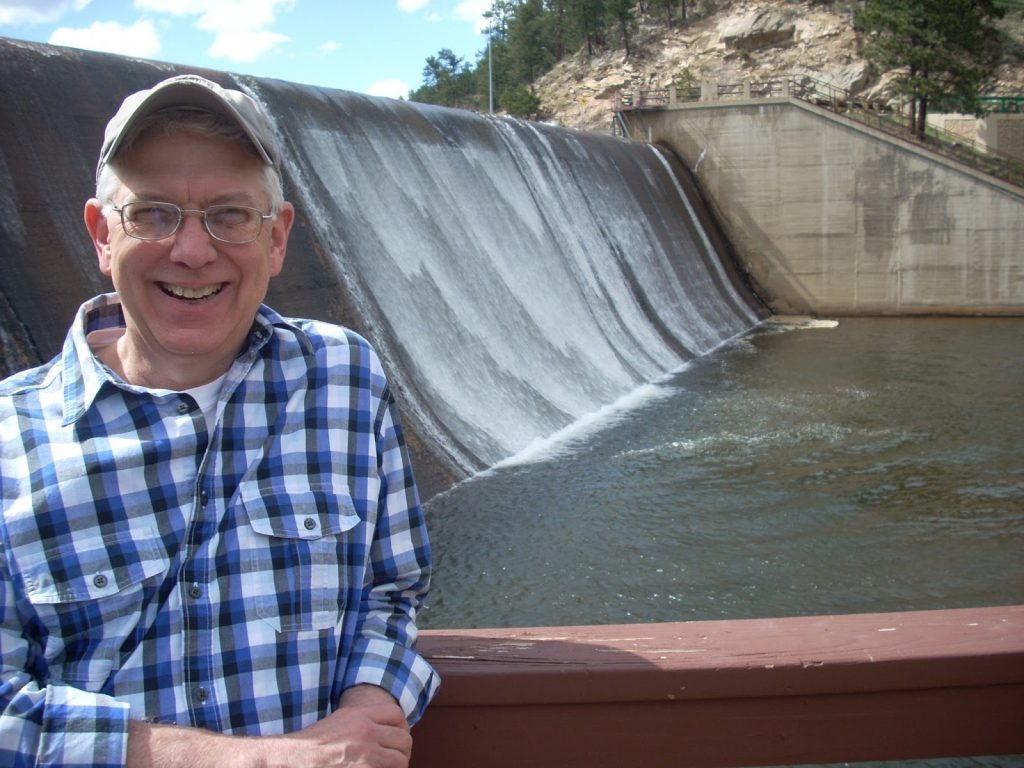
Clothes by Lewis

[I would like to begin by looking back at what happened last week with the topic being “The Person I Fall in Love with Should Be…”. As we were leaving, I was feeling disheartened for two reasons: 1) I realized that the topic I had been responsible for was not inclusive of those in the group who are in a committed relationship. It essentially left them with almost nothing to say. I apologize for that and will not allow that to happen again. 2) One of our participants made it very clear that they were not at all happy with the word “should” and made quite a point of saying that “should” is a word that should never be used as part of a topic. I wonder if we want to engage in such disparagement of a topic, especially if, as was the case last week, the originator of that topic is present.

One more comment: We have been very clear that no one is required to write on the “topic of the week”. However, I think that it is conducive to the creative process to make those deviations the exception, rather than the rule. Hearing diverse perspectives on the same topic is what makes for a stimulating hour-and-a-half and also forces us to channel our creative forces in constructive ways. ‘Nuff said about process.]

Clothes are worn for many purposes: style, status, and modesty for three. I’m going to talk about a fourth: body image. People tend to model what they think is going to “surprise and delight” the casual observer or, perhaps, significant other. Popular opinion has a way of letting someone know when they have stepped over the line of decorum and/or vogue. As a repressed exhibitionist with an eroticized libido, I have been an avid follower of these taboos for most of my life. There exists in modern American society a very distinct double-standard when it comes to the line between dress that titillates and that which commits sensory trespass.

I would like to share with you a letter written to Annie’s Mailbox advice column that was published in the Denver Post on June 29, 2003, along with the response from the columnists, Kathy Mitchell and Marcy Sugar, —

[Read letter from photocopy.]

The key to understanding the present state of our society is in the first paragraph of the response:

“Most 14-year-old boys would not be willing to put up with the teasing that Jonah is getting from his peers. Stylish or not, they would stop wearing the swimsuits. Either Jonah has tremendous self-assurance or he is enjoying these bikinis on an entirely different level.”

I have to wonder–what level would that be? The same level upon which girls of that age might enjoy wearing a bikini? I don’t think that is what is meant at all. As the responders also write, “Bikinis and thongs usually indicate something more sensual. Exhibitionism and cross-dressing are possibilities but they aren’t the only ones.” What, exactly might the others be? Homosexuality? Pedophilia? Has anyone ever asked models for the Sports Illustrated swim suit issue if they are exhibitionists? And to even suggest that “Jonah” might be a cross-dresser is to imply that thongs and bikinis are the sole province of the female gender, which is begging the very question that I am asking: Isn’t what is good for the gander also good for the goose?

When I was about 10 years old, I took a swimming class at the Hutchinson, KS, YMCA. The rules were that swimming suits were not allowed in the pool, as they might carry germs. We had to shower before we got into the pool, as well as after. I was terrified but soon got comfortable with letting it all hang out. By the time my own children were about that age, boys did not even take their swimming suits off to shower after swimming. Why the vast difference? I would welcome any and all ideas on this.

In 1990, my wife, kids and I set out for Disney World in Orlando. Wanting to appear “with it”, I bought my first pair of “surfer-style” swim trunks just for the occasion. When we went to the water park, the first thing on the kids’ agenda was the huge, serpentine water slide. Not wanting to appear skittish or square, I enthusiastically joined them. Just one problem: about 6 feet down the slide, my ridiculously bulky “trunks” grabbed hold of the slide and held on for dear life. I had to “scoot” down the remaining three stories of slide while trying not to get “rear-ended” by an unsuspecting kiddie. I have worn nothing but trusty Speedos ever since. Yes, sometimes I do feel a little “over-exposed” but at least I don’t carry a gallon of water with me whenever I get out of the pool.

[As an illustration of the fact that America’s discomfort with the male form is not universal, I am passing around a copy of Down Under: To glorify the Australian lifesaver. I have flagged a few pertinent pages.]

© September 22, 2014

About the Author

I came to the beautiful state of Colorado out of my native Kansas by way of Michigan, the state where I married and I came to the beautiful state of Colorado out of my native Kansas by way of Michigan, the state where I married and had two children while working as an engineer for the Ford Motor Company. I was married to a wonderful woman for 26 happy years and suddenly realized that life was passing me by. I figured that I should make a change, as our offspring were basically on their own and I wasn’t getting any younger. Luckily, a very attractive and personable man just happened to be crossing my path at that time, so the change-over was both fortuitous and smooth. Soon after, I retired and we moved to Denver, my husband’s home town. He passed away after 13 blissful years together in October of 2012. I am left to find a new path to fulfillment. One possibility is through writing. Thank goodness, the SAGE Creative Writing Group was there to light the way.
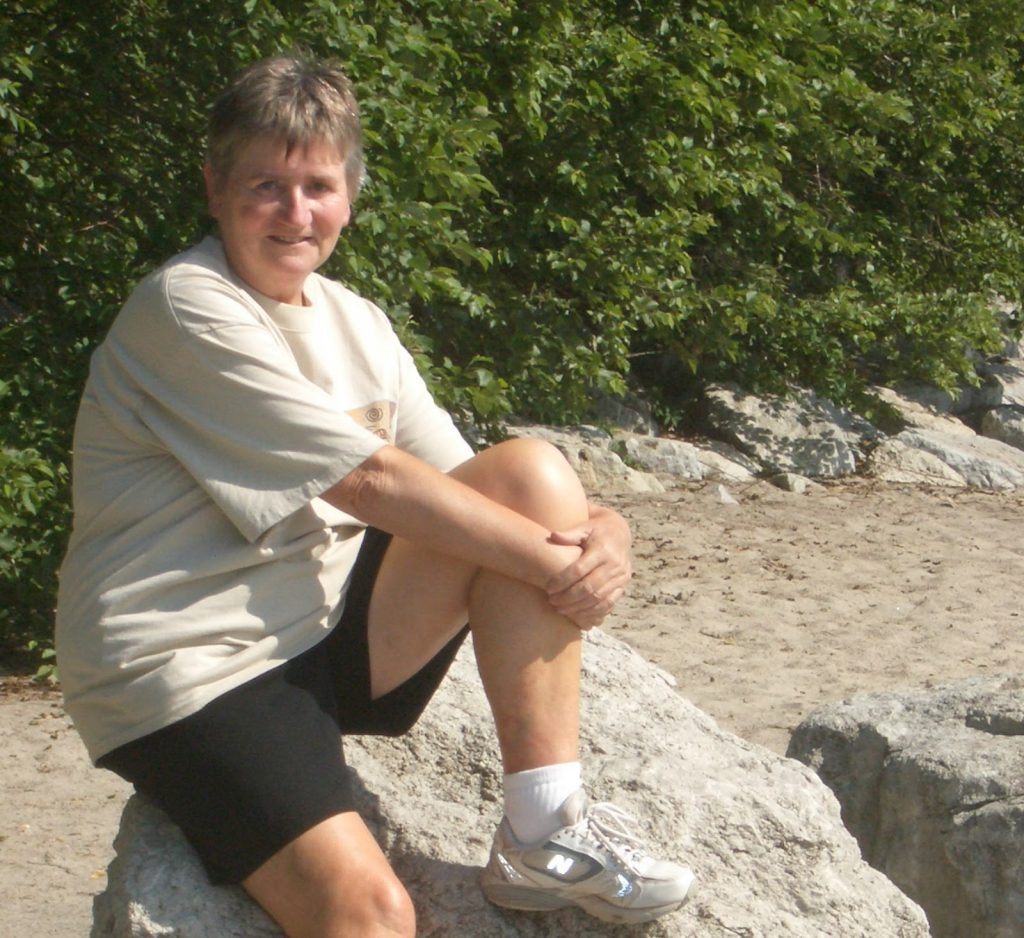
Naturally by Gillian

I can think of only one activity in which I would possibly describe myself as artistic, and that is writing; at least if I’m going with the definition, “having or revealing natural creative skill.”

The key here is the word “natural.”

I can paint. I can draw. I could create pottery vases or even carve wooden figurines. I could play the harp in readiness for my audition for angelhood. But these are, or would be, learned skills. If you try hard enough, you can learn to do just about anything. What you cannot do is make it come naturally.

Betsy and I spent some time in Taos with her daughter, Lynne. We all painted and sketched. Mine were mechanical reproductions of the scenes before my eyes; Lynne’s, very evidently, came naturally. They had a feel, a soul, to them, that mine lacked. Even had mine more adequately reproduced the subject, though I’m most certainly not making that claim, hers would still have been more artistic.

When I write, I am, to adopt a modern expression, “in the zone.”

No, not always. Of course not. But when the result is good; good to me, which is all that matters,

I don’t even feel that it is me writing. Or, if it is, it is some other me. Some subliminal me.

When that happens it is indescribable. Perhaps it’s like some drug-induced high from the ’60’s, though I cannot say from personal experience.

Maybe all of us, when we are truly creative, feel that high.

There’s another definition of the word which I also like, “aesthetically pleasing.”

I love to take photographs. This is not an artistic endeavor! Especially today, with digital cameras which do all the work. But it has it’s own creativity.

It’s kind of on a lower scale.

I see, naturally, what creates a good image.

The camera does the rest, but I point it!

I hope my photographs are aesthetically pleasing, because that’s my goal. But I hope, sometimes, for more than that. Some of them I am simply looking for the beauty that is abundant in this world. Sometimes that is enough. But real artistry should surely engender emotion, not simply beauty. Seeing it, and then capturing it, that’s the trick.

Just last week I was driving down Colfax to Story Time at The Center, when two figures rushed into the street in front of my car. A young Hispanic woman dragged a little boy of perhaps five by the hand. Under her other arm she clutched a huge plastic basket piled high with laundry.

In the boy’s other hand he hauled an immense plastic bottle of laundry soap. In a second they were gone, safely across the street and out of sight as I moved the car forward. Of course I didn’t even have a camera with me, and if I had, everything moved too fast and too unexpectedly for me to have had any chance of capturing that wonderful image; one of those pictures worth a thousand words in the stories it tells. But, “thinking like a camera,” if you like, I did capture the shot. It is burned in my brain. I can look at it whenever I want, and seeing it I can describe it to others.

One of the greatest gifts of one’s own artistry is, at least for me, that it changes for ever how I see what I see. When I’m driving, or standing in line, or doing the dishes, I feel the words of some imaginary writing come into my head, or I’m framing the perfect photo.

If I reach the stage of life where I no longer raise a camera or a pen, I hope that gift remains with me, and continues, forever, to lighten and enlighten my life.© September 2014

About the Author

I was born and raised in England. After graduation from college there, I moved to the U.S. and, having discovered Colorado, never left. I have lived in the Denver-Boulder area since 1965, working for 30 years at IBM. I married, raised four stepchildren, then got divorced after finally, in my forties, accepting myself as a lesbian. I have now been with my wonderful partner Betsy for 25 years.

Terror by Will Stanton

Back when I was around twenty and still living in my hometown, I met and briefly knew a young woman of about the same age named Ann. Physically, Ann was rather short and squat, what one would call, using a hackneyed expression, “not very attractive, but with a nice personality.” In retrospect, my guess is that Ann turned out to be gay. People said that her older brother Tim was, too. I guess it can run in some families.

Like many young people, and especially in that strange town, Ann had been interested in the occult for some time. She tended to hang around similar young people, using Ouija boards, reading about pagan practices, and becoming involved in who-knows-what.

Ann soon discovered that there was a new, young English-professor on campus who, supposedly, also was involved in the occult, claiming to be a witch. He also had a surname of “Oakwood,” which is singularly appropriate for someone claiming to practice the “old religion.” I saw him on campus. I must say that he certainly sounded and looked the part, tall and thin, very dark hair and eyes, always dressed in black, and tending to speak and behave in a mysterious manner. Ann actually went to the effort to sit in on his class, just to be there and to observe him. Eventually, she had the nerve to ask him, “Are you a white witch or black witch?” Apparently, Ann had watched “The Wizard of Oz” far more than having read reputable textbooks on pagan history and anthropology. The ancient pagans did not practice “dark magic” and actually believed that, if one did something evil, that evil would come back upon the person threefold. Naturally, the mysterious professor responded, “White witch.”

I met Ann at the same time that I briefly knew Ned. One evening when the three of us were together, Ann suggested that we go back to her house and hang out in their little basement-den where she had a small TV. So, we ended up at her house. The three of us, along with her cocker spaniel, went down to the den to watch TV and chat.

Suddenly at one point, I felt terror, as though a lump of ice had been thrust into my gut. I instantly noticed that both Ann and Ned were responding the same way, – – and so was the dog! That poor dog’s eyes were wild, and it howled and howled. This continued for at least a dozen seconds, which is a long time to feel terror. Then, the feeling and the dog’s howling abruptly stopped. We just looked at each other. Finally, Ned said, “What was that?!”

The following day, Ann attended Oakwood’s class as usual. As she was leaving at the end of class, Oakwood casually mentioned to Ann, “I visited you last night.” That really spooked Ann.

I eventually learned that Ann had gotten herself so deeply involved with the occult that she increasingly felt fear and anxiety, so much so that she finally concluded that she had to get away from it all. She approached the young, assistant priest at our town’s Episcopal church, begging him to perform an exorcism. Noting how distressed that Ann was, the priest actually did perform the ritual; and Ann never returned to her old practices.

An ironic postscript to all of this is that Ned got to know that young, handsome priest, and had sex with him. I guess that there is more than one way to reduce stress.

© 5 November 2014

About the Author

I have had a life-long fascination with people and their life stories. I also realize that, although my own life has not brought me particular fame or fortune, I too have had some noteworthy experiences and, at times, unusual ones. Since I joined this Story Time group, I have derived pleasure and satisfaction participating in the group. I do put some thought and effort into my stories, and I hope that you find them interesting.

Breaking into Gay Culture by Phillip Hoyle

I didn’t break into Gay Culture but rather carefully walked in prepared for my entrance by my good friend Ted. Over many years he had coached me, revealed the ins and outs of much of the culture by taking me to gay bars, introducing me to gay people, teaching me the language both spoken and unspoken, introducing me to gay novels, showing me more of his life than I really asked to see, and talking endlessly with me about gay experience. His tutoring took on a different seriousness when in my mid-thirties I told him I’d made it with another man, a friend of mine he’d met years before. From that point on, Ted simply assumed I was gay whatever non-gay decisions I made. His assumption led him to open even more of himself to me rather than shield me from realities that would certainly become important should I leave my marriage and go gay full time! Ted was my effective educator.

About two months after my wife and I separated I made my entry into a world I had only studied. Three blocks from my apartment I entered a bar named The New Age Revolution, a bar I had seen while walking with my wife and had wondered if it could be gay. Why else would it have such a name in Tulsa, Oklahoma? I had thought about when I would be ready to go alone to such a place, thought about when I’d go there as a gay man. Would I be courageous enough to do so? Of course, I would. After all, I didn’t separate from a twenty-nine-year-long, perfectly fine marriage to an understanding and lively woman whom I adored without intending to live a fully open gay life. I had already begun preparing to leave my profession of thirty-two years, one in which I realized I would not be able to live openly gay. So I glanced in the mirror, took off my tie, straightened my clothes, walked out the apartment, descended sixteen floors in the elevator, waved at the security guard, exited the building, and walked those three blocks down to the bar. I went early, way too early according to Ted’s instruction. He taught me never to show up before ten. I’m sure I was there at nine. I suppose it was a weeknight; I had to work the next day. The place was nearly deserted. There was music. A few people stood around talking to one another. I went up to the bartender, said “Hi,” and ordered a beer; I don’t recall what kind of beer but it was in a bottle. While I slowly sipped at my drink, I looked around at the decorations. This place just had to be gay. I couldn’t imagine any other saloon that would display a decorated dildo on the wall behind the bar. I was pretty sure I had made it to the right place.

This was not only the first time I had been alone in a gay bar; I’m sure it was the first time I’d been alone in any bar. I grew up in a dry state with a prohibitionist mother and had married a tea totaler. I had drunk beers on occasion, but had never gone to a bar before I was in my thirties and living away from Kansas. I had rarely even paid for a drink. I thought about a gay friend of mine who said he sometimes went to gay bars simply for the spiritual aspect of it, as a point of identity, participation, and presence. I stood in the bar that night not talking to anyone, thinking about how being there certainly was a kind of spiritual experience, one of great importance to me. I was finally present publically as a gay man. There I was beginning my future life as openly gay.

I drank another beer. Finally I nodded to the bartender, left a generous tip (changes must be commemorated with great generosity), and exited the door. I walked thoughtfully up the hill all the time watching peripherally for anyone that might have seen me leave the place; after all I was in Oklahoma. I entered the apartment building and returned to my home. I suspect I played music and messed around with some art project. I thought about making gay saints for my next series of mixed media works. Would I become one I wondered?

That evening I walked into a bar but wasn’t breaking into gay culture. Actually I was breaking out of several important, long-standing straight relationships. My entering gay culture passed as quietly as that first night in a gay bar by myself, and I’ve never regretted that short walk some fifteen years ago.© Denver, 2012

About the Author

Phillip Hoyle lives in Denver and spends his time writing, painting, and socializing. In general he keeps busy with groups of writers and artists. Following thirty-two years in church work and fifteen in a therapeutic massage practice, he now focuses on creating beauty. He volunteers at The Center leading the SAGE program “Telling Your Story.”

He also blogs at artandmorebyphilhoyle.blogspot.com

The Women in My Life by Pat Gourley

I have written many times over the years in this group about men and women who have influenced me. The men of course include Harry Hay and Jerry Garcia to say nothing of really countless gay brothers. In hindsight and this is actually current to this day it is the women in my life who have imparted the modicum of wisdom I have today.
It all started with my mother of course and her relentless unconditional positive regard. I was the oldest male in a modest-sized Irish Catholic family (6 kids only!) and therefore could really do no wrong. The closest I ever came to being reprimanded by her was the frequent Zen injunction to please go sit down and be quiet. Oh, and there is the one time I split my brother Brian’s head open with a rock. We had been throwing dirt clods at each other, something farm boys did frequently, and I apparently hurled one my brother’s way that also had a rock in it. That resulted in the only corporal punishment I ever received from either parent and involved a couple whacks on the butt with her shoe.
I also fondly remember two of my several aunts, Dorothy and Alice. These women taught me the fine art of cooking and the joy of gardening and eating fresh vegetables. Lessons that continue to serve me well decades later.

I have wondered on occasion whether or not my mom may have had lesbian tendencies. She did join the WAC’s, as a nurse, in World War II stationed in Hawaii, was an ace softball pitcher; never fond of cooking or housework and always eager to drive large farm machinery. Perhaps it was lucky for me that I was born pre-gay-lib in 1949. The night I was conceived LGBT identities were really not even a twinkle in any one’s eye outside of a few urban coastal enclaves. Options for most Catholic women who might have been gay in the 1940’s were largely limited to the convent or marriage preferably with as many babies as you could pop out. Of the many, many compliments I can pay my mother that she might have had dyke tendencies is right there at the top – loved you mom!

The next woman to come along who had a very profound effect on my development was Sister Alberta Marie my government/civics teacher in the last two years of high school. I owe this woman a great debt of gratitude on so many fronts but most particularly I learned to never be afraid to question authority. I was able to reconnect with her in June of 2013 in New York City where she has lived for decades and worked as an immigration lawyer. To her immense credit she was tossed out of the convent shortly after I graduated high school with a long list of offenses per the local bishop. The final straw I think was bringing renowned Jesuit anti-Vietnam War activist, Daniel Berrigan, to speak to the school’s Peace Club at Marion Central, which she was instrumental in founding.

Next came a group of women who lived communally with us in Champaign-Urbana from 1967-1972. Several of these powerful women helped to shape my budding radical politics and began to impart a feminist analysis to my worldview. One in particular was a frequent LSD tripping companion. We would drive out to a local forest preserve and then take, in those days usually, a hit of something called windowpane and spend the day having religious and spiritual experiences with the local flora and fauna. To this day I think those trips were as close as I have come, despite many, many hours on the cushion and in retreat, to realizing the non-dual nature of it all. It really is all just one taste and one’s personal taste of it often fleeting.

Next up were a group of nurses again all women who I worked with at the inpatient psychiatric unit at then Denver General Hospital. A few months after arriving in Denver in late 1972 I was working on the Psychiatric Unit with a cadre of very strong nurses who I admired greatly and encouraged me to pursue my own career in nursing and that dance continues to this day. They were a feisty bunch who never afraid to put uppity physicians in their place and were totally instrumental in shaping my life-long philosophy of nursing.
By the mid-1970’s I was becoming involved in the Gay Community Center on Lafayette Street and being introduced to several potent women best described as radical lesbian feminists at the time. These women helped me through occasional and well-deserved criticism to hone my own political persona into one more effective and definitely more honest. A shout of thanks to Carol, Tea, Britt, Karen, Janet, Katherine, Donna and many others who helped immensely broaden my perception of what it was to be “queer-other” and helping to create a fertile ground that definitely aided in my latching onto Harry Hay and the Radical Fairies. Many of these same women were also instrumental in getting what turned out to be very successful AIDS efforts off the ground here locally.

By the late 1980’s I was exploring spirituality a bit differently, leaving the pagan/wiccan traditions behind and moving to the cushion and re-invoking my mother’s frequent injunction to sit still and be quiet. In the early 1990’s I became involved with a local chapter of the Kwan Um School of Zen. The guiding teacher, based in Rhode Island but a frequent visitor to our Sangha, was a women named Bobbi who had a day job as a hospice nurse and oh by the way she is a lesbian. Another potent mix of female energy I owe a great debt to.
In writing this piece more and more women have come to mind who were and are great friends and persons who had significant impacts on me. I’ll stop though in the spirit of brevity. It is quite frightening really for me to try and even think where I would be today professionally, culturally, psychologically, socially and spiritually without so many dynamic women influencing me along the path.

Sadly as I finish this piece I just received an email about the death of straight woman ally who I had gotten to know well in the 1980’s through her tireless volunteer efforts with the Colorado AIDS Project being on the original CAP Board of Directors. Straight allies in those dark days were very brave and cherished souls. Jill got to spend Thanksgiving with family around her bed before succumbing to a four-year battle with cancer.

Women – can’t live without ‘em!

© November 2014

About the Author

I was born in La Porte, Indiana in 1949, raised on a farm and schooled by Holy Cross nuns. The bulk of my adult life, some 40 plus years, was spent in Denver, Colorado as a nurse, gardener and gay/AIDS activist. I have currently returned to Denver after an extended sabbatical in San Francisco, California.

A Ring to Prove It by Gillian

I don’t believe I’ve ever actually told anyone this. Not because it’s shameful or embarrassing but because it held really no significance for me; so I say, but here I am remembering it after almost 45 years, so it must figure somewhere, if remotely, in my psyche.

It was, I think, 1970. Maybe ’71. I lived with my husband and step-children in Jamestown, a small, one might say tiny, old mining town in the foothills north-west of Boulder. It’s roughly ten miles up Left Hand Canyon, off highway 36 which runs between Boulder and Lyons. In those days there were few houses in the canyon until you reached Jamestown, with its impressive population of around 200.

I put in many extra hours of work at IBM, built a few years earlier between Boulder and Longmont. Being by nature a morning person, I preferred to arrive early rather than stay late, and frequently began work around 5 am. This particular day I must have had some compelling task ahead, though I have no memory of it, as I started out to work under dire conditions.

It was a dark and stormy night.

No, really! It was.

I set out down the canyon about 4:30 in the morning, in our old Willys jeep, hardly able to see anything for the snow swirling in the headlights. I doubt I had reached 20 m.p.h. when I thought I saw something moving ahead of me: just a vague dark shape against the snow which had already built up on the road, drifting against the trees. Deer, I thought. They were often about on the canyon road. I slowed even more, knowing how skittish they could be. I crept up on the shadow still moving ahead of me. Not a deer. A shambling, half running, half walking, figure on two legs.

What on earth was he, for some unknown reason I identified the figure as a man, doing, walking down the canyon in this weather? Had his car broken down? Crashed? I had seen no vehicle beside the road, but with the dreadful visibility maybe I’d have missed it.

I stopped beside him. He was beside the passenger door, and before I knew what was happening the door was torn open against the wind and this dark figure hauled itself into the passenger seat. Well? Wasn’t that why I had stopped? You can’t, at least I can’t, ignore a fellow human being under these circumstances. And anyway, he must be a neighbor; at the very least someone I knew by sight. Who else would be in Left Hand Canyon on foot in the middle of a blizzard?

Socially, I introduced myself, then politely enquired,

“Who are you?”

Silence.

“Do you live in Jimtown?” I asked, using the local vernacular.

In the absence of a reply, I asked, “Where you trying to go?”

A grunt which could have been interpreted as “hospital,” emerged from the dark shape beside me.

“Boulder? Which one?” Boulder at that time had two.

Another grunt.

By this time, my common sense was reasserting itself.

Who was he? Why, in God’s name, was he heading for a hospital on a night like this?

Was he hurt?

I glanced occasionally in his direction but could see nothing but a dark shapeless mass of clothes. What to do, what to do!

I tried occasionally to engender conversation, but failed miserably.

My imagination took over.

Perhaps he was riddled with bullets! Was he, at this very moment, dripping, no, pouring, blood all over the jeep? Worse – well, maybe worse – was he suffering from some highly infectious disease and in two days I and all my family would be at death’s door?

What to do, what to do?

I breathed deeply and calmed myself.

Of course! He had had a phone call. Some loved one had had an accident, only to be expected on a night like this. They were in E.R. and he was going to their bedside. Or he himself had had an accident. The car had gone over the bank into the creek, quite likely in this storm, and explaining the absence of a vehicle. Was he, perhaps, drunk? I sniffed the air surreptitiously but could detect no hint of alcohol.

Whatever the truth, I should get to Community Hospital as fast as possible, which actually was very slowly indeed, and part company with my guest. Alone with this silent, apparently unknown, man, on a night like this in the pitch-black canyon, was seriously not comfortable.

As the friendly street lights of Boulder approached, I glanced in his direction as often as I could possibly afford to take my eyes off the road, which in fact was pretty infrequently.

He had one hand, I managed to see, tucked into his coat, Napoleon style.

My imagination took off at a run.

Was that hand injured? Or holding a gun? Or, I tried to bring myself back to earth, just cold?

He was resting, I now saw, with his head on the back of the seat, (no head-rests in those carefree days!) with his eyes closed. He looked much more vulnerable than scary as his head rolled with every turn. Was he asleep? Passed out?

The coat which carefully encased his left hand looked like an army great-coat.

A sick Vet? A deserter? The Vietnam War still raged. It was possible. I liked the idea and warmed to him on the strength of it.

I pulled into the brightly-lit entrance drive to the hospital. I had no idea if this was where I should take him, being as ignorant of hospital etiquette as I was of his needs. As I pulled up, he pushed himself up in the seat, blinking his eyes.

“Community Hospital,” I said, sounding terse even to myself.

He, however, became positively verbose.

“You’re good person,” he said, or something like that.

“No money. Here.”

As he stumbled from the jeep into the still swirling snow, he pushed his right hand towards me.

It held a ring between the thumb and index finger.

He gave a heavy shrug.

“Not worth much I ‘spect. All I got …. “

I gazed at it, stupefied.

“No, no, I don’t need anything. Just hope …,” I had no idea what to say, “everything’s OK,” I finished, lamely.

He slid gracelessly off the seat into the drifting snow and staggered into the hospital without another word or a wave of the hand.

What did I expect, that he would wave a goodbye kiss?

I went to work.

As happens sometimes in Colorado, the sun was out by noon. The cars steamed in the parking lot. By late afternoon there was nothing to suggest the raging blizzard of twelve hours before. My midnight rider seemed surreal to me. Could I have imagined the whole thing? I wasn’t sure if that worried me more, or the fact that it had actually happened.

It was still vaguely light when I left work. I studied the jeep passenger seat carefully. It wasn’t wet; perhaps slightly damp. There was no hint of blood. I ran my hand once more over the seat and brushed against something hard. I picked it up, held it up. and peered through the dim light.

A ring.

Had he dropped it when he got out of the jeep? That seemed unlikely. I realized that it had been centrally located in the middle of the seat. Placed there. It was his payment for my assistance. I slid it into my pocket. It was nothing I wanted to explain to my husband, however I cared to view it.

For the next week or so I monitored local radio and read the Boulder Camera from cover to cover. I looked for gangland shootings, hippie overdoses, army deserters, and deadly viruses. Nothing. Then I went off into true paranoia. There were no reports in the media because he was a #1 FBI fugitive and they wanted no publicity. He had a highly communicable disease and they were keeping it quiet to prevent panic. He was a Communist spy – this was still the Cold War, remember – so they were keeping him under wraps.

Slowly the years went by and of course I forgot all about it. It had, after all, little if any impact on my life. But for whatever reason, doubtless nothing more than inertia, I still have the ring. And that is the only reason I know that this really did happen.

© October 2014

About the Author

I was born and raised in England. After graduation from college there, I moved to the U.S. and, having discovered Colorado, never left. I have lived in the Denver-Boulder area since 1965, working for 30 years at IBM. I married, raised four stepchildren, then got divorced after finally, in my forties, accepting myself as a lesbian. I have now been with my wonderful partner Betsy for 25 years.

Pets by Gillian

My mother was
a great one for pets. She had pet peeves, pet grievances, pet projects, pet
phrases, and, being a school teacher, even teacher’s pets! She herself used
these expressions.
“Oh, you know
that’s one of my pet peeves,” she’d say as a hand projected from a
passing car to deposit unsightly fish-and-chip wrapping in the flowering
hedgerow. Split infinitives was another. Star Trek was after her time, but I
cannot hear that phrase, to boldly go, without imagining how she would
have given a sharp intake of breath, shaken her head sadly, and told the TV,
admonishingly, “It’s either boldly to go, or to go boldly,
NOT to boldly go!”  Split
infinitives, she always stated, set her teeth on edge. Fortunately for her,
being a teacher, fingernails on the blackboard did not!
I, also, have
pet peeves; people who, chatting on their cellphones, crash their grocery carts
into my ankles. Or almost crash their car into my car. Or shout into their
cellphones at the table next to mine in a restaurant, or in line at the
supermarket. Or those who, speaking of the supermarket line, react in
astonishment when the clerk implies that they need actually to pay (see, no
split infinitive!) for their groceries, and begin an endless hunt, in a
bottomless purse, for their checkbook.
Mom’s pet
grievances, and they were many, were all sub-titles. They related, mostly
directly, occasionally indirectly, to the the Grand Category of Grievances: my
father. What he had ever done to deserve this, I never could ascertain; but I
have written about this before so will not repeat myself. Suffice it to say
that I loved my dad, and never truly understood Mom’s animosity.
When I say I
loved him, I don’t mean that he was my dad so of course I loved him in spite of
all his faults and wrong-doings. I mean that I loved him because of who he was,
not despite it.
I have my own
grievances, but most of mine, or so I like to think, are general rather than
personal.  “A feeling of resentment
over something believed to be wrong or unfair,” says the online
dictionary.  Given that definition, yes,
I grieve every war and every youth sacrificed to it. I grieve every starving
person with no food to eat, and every thirsty person with no water to drink. I
grieve man’s inhumanity to man, but then you’ve heard all that before, too. In
the last couple of years or so I find myself forced to grieve for young black
people killed, no, let’s use the right word here, murdered, for no
reason other than the color of their skin, by angry bigoted white men.
My mother’s
pet projects, in the sense of those which go on, year after year, were writing,
both poetry and prose, and pressing flowers. I do my best with writing, and
truly love doing it, but the pressed flowers somehow passed me by. I do love to
photograph them, though, so perhaps that’s some kind of higher-tech equivalent.
My latest pet project is organizing my photos into a series of theme books.
And so to pet
phrases!
Do as you
would be done by.
If the whole world lives by
those few words, what a wonderful world it would be!
If you can’t
say something nice, don’t say anything at all.
We, as a society, definitely have abandoned that one!
Oh dear! What
will people think?
Mom, a product of an age when
appearances greatly mattered, said that quite frequently to both me and my dad,
neither of us great respecters of neighbors’ judgments.  
This one was
somewhat at odds with another pet phrase of Mom’s.
“Just be
comfortable,” she’d respond, in any discussion of what to wear, but then
proceed to “what will people think?” when I arrived in slacks or my
dad without a tie. Mom was not without her inconsistencies, but we learned
easily enough how to deal with them and my mother was, on the whole,
considerate, sweet, and kind. As with my dad, I loved her very much, simply for
who she was.
My mother had,
quite literally, generations of teacher’s pets. She began teaching in the local
two-room school in 1928 and retired in the early 1970’s, so, except for few
years out in the 40’s, she taught in the same room for about forty years. At
the end she was teaching some whose grandparents she had taught.  
“Oh that
little Johnny Batchett!” she’d exclaim. She never denied having favorites
but she would never have treated them as the classic teachers’ pets. She would
have taken great care never to show any hint of favoritism.
“He’s got
that same little cheeky smile as his granddad! He’s got his mother’s dimples
though. The girls are going to be round him like bees around the honey! Of
course, his dad was just the same. All ‘love them and leave them’ young Tom
was, till those dimples hooked him fair and square ….. ” and off she’d
go.
” ……
but that Yvonne Atkins! What a little madam! Still, what can you expect? Her
mum and dad, both such discipline problems at that age. I’ll never forget the
time …….”  My dad would give me
his covert wink, and we’d settle down to listen, or at least pretend we were.
Recalling
Mom’s pet thises and thats reminds me, once again, how the world has changed
over the course of my life. Not too many people these days are taught by the
same person who taught their grandparents, or even their parents. Or even, come
to that, an older sibling.
Most of us
care little what anyone thinks of the way we look, or often even the way we
act.  Those old admonitions such as the
Golden Rule, once painstakingly embroidered and hung on the wall, have more or
less disappeared; I’m quite sure they aren’t about to go viral any time soon.
I’m not suggesting we abided by such things in our day, but at least we were
aware of the concept; perhaps we tried.
Yes, I am
being an old curmudgeon. My own pet peeves and grievances grow apace.  Well why not? There is much of this Brave New
World I do not like.  But there would, I
suspect, be more to dislike, knowing what I now know, if I returned to that
rose-colored past, than there is in the reality of the present. Why would I
want to return to a world where homosexuality was illegal? A woman having a
baby was forced to quit her job, and for this reason could not get a loan to
buy a house or car in her own name, no matter how well paid she was. And even
after the birth control pill gave women much better control over their own
reproductive rights, it was illegal to provide [or] prescribe them for an
unmarried woman.  No. I really want np
part of it.
As for the
future, who knows?
As Jay Asher
says, in his novel Thirteen Reasons Why
“You can’t stop the future
You can’t rewind the past
The only way to learn the secret
… is to press play.”
So as I’m not
yet quite ready to press the stop button, and certainly not the eject, I guess
I’d better do just that!
© 18 August 2014 
About the Author 
 I
was born and raised in England. After graduation from college there, I moved to
the U.S. and, having discovered Colorado, never left. I have lived in the
Denver-Boulder area since 1965, working for 30 years at IBM. I married, raised
four stepchildren, then got divorced after finally, in my forties, accepting
myself as a lesbian. I have now been with my wonderful partner Betsy for 25
years.

Camping by Will Stanton

I am one of those fortunate
people who grew up in an era that was not overwhelmed, as we appear to be
now-days, with digital technology.  We
found ways of entertaining ourselves and choosing enjoyable activities that
were more natural.  Camping was one of
those.
My mother and father thought
that camping was a good way to spend summer vacations.  Part of that stemmed from the fact that we
did not have much money and were not well-healed enough to take world cruises,
go to luxury resorts, or stay in fancy hotels. 
My father was able to pick up some army-surplus camping supplies, all of
it rather primitive by today’s camping standards.  He bought a heavy-canvas tent, big enough to
stand up in and to hold the five of us. 
He bought five army cots made of heavy oak supports and canvas.  We had a gas Coleman lantern that, when lit,
hissed and provided us with plenty  of
light.  We had a plywood icebox that he
made, lined with Celotex for insulation.
So for several summers, we
traveled in our station wagon to various states in central, north, and eastern
U.S., setting up camp in preselected campsites. 
Undoubtedly, these travels sparked my love of nature that has lasted all
my life.
Unlike many other boys who
found enjoyable experiences camping through joining the Cub Scouts, Boys
Scouts, or (as portrayed in the movie “Moonlight Kingdom”) the Khaki Scouts, my
brief participation in the scouts included almost no camping trips.  I don’t recall whether our local troops just
did not offer that many trips, or if my mother just did not bother to sign me
up.  As a consequence, I missed out on
some scouting experiences, enjoyable or less so, that many other boys have had.
I do recall that one of the
older boys, seventeen-year-old Bruce, apparently was very proud of his
developing masculinity, which was expressed in his being the hairiest
individual I ever had seen, to that date, outside of a zoo.  Between his questionable personality, very
chunky build, rather common features, and a mat of black hair covering almost
the entirety of his body, I did not find him to be a particularly attractive
person.
Bruce was noted for two
exceptional habits while on camping trips. 
One was that he prided himself on carrying with him a battery-pack and
electric razor to mow each morning the inevitable black stubble on his
face.  The other habit, which to this day
I have not been able to explain, was that he liked to spend the night in his
sleeping bag nude.  Boys being boys,
neither of these facts went unobserved.  And
boys being who they are, they decided to play a practical joke on Bruce.  All they had to do was hook up his electric
razor to his battery-pack, slip it down into his sleeping back, turn it on, and
then shout, “Snake!  Snake!” 
Bruce, waking up to the
warning shouts, along with the buzz and vibration down in his sleeping bag,
naturally panicked.  Terrified, and
struggling to extricate himself from the sleeping bag, Bruce quickly wiggled
out of the bag, stood up, and without stopping to further assess the situation,
took off running into the woods.  It took
a while for the boys to coax Bruce back into the camp.  He was relieved but also irritated to find
that there never was a snake in his sleeping bag.  He was even more irritated with the new
Indian name that the boys assigned to him, “Running Bare.”
© 23
January 2014    
About the Author 
 I have had a life-long fascination with people
and their life stories.  I also realize
that, although my own life has not brought me particular fame or fortune, I too
have had some noteworthy experiences and, at times, unusual ones.  Since I joined this Story Time group, I have
derived pleasure and satisfaction participating in the group.  I do put some thought and effort into my
stories, and I hope that you find them interesting.

Feeling Loved by Ricky

In
hindsight, I am sure my parents sort of loved me.  Early photographs clearly show me smiling, especially
on my birthdays, Halloweens, and Christmases. 
I did not feel loved during my frequent spankings for being
disobedient.  I am fairly sure that my
dad did not like spanking me but felt that he had to; the old “spare the rod
and spoil the child” philosophy.
It is
rather ironic how our brains tend to be very selective about which memories it
chooses to give us access.  For example,
I get glimpses or figments of some happy or pleasing moments, but not a lengthy
detailed viewing.  I know I was cared for
and nourished, except for those darned stewed tomatoes, and yet I have no
memories of being hugged or kissed.  I am
sure I got hugs and kisses or I would be a complete basket case by now; I just
don’t remember any.
My
maternal grandparents loved me but were not demonstrative in showing it with
hugs or kisses.  Instead my grandfather
pulled a trick on me by pre-filling my lunch drinking glass with yogurt-like
“liquid” accurately named “long milk”, as it was thick like honey or molasses
but lacked a decent flavor.  That he, my
“hero” surrogate father, would do such a thing really hurt my feelings and I
definitely did not feel loved at that point.
At the end
of my first summer with them on their farm in Minnesota (June thru August
1956), my mother called me on the phone and talked me into staying there for my
3rd grade school year.  I
didn’t know about the divorce proceedings yet, but I still did not feel loved
by her.  When she came out later that
year to attend her sister’s wedding, I thought I would be returning to
California with her.  It did not happen
and I felt unloved again.
When I did
not get to go home at the end of that school year and had to stay for the 4th
grade too, I began to wonder why can’t I go home but no one would tell me
anything truthful.  I was loved, but
didn’t feel loved.
When my
dad came to visit at Christmas in 1957, I finally was told the important part
of the truth and why I could not go home with him.  I know he wanted to take me home but was
constrained by the law.  Nonetheless,
when he left I began to feel that I was unlovable.  At the end of May 1958, my mother came to the
farm with my infant twin brother and sister and my new step-father to introduce
him and them to her parents and to take me back to California.  I still did not feel loved, but I was very
happy to go back to a new home.
While
living at Lake Tahoe, we had three different residences but all felt like some
kind of home.  The last place is the one
I refer to as “home” during conversations. 
It was while living in that particular house, I began to feel loved
again, but not by people.  Of course my
baby siblings grew to love me of a sort since I was practically their parent
until I left for college, but the love I am referring to came from our pet
female dog, Peewee.  She was a lap-dog,
with long shaggy fur; a mixed breed of ¾ Oriental Poodle and ¼ Pomeranian. 
Peewee’s
previous owner was a woman who was moving and could not take her pet to the new
location, so my mother brought the dog home. 
Being a small dog, she was shaking with fear when she arrived and ran
under the couch to keep away from me (13) and the little-ones (both 3) whom all
wanted to touch and hold her.  After the
twins went to bed, I was still lying on the floor with my hand under the front
of the couch, while watching the television. 
After a while, I felt the dog licking my fingers.  I slowly pulled my hand back and she followed
and then walked to my side and cuddled with me. 
At that moment, we bonded and from then on, I was her’s and she was
mine.  That dog loved me and I loved her
back.  We both felt loved for many years
until I left for college and then the military. 
I was stationed in Florida when I learned that she had passed away.  In spite of my traumatized emotions, I
grieved for the loss of my first love, the one who was always there and never
made demands.  Since then, I have always
had deep affection for my pets.
When I was
11, 12, 13, and 14, my paternal grandmother babysat a Downs Syndrome pre-teen
girl named, Jackie.  When my dad took me
over to visit my grandmother, I also got to meet Jackie who always remembered
me after our first meeting and who also greeted me with a huge smile and strong
hug.  That was the way she greeted every
one, with pure innocent happiness and radiant love.  I have often wondered if Jesus would welcome
me like that someday.
Eventually,
I met my soul-mate and we were married. 
I felt loved again.  With each
child we both felt an increase in love. 
Naturally, a child’s love for his parents fluctuates with the pangs of
growing-up, but eventually equilibrium is obtained and love makes its presence
known again, unless the parent or child has done something to destroy it along
the way.
After my
wife passed away, I thought love was gone from this life.  The love of my children is there but just is
not the same.  Since attending the SAGE
Telling Your Story group sessions, I am receiving the love of friends, both
close and casual when I am around them. 
I feel loved but not the kind that lasts.  This kind of love needs frequent refreshing
just as if we were all partners or married and living together.
To close
with a borrowed quote from two movies, The Boy with Green Hair and Moulin Rouge, I leave you with, “The greatest
thing you will ever learn is to love and be loved in return.
© 21 October 2013
About the Author  
I was born in June of 1948 in Los Angeles, living first in
Lawndale and then in Redondo Beach.  Just
prior to turning 8 years old in 1956, I began living with my grandparents on
their farm in Isanti County, Minnesota for two years during which time my
parents divorced.
When united with my mother and stepfather two years later
in 1958, I lived first at Emerald Bay and then at South Lake Tahoe, California,
graduating from South Tahoe High School in 1966.  After three tours of duty with the Air Force,
I moved to Denver, Colorado where I lived with my wife and four children until
her passing away from complications of breast cancer four days after the 9-11-2001
terrorist attack.
I came out as a gay man in the summer of 2010.   I find writing these memories to be
therapeutic.
My story blog is, TheTahoeBoy.Blogspot.com.

The Wisdom of an LGBT Identity by Phillip Hoyle

Cecelia started it when she told me about a book she wanted me to teach. The Artist’s Way by Julia Cameron was no ordinary book but, rather, a spiritual process of self-examination, exercises, and disciplines to help the reader overcome barriers to self-expression as an artist. The content and activities were meant for writers, visual artists, performers, and just about anyone who wanted to explore his or her own artistic bent. I was skeptical, but Cecelia was persistent. Agreeing to share the task of facilitating the thirteen sessions, we settled on an approach that seemed well balanced.

A group of writers, poets, painters, illustrators, sculptors, musicians, and educators—all members of the church where I worked—assembled that first night. They received their copies of the book and listened patiently as we explained the process for both the group and the individual participants. The work focused daily on the infamous “Morning Pages,” periodically on completing short writing and art exercises, and weekly on “Artist Dates.” Oh, we read the book, too, and met each week to share our work, objections, pains, elation, pasts, and dreams.

What Cecelia knew and I hoped would happen did occur. We changed our views of ourselves, our appreciation of one another, and our ability to engage in creative work. Due to our weeks together, our lives have continued to change to this day.

For example, some seventeen years later I am still writing my three hand-written, first-thing-in-the-morning pages. I have been writing and painting on a regular basis. I know others have as well. Since that time I have led several other groups through Cameron’s process, often sharing the leadership with others as Cecelia taught me. People are still changing. But the most unexpected change occurred in me, and it wasn’t directly related to seeing myself as an artist.

The child, the inner child, a concept with which I was familiar, showed up prominently in The Artist’s Way. I had always been slightly put off by the concept, not because it made no sense, but because I heard it used so trivially so often. I read Cameron critically and did not find her explications very enlightening, but I did respond to her process. As a teacher I had pledged myself to engage fully in the process the book proffered. I answered all the questions the author posed, made all the lists she asked for, and on Artist Dates took my inner child to the museums, through parks, down streets of mansions, to mountain meadows, streams and caves, into paper shops, hardware stores and artist supply companies just like the writer instructed. During our times together I recalled many childhood scenes. Somehow Cameron showed me that my inner child is not just some kind of memory of past events but that I am still all that I have ever been at whatever age: confident or afraid, victorious or at a loss, praised or put down.

So I got reacquainted with my inner child’s hurt even though the idea seemed corny. Then I wrote about my fifth grade teacher who derided my Purple Cow illustration but offered me no help with my drawing. I was embarrassed and convinced I couldn’t draw. Two years later I enrolled in seventh grade woodshop instead of the art class I really wanted. But in shop I discovered I couldn’t do the projects very well not being strong enough to control the awkward tools I had to use. My only really fine work that year was the design I burned in the wooden bookends I made. I wrote about these things in the exercises and in my Morning Pages and grew more and more to love my hurt inner artist child.

The more Artist Dates I went on the more artistic and the more gay I got! That’s when I remembered the comment a gay friend of mine said about my work in religious education. “It’s more like art than education,” he observed. I trusted the judgment of this fellow minister, educator, and artist but felt confused. Looking critically into my own experience I finally I realized what was right about his analysis, that my play with religious ideas, symbols, and characters was enacted through art forms. And then I started to wonder if my fifth grade teacher was wrong. I quit planning art processes for children and began doing them for myself.

Cameron’s process expanded. She wanted us to costume on our Artist Dates wearing artsy clothes—surely black outfits with berets and scarves. She encouraged us to hang around with other artists. She suggested we introduce ourselves as artists. In so doing, she opened my imagination by encouraging an identity. In my response I discovered that not only was the artist child wounded in me but the gay child as well.

Then the goofy New Age intruded. Cameron wanted us to make affirmations, to write over and over certain sentences. I did so even though I hated doing it. But how else does one learn? I still write one of these sentences, still slightly irritated because, I’m sure, I hear a writing teacher telling me not to write in the first person and because to me the affirmation seems exaggerated, not exactly true. Stifling my objections I write: “I, Phillip Hoyle, am a brilliant and prolific artist.” The first time I encountered it, I simply filled in the blank with my name, first and last, just as she instructed. Then I started writing it at the end of the Morning Pages sometimes as an additional page of mantra-like affirmations, at other times to fill out the third page when I felt like I was running out of time or ideas to write.

What I learned through identifying myself as an artist transformed me. I sought out other artists. I laughed when I dressed in black like our church organist. I continued the artist dates long after the thirteen weeks ended. I continued to write the Morning Pages. And the more I did all these exercises, I found my artistic intertwined with my gay. I was doubly identified. My hurt artist child was always an artist and was always gay. That’s me. 


My mantra now included this: I am Phillip Hoyle. I am an artist. AND I am gay. I was always an artist, and I was always gay.

The advantage of this identity? I was able to change my life knowing a community of acceptance, understanding, and living. A way to see myself. A structure of self-acceptance and understanding. A way to find friends. The wisdom of LGBTQA coalition identity. Something more than politics. Rather the creation of a world-view of inclusion, tolerance, acceptance, relationship, and growth within diversity.

© Denver, 2012


About the Author

Phillip Hoyle lives in Denver and spends his time writing, painting, and socializing. In general he keeps busy with groups of writers and artists. Following thirty-two years in church work and fifteen in a therapeutic massage practice, he now focuses on creating beauty. He volunteers at The Center leading the SAGE program “Telling Your Story.”

He also blogs at artandmorebyphilhoyle.blogspot.com